Skip to content

Southeast Asia Supply Chain

Indonesia’s Garment Exports Could Rise $2B via Supply Chain Fixes

Indonesia’s garment exports have stagnated at $8–9 billion for nearly a decade. Vector Consulting Group identifies operational gaps—not just labor costs—as the key constraint. Systematic production improvements could boost sewing efficiency by 20–30%, cut lead times by 20–30%, and push OTIF delivery above 90%. Fixing supply chain reliability across procurement, planning, and logistics may unlock $2 billion in additional export value. Rajesh Inamdar, Country Head–Indonesia at Vector Consulting Group, emphasized that global buyers purchase trust—not just products.

Original source: Source information pending

Indonesia’s Garment Exports Could Rise $2B via Supply Chain Fixes

According to kompas.id, Indonesia’s garment export value has remained stagnant at $8–9 billion for nearly a decade, despite a strong manufacturing base, experienced workforce, and long-standing relationships with global buyers.

Root Causes of Stagnation

Vector Consulting Group identifies the core constraint not as labor cost alone but as systemic operational gaps. Rajesh Inamdar, Country Head–Indonesia at Vector Consulting Group, stated on Friday, August 28, 2026:

“Competitiveness in Indonesia’s garment industry cannot be viewed solely through the lens of labor costs or government policy.”

He emphasized that factory-level efficiency—converting labor hours into finished goods—directly impacts both production cost and delivery reliability.

The firm’s research shows that systematic improvements in production execution could boost sewing line efficiency by 20–30%, cut lead times by 20–30%, and raise on-time-in-full (OTIF) delivery performance to above 90%. These gains hinge on disciplined execution across planning, procurement, sales coordination, and style-level capacity scheduling.

Supply Chain Reliability Is Non-Negotiable

P Senthilkumar, Senior Partner at Vector Consulting Group, stressed that isolated gains—such as higher sewing efficiency—are insufficient without end-to-end supply chain reliability.

“Ultimately, what global buyers purchase is not just the product—but trust.”

That trust depends on consistent fulfillment of quantity, quality, and timing commitments.

Delays in fabric procurement, frequent production schedule changes, or failure to meet shipping deadlines erode buyer confidence—even if sewing lines operate efficiently. The report underscores that sourcing appeal now rests on building a supply chain that is faster, more stable, and more predictable.

Vector estimates that resolving these operational bottlenecks could lift Indonesia’s garment export value by approximately $2 billion. Most of this potential can be captured by optimizing existing production capacity—not expanding it—through improved material availability, cross-functional coordination, and tighter execution discipline.

Broader Economic and Employment Impacts

Higher productivity and capacity utilization strengthen manufacturers’ financial health, enabling them to retain operations, secure new orders, and pursue expansion. While government policy on trade, infrastructure, and business climate remains important, Vector Consulting Group advises industry not to wait for external conditions to improve before acting.

Rajesh Inamdar noted:

“The greatest opportunity today is to enhance value and competitiveness from capabilities the industry already possesses.”

With its established manufacturing foundation, Indonesia retains significant room to reinforce its position as a competitive global garment production and sourcing hub.

Source: kompas.id

Compiled from international media by the SCI.AI editorial team.
Ask SCI.AI Finished reading? Continue with SCI.AI. Explore the related policy, route, company and historical context. Continue asking
Indonesia Launches B50 Biofuel on 1 July 2026 Amid Storage Infrastructure Gaps
Southeast Asia Supply Chain

Indonesia Launches B50 Biofuel on 1 July 2026 Amid Storage Infrastructure Gaps

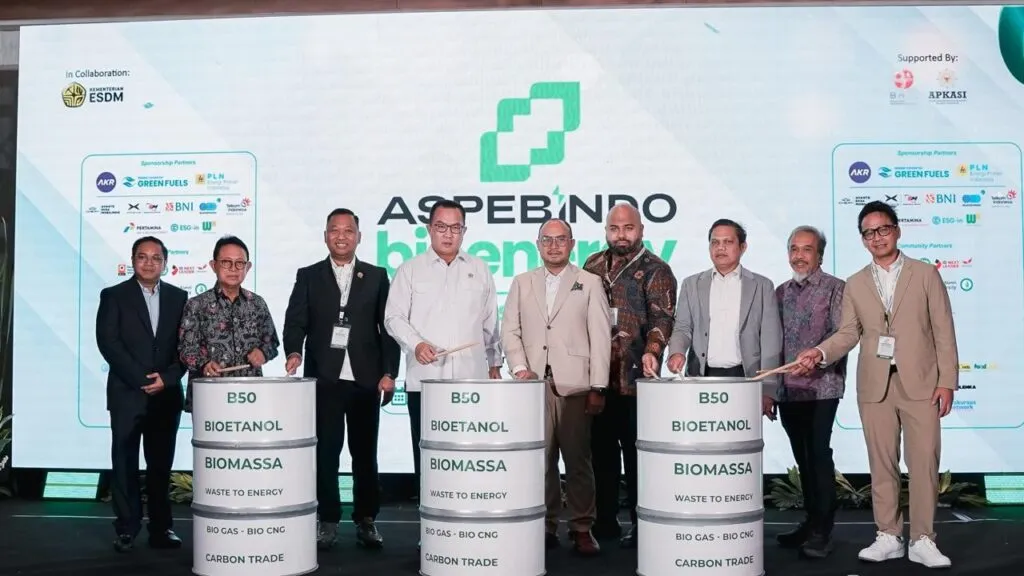
Indonesia launched its B50 biofuel program — blending 50% biodiesel with Biosolar — on 1 July 2026. While initial distribution has been stable, experts warn that FAME’s hygroscopic properties demand urgent upgrades to storage infrastructure. BPH Migas’ Fathul Nugroho stressed tank readiness to prevent water contamination; BRIN’s Arif Satria confirmed ongoing dewatering and engine reliability tests. ASPEBINDO leaders Anggawira and M. Hadi Nainggolan urged integrated upstream-to-downstream coordination, citing logistics costs and feedstock certainty as critical to commercial viability. The ASPEBINDO Bioenergy Business Summit 2026 launched a multi-phase activation plan targeting policy, financing, and talent development.

SMBC Indonesia Inks ADB Deal to Boost Trade Finance
Southeast Asia Supply Chain

SMBC Indonesia Inks ADB Deal to Boost Trade Finance

PT Bank SMBC Indonesia Tbk (BTPN) has partnered with the Asian Development Bank (ADB) to bolster trade and supply chain financing via unfunded risk participation. In Semester I 2026, the bank reported consolidated net profit of Rp1.4 trillion (+40.3% yoy), consolidated credit of Rp185.3 trillion, and consolidated assets of Rp245.5 trillion (+4.7% yoy). Corporate/commercial lending reached Rp116.5 trillion (+12.8% yoy), while subsidiaries BTPN Syariah and Grup OTO contributed Rp655 billion and Rp382 billion in net profit, respectively.

Indonesia Targets $7.5B China Durian Market via 53 Transmigration Zones
Southeast Asia Supply Chain

Indonesia Targets $7.5B China Durian Market via 53 Transmigration Zones

Indonesia is redefining its transmigration program as an engine for supply chain integration, targeting the US$7.5 billion annual durian market in China. Economist Soner Bakaya highlights Indonesia's strategic advantages — including political neutrality, trade routes, and nickel resources — to attract investment and build domestic industrial capacity. The Ministry of Transmigration, under Muhammad Iftitah Sulaiman Suryanagara, will deploy 1,476 experts across 53 zones in 2026, including 10 in Papua, to establish end-to-end economic ecosystems covering research, production, processing, logistics, and marketing.

Welcome Back!

Login to your account below

Create New Account!

Fill the forms below to register

Retrieve your password

Please enter your username or email address to reset your password.

Scan to share via WeChat

Open WeChat and scan the QR code to share

QR Code

Add New Playlist