Skip to content

Africa Supply Chain

Analysis

Maersk, Hapag-Lloyd resume Red Sea route amid capacity relief

A.P. Moller-Maersk and Hapag-Lloyd announced on July 6, 2026, they are resuming Red Sea and Suez Canal transit for select Asia–Europe services — the first major carrier alliance to do so since late 2023. The move follows security reassessments and aims to alleviate vessel capacity constraints that drove spot rates up 37% in recent weeks. Maersk shares fell 9%, Hapag-Lloyd dropped 4.6%, reflecting market expectations of rate normalization. The Majestic Maersk, currently near Oman, will be the first redirected vessel. The Cape of Good Hope detour added ~14–18 days and $250,000–$350,000 in fuel costs per round trip.

Original source: Source information pending

Maersk, Hapag-Lloyd resume Red Sea route amid capacity relief

According to www.supplychainbrain.com, A.P. Moller-Maersk A/S and Hapag-Lloyd AG announced on July 6, 2026 their joint decision to reinstate container vessel transit through the Red Sea and Suez Canal — ending a nearly three-year diversion around Africa’s Cape of Good Hope.

Joint Service Realignment

The two carriers operate under the Gemini capacity-sharing alliance. Their coordinated move targets the Asia–Europe trade lane linking the southern Mediterranean with China. According to Maersk’s official statement, the decision “comes following thorough assessments of the security situation in the Red Sea area” and marks “a step towards a gradual return to a trans-Suez network.”

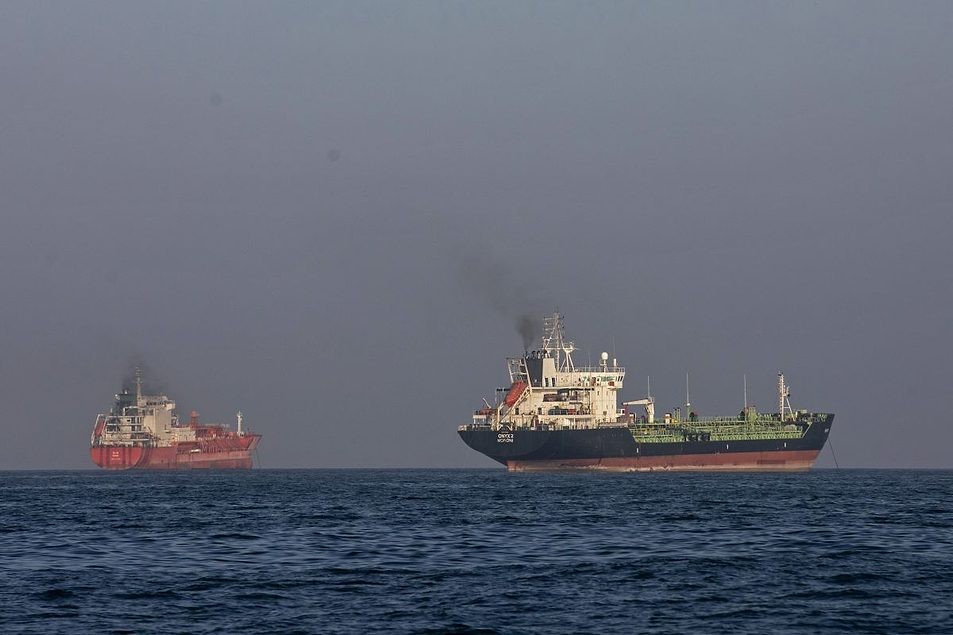
The first vessel scheduled for redirection is the Majestic Maersk, currently positioned near Oman as confirmed by ship-tracking data compiled by Bloomberg. The service shift is expected to reduce voyage duration by approximately 10–12 days compared to the Cape route, cutting fuel consumption and lowering emissions per TEU.

Market Impact and Share Reaction

Investors reacted swiftly: Maersk, headquartered in Copenhagen and ranked as the world’s second-largest container line, saw its shares fall as much as 9% — its steepest intraday decline since May 7, 2026. Hapag-Lloyd, the fifth-largest global carrier and based in Hamburg, Germany, dropped up to 4.6%, its largest single-day slide since April 2, 2026. Analysts attributed the sell-off to expectations that restored Red Sea access would ease tight vessel capacity and suppress spot freight rates, which had surged 37% over the prior four weeks amid peak-season demand and extended transit times.

Since late 2023, most major container lines avoided the Red Sea after Yemen-based Houthis began targeting commercial vessels in solidarity with Palestinians during the Israel–Gaza conflict. Though some carriers signaled tentative returns earlier in 2026, renewed hostilities following the outbreak of the Iran war in late February disrupted those plans and reinforced maritime risk assessments.

Operational and Economic Implications

The detour around southern Africa adds roughly 3,000 nautical miles to Asia–Europe voyages, increasing voyage time by 14–18 days and raising bunker costs by an estimated $250,000–$350,000 per round trip. With global container fleet utilization hovering near 92% ahead of Q3 peak season, the extended routing strained port call scheduling and contributed to terminal congestion in Rotterdam, Hamburg, and Los Angeles.

For supply chain professionals, the resumption signals measurable near-term relief: reduced transit variability, lower demurrage exposure, and improved predictability for just-in-time manufacturing flows reliant on Asia-sourced components. However, insurers continue requiring war-risk surcharges — currently averaging 1.2% of base freight — and armed escort protocols remain mandatory for vessels transiting the southern Red Sea corridor.

The Gemini alliance’s move does not yet represent full normalization. Both carriers emphasized “gradual” reintegration and confirmed no immediate expansion beyond the initial Asia–Europe loop. Other major operators — including COSCO and MSC — have not announced similar shifts, citing ongoing threat assessments from naval coalition reports issued jointly by the U.S., U.K., and EU.

Source: Supply Chain Brain

Compiled from international media by the SCI.AI editorial team.
Ask SCI.AI Finished reading? Continue with SCI.AI. Explore the related policy, route, company and historical context. Continue asking
Transnet posts R4.6B profit, rail volumes rise 4.9% to 167.9M mt
Africa Supply Chain

Transnet posts R4.6B profit, rail volumes rise 4.9% to 167.9M mt

Transnet posted a R4.6 billion profit for the year ended March 31, 2026 — its first in four years — reversing a R1.9 billion loss. Revenue rose 7.1% to R88.6 billion, driven by 4.9% higher rail volumes (167.9 million mt) and 6.9% growth in pipeline volumes (14.3 billion litres). EBITDA edged up 0.7% to R30.9 billion, while net operating expenses jumped 10.8% to R57.7 billion. A R12.5 billion gain from the sale of a 49.999% stake in Durban Gateway Terminal contributed significantly. CEO Michelle Phillips noted rail volumes remain short of the 180 million mt break-even target. Borrowings reached R150.7 billion, and R129.1 billion is earmarked for capital investment over five years.

DP World pledges $4B Africa expansion amid 75% fuel cost surge
Africa Supply Chain

DP World pledges $4B Africa expansion amid 75% fuel cost surge

DP World reaffirms its $4 billion investment pledge in African port and logistics infrastructure despite a 75% fuel price surge in South Africa and disruptions caused by the Strait of Hormuz closure. CEO Mohammed Akoojee confirmed ongoing projects including Maputo Port expansion and the DRC’s first deep-water port, due in Q1 next year. The company operates 7,000+ trucks across Africa and is shifting toward integrated logistics ecosystems linking Tanzania, Rwanda, Zambia, and Congo.

Global Hunger Falls to 645M in 2025 Amid Conflict Risks
Africa Supply Chain

Global Hunger Falls to 645M in 2025 Amid Conflict Risks

Global hunger fell to 645 million people (7.8% of the world population) in 2025, marking the third straight annual decline since pandemic-driven spikes. Yet conflicts — especially in the Middle East — and climate shocks threaten reversal, with the UN World Food Programme warning that 45 million more could face acute food insecurity if the Iran war continues and oil exceeds $100/barrel. Africa remains the epicenter: one in five people there were undernourished in 2025, and the UN projects 56% of the world’s hungry will live there by 2030. Supply chain professionals must now integrate humanitarian risk data into logistics planning, particularly across Red Sea and Suez Canal corridors.

Welcome Back!

Login to your account below

Create New Account!

Fill the forms below to register

Retrieve your password

Please enter your username or email address to reset your password.

Scan to share via WeChat

Open WeChat and scan the QR code to share

QR Code

Add New Playlist