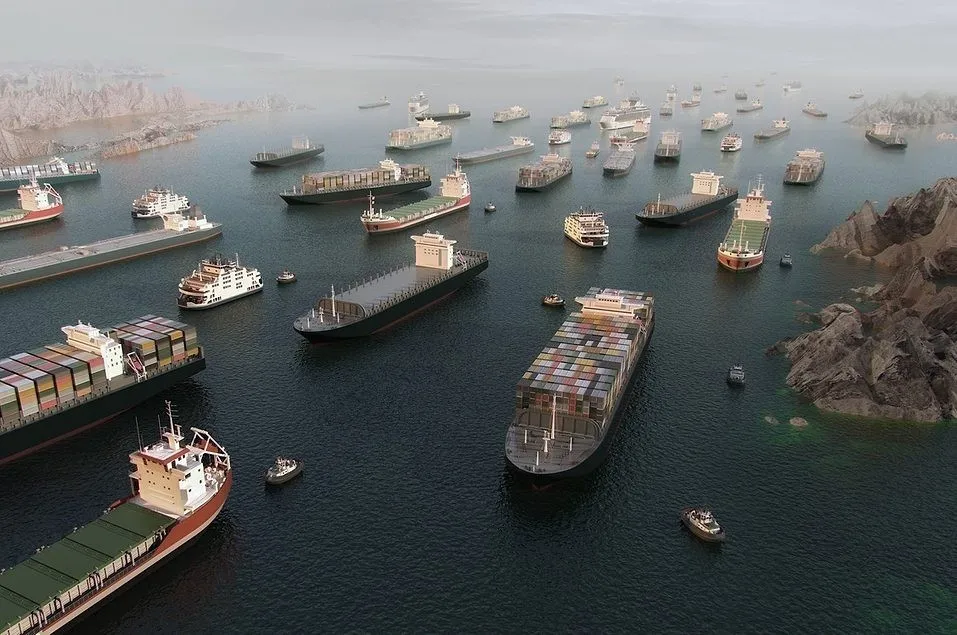
Scientists warn that over 1,500 ships stranded in the Strait of Hormuz since late February 2026 have accumulated dangerous levels of marine biofouling — including algae, mussels, and barnacles — raising high risks of global 'bioinvasion.' With vessels idle for at least 40 times longer than typical port stays, invasive species may spread to ports worldwide upon departure. A July 22, 2026 report urges mandatory hull inspections and cleaning before resuming voyages, and calls for coordinated early detection at receiving ports. The Strait of Hormuz, handling ~20% of global oil shipments, is now an ecological flashpoint with cascading supply chain and regulatory implications.
According to www.supplychainbrain.com, biologists have issued a formal warning that more than 1,500 ships anchored in the Strait of Hormuz since late February 2026 pose a severe ecological threat due to unchecked marine biofouling.
Unprecedented Biofouling Accumulation
A global coalition of scientists released findings on July 22, 2026, documenting extraordinary levels of microbial algae, mussels, barnacles, and other organisms colonizing vessel hulls. These ships have remained idle for at least 40 times longer than the typical port stay — which normally lasts just one to three days — creating optimal conditions for invasive species to mature and proliferate.
The report states that this mass lay-up represents “the unprecedented scale and duration of this spring and summer mass lay-up of large commercial ships,” turning vessels into potential vectors for what researchers term a marine invasive species “super-spreader” event. Unlike routine transits where biofouling is limited, prolonged immobility allows organisms to complete full life cycles, increasing their viability upon arrival at destination ports.
Risk to Global Marine Ecosystems
Once released from the strait, these vessels could introduce non-native parasites and pathogens across multiple continents, with documented consequences including displacement of native marine life, damage to fisheries, and degradation of coastal infrastructure such as piers, intake pipes, and aquaculture facilities. Eradication becomes nearly impossible once established populations take root — a reality confirmed by decades of invasive species management failures worldwide.
“Whether it becomes a global bioinvasion super-spreader event will now depend less on the biofouling communities already present on vessels, than on the speed, coordination, and effectiveness of the responses that follow,” the report notes.
Urgent Mitigation Recommendations
The scientific coalition urges immediate action: all vessels departing the Strait of Hormuz must be treated as high-risk for biofouling. Mandatory hull inspections and cleaning — ideally conducted before resuming international voyages — are recommended by researchers. Ports receiving these vessels should activate early detection systems and rapid response protocols, coordinating closely with port authorities, shipping operators, and environmental agencies.
Such measures align with International Maritime Organization (IMO) Guidelines on the Control of Harmful Aquatic Organisms in Ballast Water and Sediments, though the current situation exceeds standard regulatory thresholds due to both scale and duration. The Strait of Hormuz, a critical maritime chokepoint handling roughly 20% of global oil shipments, has seen no comparable vessel congestion since the 2019 tanker incidents — making this event historically distinct.
Supply Chain and Regulatory Implications
For supply chain professionals, the implications extend beyond ecology into operational continuity and compliance risk. Delays caused by mandatory biofouling inspections could compound existing bottlenecks, particularly for time-sensitive cargo moving through Middle Eastern, Indian Ocean, and Mediterranean gateways. Carriers may face unplanned dry-docking costs, port fees for emergency cleaning, and potential liability under national biosecurity laws — including those enforced by Australia, New Zealand, and the United States, all of which maintain strict invasive-species entry protocols.
This incident also highlights growing interdependence between geopolitical instability and ecological resilience. With armed conflict and maritime security incidents contributing to the initial backlog, the resulting biological cascade demonstrates how supply chain disruption can trigger second-order environmental hazards — a dynamic increasingly tracked by firms using integrated Supply Chain Risk and ESG compliance frameworks.
Source: Supply Chain Brain
Compiled from international media by the SCI.AI editorial team.