The U.S.-Saudi nuclear agreement signed on 22 July 2026 has triggered a regional contest for dominance over the nuclear supply chain—valued at tens of billions. With Urenco reporting €2.096 billion in 2025 revenue and Orano holding a €34.2 billion order book, five national models (U.S., Russia, China, France, South Korea) compete for Saudi contracts. The Barakah plant in the UAE—supplying 25% of the country’s electricity—demonstrates how localization can occur without enrichment, while Iran’s mature fuel-cycle capabilities pose a strategic counterweight. Congressional review, enrichment rights, and Gulf diplomacy remain pivotal.
According to en.ilsole24ore.com, the civil nuclear agreement signed on 22 July 2026 between the United States and Saudi Arabia has ignited a high-stakes regional competition—not just for reactor construction, but for control over the entire nuclear supply chain, valued at tens of billions of dollars.
The U.S. Congress Review Process
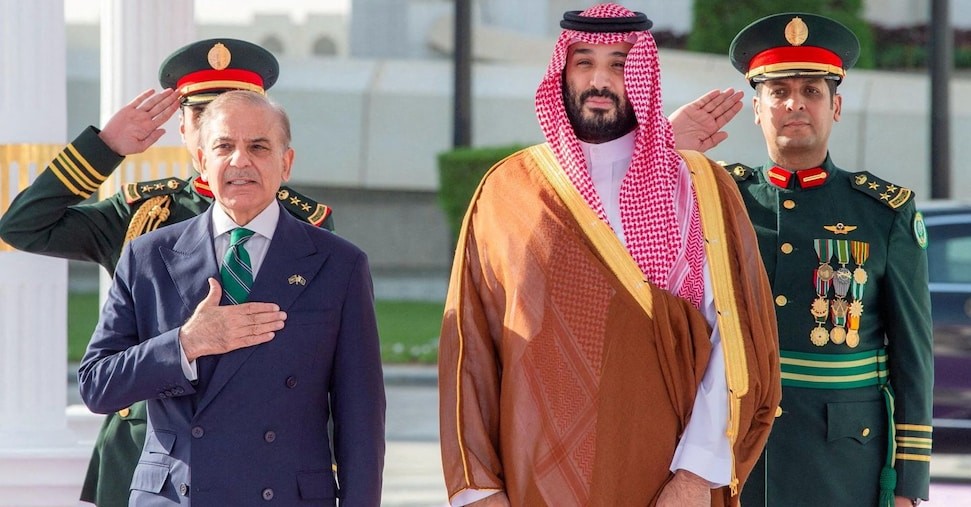
The agreement was signed by U.S. Secretary of Energy Chris Wright and Saudi Minister of Energy Prince Abdulaziz bin Salman. However, it has not yet entered into force. Under U.S. law, the deal must undergo congressional review within 90 days, after which export licenses, technology transfers, component supply, and reactor contracts may proceed. A critical unresolved issue is whether Riyadh has secured approval for uranium enrichment and fuel reprocessing—a privilege denied to Abu Dhabi under its 2009 agreement with the U.S. It remains undisclosed whether implementation hinges on Saudi adoption of the International Atomic Energy Agency’s Additional Protocol, which expands inspection authority to cover undeclared nuclear activities.
Fuel Cycle Economics and Market Scale
The nuclear fuel supply chain spans uranium mining, conversion to hexafluoride, enrichment, ceramic pellet production, fuel assembly, refuelling, maintenance, digital upgrades, safety system replacement, operator training, spent fuel management, and decommissioning. Revenue streams extend over decades. Urenco, a leading enrichment group, reported €2.096 billion in revenues for 2025, with an EBITDA of €804 million, investments of €616 million, and a record order book of €21.3 billion extending into the 2040s. French nuclear services giant Orano recorded €5.138 billion in revenue in 2025 and holds an order book worth €34.2 billion, employing over 21,000 people.
Five Industrial Models Compete for Riyadh
Five national industrial systems are vying for Saudi contracts: the United States offers integrated reactors, fuel, maintenance, digital systems, and Western financial access—led by Westinghouse, Urenco USA, and Centrus. Russia’s Rosatom proposes a fully vertical model, already deployed at Akkuyu in Turkey and El-Dabaa in Egypt. China links nuclear exports to public credit and infrastructure investment—evidenced by four operating reactors at Chashma and two 1,100-megawatt ACP1000 units in Karachi, with a new 1,200-megawatt unit under construction. France leverages its near-complete supply chain via EDF, Framatome, and Orano. South Korea points to its proven Gulf delivery: the four APR-1400 reactors at Barakah in the UAE.
Barakah as Blueprint—and Warning
The Barakah project demonstrates that large-scale nuclear power can be built without domestic uranium enrichment. Its four reactors supply roughly 25% of UAE electricity. Fuel sourcing relied on an international network: uranium, conversion, and enrichment were procured from multiple suppliers; initial fuel assemblies were manufactured by KEPCO Nuclear Fuel in South Korea, later diversified through agreements including one with Framatome. By 2015, over 1,100 Emirati companies had won contracts worth more than $2.5 billion; subsequently, 175 American suppliers secured over $2.75 billion in contracts. This precedent shows how billions in civil engineering, steel, cabling, logistics, security, and training can remain local—even without enrichment capability. But it also introduces diplomatic risk: if Washington grants Riyadh more permissive terms than those accepted by Abu Dhabi in 2009, the UAE may formally request equivalent treatment—potentially destabilising Gulf nuclear coordination.
Iran’s Advantaged Position
Iran now possesses the Middle East’s most comprehensive indigenous nuclear fuel cycle, mastering uranium extraction, conversion, enrichment, and fuel production. While it relies on Russia for the Bushehr-1 reactor (net capacity 915 megawatts), which generated over 5,100 gigawatt-hours in 2025, Bushehr-2 (974 megawatts) has been under construction since September 2019. Iran’s strategic advantage lies less in reactor count than in accumulated expertise across all stages of the fuel cycle—including scientists, laboratories, infrastructure, and domestic supply chains—shortening the time required for future expansion.
Source: en.ilsole24ore.com
Compiled from international media by the SCI.AI editorial team.