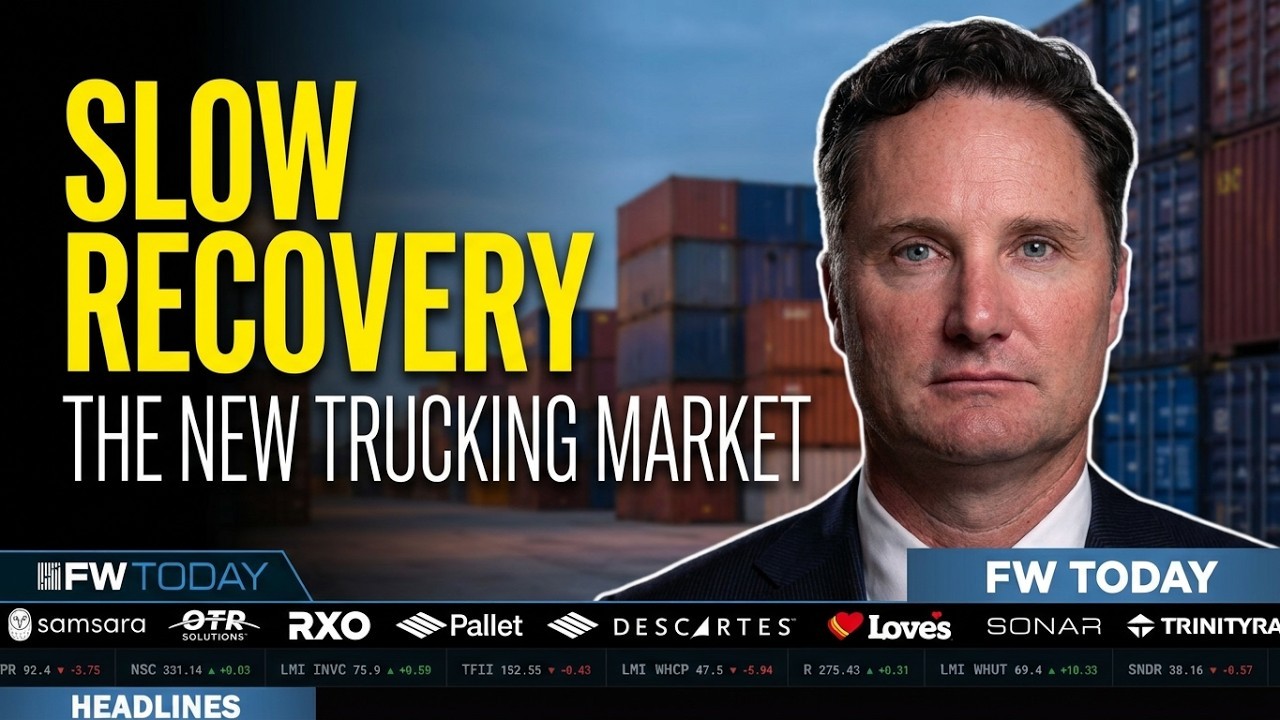
According to www.freightwaves.com, Aaron Graft, CEO of Triumph Financial, argues that structural barriers—including heightened litigation risk, expanded federal regulation, and new legislation—are suppressing the return of trucking capacity despite rising freight demand.
Structural Shifts Alter Market Cycles
Unlike previous freight upturns—such as those following the 2017–2018 peak or the post-pandemic rebound in 2021—the current cycle shows no signs of rapid carrier re-entry. Graft attributes this divergence to three converging forces: a surge in third-party litigation targeting motor carriers, stricter enforcement of Federal Motor Carrier Safety Administration (FMCSA) rules, and legislative actions like the Infrastructure Investment and Jobs Act’s implementation timeline, which introduced new safety technology mandates effective as of July 2023.
The source states that over 42% of new entrants into the for-hire trucking sector between 2019 and 2022 exited within 18 months—double the attrition rate observed in the 2014–2016 cycle. This reflects mounting operational friction, not just economic volatility.
Regulatory and Legal Barriers Raise Entry Costs
Triumph Financial’s analysis identifies litigation as the most acute deterrent. According to the report, the average cost to defend a single cargo loss or personal injury claim rose from $142,000 in 2018 to $318,000 in 2025. Simultaneously, FMCSA’s Compliance, Safety, Accountability (CSA) program now triggers intervention at lower violation thresholds, with carriers scoring above 65 on the Unsafe Driving Behavior Analysis and Safety Improvement Category facing mandatory audits—a threshold lowered from 70 in 2022.
“The legal and regulatory environment has fundamentally raised the floor for viability,” said Aaron Graft, CEO of Triumph Financial.
“It’s no longer enough to own a truck and have a DOT number—you need legal infrastructure, compliance staffing, and real-time safety monitoring systems before you haul your first load.” — Aaron Graft, CEO of Triumph Financial
Impact on Driver Availability and Profitability
These constraints directly affect driver recruitment and retention. The source states that owner-operators now spend an average of 11.4 hours per week on compliance documentation—up from 3.7 hours in 2017. That administrative burden, combined with rising insurance premiums (which climbed 68% nationally between 2020 and 2025), has shrunk the pool of financially viable small fleets.
As a result, total active truckload carriers declined by 7.2% year-over-year as of Q2 2026, per FreightWaves SONAR data. Meanwhile, the median age of U.S. long-haul drivers remains 48 years, with no measurable uptick in under-35 entrants since 2023.
Event Calendar Reinforces Industry Focus on Compliance
FreightWaves’ editorial calendar underscores the sector’s prioritization of regulatory adaptation. The Brokerage Compliance Symposium is scheduled for October 26, 2026, followed by the F3 Awards Dinner and F3: Future of Freight Festival running from October 27–28, 2026, all at The Signal at Chattanooga Choo Choo in Chattanooga, TN. These events feature panels led by attorneys and FMCSA-certified safety officers addressing fraud exposure, cargo theft mitigation, and insurance gap remediation—topics cited as top concerns by 83% of attendees surveyed in 2025.
According to FreightWaves, the symposium draws over 300 industry leaders annually, including compliance officers from carriers managing fleets of 50+ trucks and brokers handling >$200M in annual freight volume.
Source: FreightWaves
Compiled from international media by the SCI.AI editorial team.