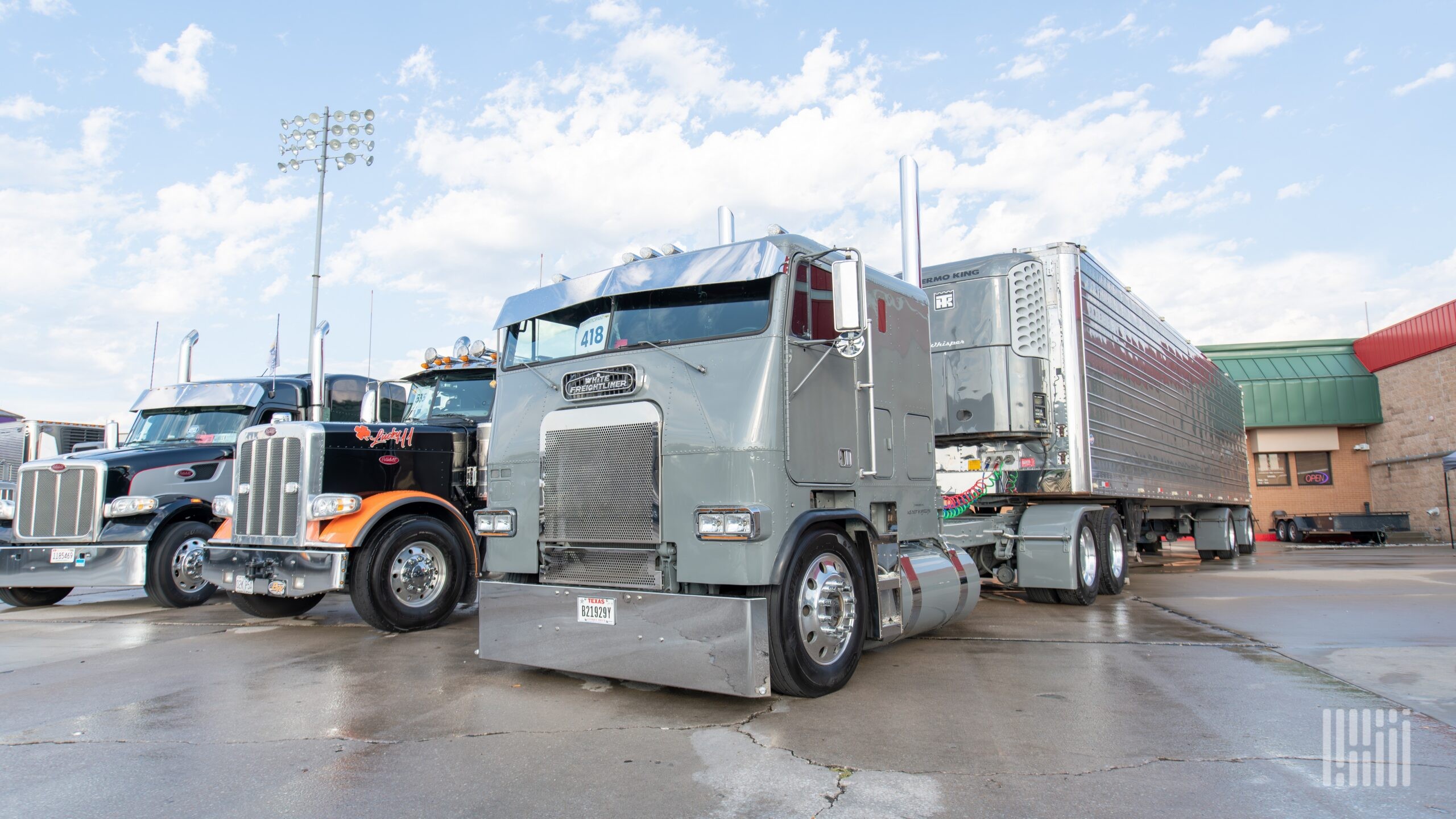
According to FreightWaves, U.S. trucking capacity has contracted to a 43-month low while freight rates remain near record highs — intensifying pressure on shippers just as demand for transport volume expands.
Freight Rates Hold Near All-Time Peak
ACT Research’s June For-Hire Trucking Index shows the Freight Rate Index at 70.2, seasonally adjusted — down 9.5 points month-over-month from May’s record high of 79.7, but still among the strongest readings in the survey’s nearly 17-year history. The index operates as a diffusion measure, where values above 50 indicate market expansion and below 50 signal contraction; a flat reading equals exactly 50.
This persistent strength reflects decisive market imbalance in favor of carriers, with ACT Research stating that “tight market dynamics are likely to continue to drive rates higher.” The report underscores that even after the June pullback, rate levels remain structurally elevated — not merely cyclical — due to underlying supply constraints.
Capacity Shrinks to 43-Month Low
The Capacity Index rose 1.5 points to 55.0 in June — its highest level since January 2023, marking a 43-month high. However, this gain does not reflect broad-based fleet expansion. Instead, it signals growth concentrated among larger, well-capitalized carriers — not industry-wide recovery.
Class 8 tractor sales continue to run below replacement demand across the industry, exacerbating equipment scarcity. ACT Research projects accelerated capacity expansion in Q3 and Q4 2026, driven by spot-rate gains flowing through to contract rates and fleets replacing aging trucks ahead of the EPA ’27 emissions rules.
Driver Shortage Deepens Amid New FMCSA Rules
The Driver Availability Index improved slightly to 34.1 in June from 32.6 in May — yet remains severely depressed. It had plunged to a five-year low of 30.4 in April following implementation of new Federal Motor Carrier Safety Administration (FMCSA) regulations in mid-March, including restrictions on nondomiciled commercial driver’s license (CDL) holders, stricter enforcement of electronic logging device (ELD) compliance and registration fraud, and closures of unaccredited driver training schools.
While May and June saw modest stabilization, ACT Research warns that these regulatory shifts will sustain labor scarcity — reinforcing upward pressure on freight rates through 2026.
Fleet Investment Remains Cautious
Fleet purchase intentions held flat month-over-month, with only 47% of carriers planning equipment purchases in the next three months — below the historical June average of 53%. Two structural factors constrain capital spending: carrier profit margins entering 2026 were at their weakest since the Great Recession, and large carriers experienced limited margin improvement in Q1 2026 due to a roughly six-month lag between spot-rate gains and contract-rate adjustments.
ACT Research expects this gap to narrow as rate gains fully propagate through contracts — supporting stronger investment activity later this year. Replacement demand tied to EPA ’27 compliance is also expected to catalyze equipment orders in the second half of 2026.
Thomas Wasson, a trucking analyst at FreightWaves based in Chattanooga, Tenn., authored the report. He previously held roles at U.S. Xpress Enterprises, Arrive Logistics, and the digital trucking startup aifleet, where his work focused on fleet management, load planning, and truckload network design.
Source: FreightWaves
Compiled from international media by the SCI.AI editorial team.