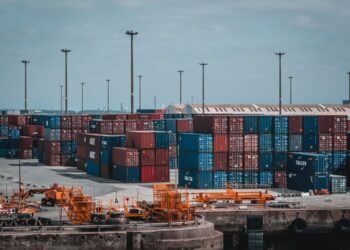
According to www.sahi.com, DCM Shriram has officially denied reports that it secured a 1,000-unit shipping container order from A.P. Moller–Maersk — a clarification that dampens near-term revenue expectations for its emerging logistics manufacturing unit.
Official Denial and Market Impact
The company’s public refutation comes just days after unverified media reports triggered retail investor optimism, with some analysts speculating the deal could meaningfully expand the contribution of its ‘Other Businesses’ segment. According to the report, the rumored order would have represented the first major global procurement under India’s newly launched Container Manufacturing Promotion Scheme — a flagship initiative backed by a ₹10,000 Cr budgetary allocation in the 2026 Union Budget. With India currently importing over 95% of its cargo containers — predominantly from China — the denial shifts market sentiment from speculative ‘order-win’ enthusiasm to cautious realism.
The clarification follows DCM Shriram’s FY26 financial results, which showed consolidated revenue of ₹13,538 Cr and adjusted net profit of ₹617 Cr. The company also reported a 42% surge in full-year profit to ₹856 Cr, aided by a ₹239 Cr deferred tax credit. This strong underlying performance provides a fundamental floor for the stock despite the removal of the Maersk catalyst.
Strategic Positioning in Domestic Container Manufacturing
Although the 1,000-container order was denied, DCM Shriram remains a foundational participant in India’s domestic container manufacturing ecosystem. The company, through its subsidiary DCM Shriram International Ltd, has successfully developed EXIM-standard prototype cargo boxes for Maersk — validating its technical capability. As noted in the source, this prototype work positions the firm as a first-mover among Indian conglomerates in the space. The ₹10,000 Cr government scheme offers both capital subsidies and operational incentives, and DCM Shriram is explicitly cited as being “well-positioned to benefit from these incentives as actual contracts materialize.”
Industry context underscores the scale of the challenge: Chinese manufacturers hold a 97% share of global container production. Breaking into that market requires not only engineering competence but cost competitiveness — an area flagged as a key risk in the source, citing “persistence of high production costs relative to Chinese manufacturers.” To support scaling, the company recently increased its renewable energy investment commitment to ₹105 Cr and commissioned its 52,000 TPA Epichlorohydrin plant at Bharuch in April 2026.
Operational Priorities and Segment Dynamics
With the Maersk order off the table, capital allocation is expected to remain focused on core industrial assets. The source states that expansions at the Bharuch chemical complex will continue to anchor near-term investment. Chemicals — generating ₹13,538 Cr in FY26 revenue — remain the company’s primary earnings driver, outpacing newer verticals including logistics infrastructure and sugar. The Chloro-Vinyl segment, for instance, is highlighted as a trigger factor for Q1 FY27 volume guidance, reflecting ongoing cyclicality in vinyl markets.
Margin pressure in core businesses is identified as a watchpoint, particularly in Vinyl and Sugar, where commodity-driven volatility persists. Meanwhile, the company’s diversified portfolio continues to deliver structural resilience: its PBDIT grew 15% year-on-year in FY26. Trading signals from Sahi classify the stock’s near-term bias as neutral, with overweight recommendations maintained for Logistics Infrastructure and Chemicals — but underweight for Export-linked Manufacturing given current global freight headwinds.
Broader Implications for India’s Logistics Ambitions
The episode serves as a reality check for investors tracking India’s ‘Make in India’ logistics agenda. As SAHI Perspective observes, “the denial underscores the early-stage volatility in India’s container manufacturing ecosystem.” While technical validation exists via Maersk’s prototype engagement, commercial scaling under the ₹10,000 Cr scheme is likely to be gradual — not accelerated by a single blockbuster contract. That measured pace aligns with broader sectoral trends: recent tender announcements under the scheme remain pending, and no other Indian manufacturer has yet announced a large-scale export contract.
From a supply chain practitioner standpoint, the case illustrates how policy ambition and industrial execution often operate on divergent timelines. For procurement teams evaluating domestic alternatives to Chinese containers, DCM Shriram’s proven prototyping capacity offers a tangible starting point — but volume availability, certification timelines, and landed cost parity will determine real-world adoption. As the source notes, official tender awards and Q1 FY27 volume data for Chloro-Vinyl will be critical near-term indicators of both financial and strategic momentum.
Source: sahi.com
Compiled from international media by the SCI.AI editorial team.