According to allafrica.com, Standard Bank has slashed its 2026 current account surplus forecast for Ghana by $1 billion, citing soaring petroleum import costs triggered by Middle East geopolitical tensions.
Oil Price Shock and External Vulnerability
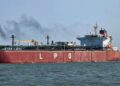
As a net oil importer, Ghana faces acute pressure from elevated global energy prices. At an oil price of $65 per barrel, petroleum imports constitute approximately 29% of total goods imports — a share that rises sharply at higher price levels such as $90–$95 per barrel. Standard Bank analyst Jibran Qureishi, Head, Africa Regions Economics Research, Standard Bank, emphasized the structural exposure:
“We still import a lot more oil than we export. This has prompted us to re-look at our current account surplus position. We had initially thought that Ghana could print a surplus of about $5 billion for 2026, but we do now believe that this could reduce by about a billion dollars.” — Jibran Qureishi, Head, Africa Regions Economics Research, Standard Bank
Despite the downward revision, Ghana is still projected to maintain a current account surplus in 2026 — a key indicator of external stability. However, the narrowing margin underscores the economy’s sensitivity to global energy shocks, particularly given Ghana’s status as Africa’s largest gold producer and its heavy reliance on imported refined fuels.
Forex Market Strain and Structural Reform
The foreign exchange market has deteriorated significantly. Standard Bank estimates a dollar backlog of approximately $1 billion, while the cedi has weakened to trade between GH¢11.65–11.70 per U.S. dollar in the spot market. The research team projects the official exchange rate will approach GH¢12.00 before recovering, contingent on new liquidity mechanisms taking effect.
To address chronic auction volatility and inequitable FX access, the Bank of Ghana is transitioning from its current FX auction system to a new 15-day funded forward mechanism managed by the Gold Board. This reform operates at the central bank’s reference rate with a flat fee of 0.05% in cedi — designed to channel artisanal mining liquidity directly into the broader market and reduce aggressive bidding.
Jibran Qureishi explained the rationale:
“The existing FX auction system emboldens aggressive bidding at these auctions, and number two, they don’t think that everybody gets FX equities. Through this transition, there’s likely going to be less volatility, less aggressive bidding, and there will be more liquidity to the broader market players.” — Jibran Qureishi, Head, Africa Regions Economics Research, Standard Bank
Monetary Policy Shifts and Debt Pressure
In early 2026, the Bank of Ghana surprised markets with a 150 basis point rate cut, lowering the monetary policy rate to 14%. However, Standard Bank expects the central bank to pause further easing amid rising inflation pressures from fuel and food prices. Jibran Qureishi forecasts inflation will reach the high single digits, low double digits before year-end, warranting a neutral stance for the remainder of 2026 — with risks tilted toward a hawkish bias by year-end.
A mounting challenge lies in external debt servicing: amortisations surged from $960 million in 2025 to a projected $2.3 billion in 2026, escalating further to $3.2 billion in 2027. Though foreign exchange reserves stood at approximately $13.9 billion as of April 2026, the accelerating amortisation schedule constrains fiscal flexibility and highlights the urgency of macroeconomic discipline.
Standard Bank anticipates Ghana may seek commercial financing — via syndicated loans or a Eurobond issuance — once its IMF programme formally concludes. As Jibran Qureishi stressed, the critical test lies ahead:
“The authorities have to now prove to the investment community, and this will be the litmus test between now and the election year of 2028, that they are completely out of the ICU and completely at home. Ghana has a fiscal credibility deficit, and it takes years to restore that.” — Jibran Qureishi, Head, Africa Regions Economics Research, Standard Bank
Source: allafrica.com
Compiled from international media by the SCI.AI editorial team.