Skip to content

Disruptions · Risk & Resilience

Analysis

Ukraine blames Russia for grain ship strike killing 6 sailors

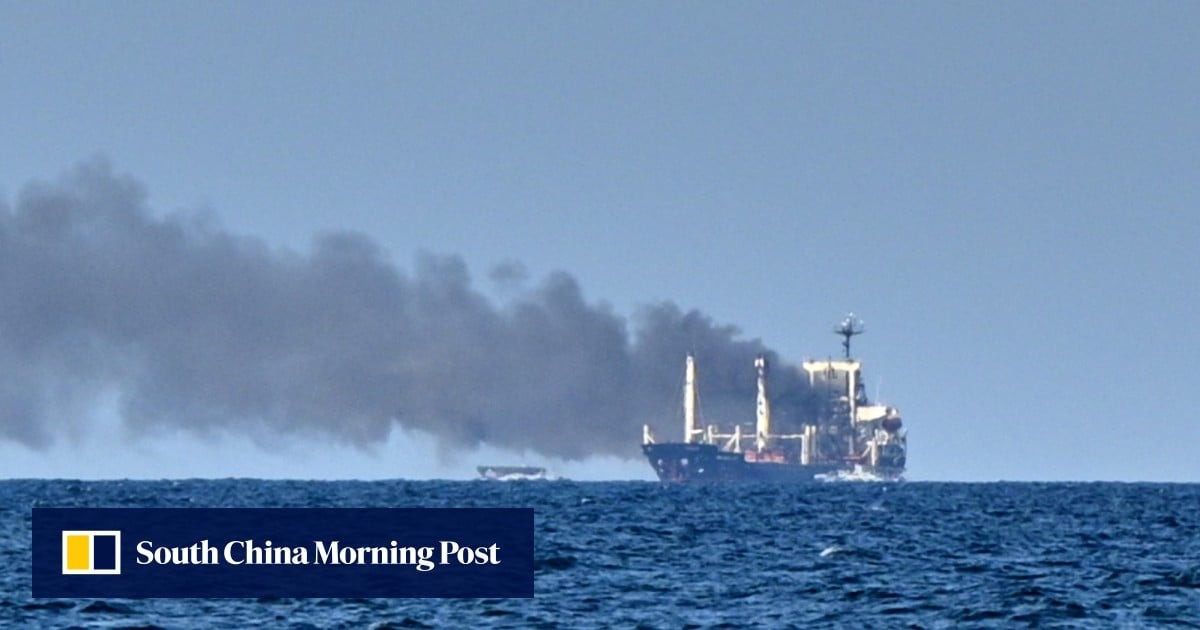
Ukraine’s navy confirmed six sailors killed and four missing after Russian cruise missiles struck the Turkish-owned grain vessel Golden Leo near Odesa on 20 July 2026. The ship, flagged in Guinea-Bissau, was departing the combat zone with a grain cargo. Foreign Minister Andriy Sybiga confirmed a Ukrainian maritime pilot was among the dead. Eight crew were rescued, two injured. The attack follows a fresh Russian missile barrage on Kyiv and threatens already strained Black Sea grain logistics, where insurance costs have surged over 300% since early 2024.

Original source: Source information pending

Ukraine blames Russia for grain ship strike killing 6 sailors

According to www.scmp.com, Ukraine’s navy confirmed that 6 sailors died and 4 remain missing after Russian cruise missiles struck the Turkish-owned cargo vessel Golden Leo near Odesa on 20 July 2026.

Russian missile strike on civilian grain vessel

Ukraine’s navy stated that Russia launched three cruise missiles at the Golden Leo, a vessel registered under the flag of Guinea-Bissau, as it was “leaving the combat zone with a cargo of grain”. The attack occurred hours after Moscow conducted a fresh barrage of missiles against Kyiv — underscoring the intensification of strikes targeting both urban centers and maritime logistics infrastructure in the Black Sea region.

The vessel was en route from Ukrainian port facilities when hit. Prime Minister Sergiy Koretsky confirmed the location of the strike occurred near Odesa, a critical export hub for Ukrainian grain. The incident directly impacts one of the few remaining functional maritime corridors established under the Black Sea Grain Initiative’s successor arrangements, despite the formal collapse of that UN-brokered deal in 2023.

Casualties and crew composition

Kyiv’s transport minister Mykola Kalashnyk reported on Telegram that eight crew members were rescued, two of whom sustained injuries. He added: “Unfortunately, as of now, six sailors are confirmed dead, and four more are missing.”

Foreign Minister Andriy Sybiga disclosed that the crew included citizens of Syria and India. In a statement posted on X (formerly Twitter), Sybiga confirmed the death of a Ukrainian maritime pilot aboard the vessel — a detail highlighting the direct involvement of Ukrainian personnel in commercial shipping operations supporting grain exports. He condemned the attack as part of an ongoing campaign, saying:

“While the world is still responding to Russia’s brutal overnight attack on Kyiv, Moscow continues its campaign of terror throughout the day.”

Geopolitical and supply chain implications

The strike occurred amid renewed volatility in Black Sea shipping lanes, where insurers have withdrawn coverage for vessels transiting within 12 nautical miles of Ukraine’s coast since early 2024. According to industry data from the International Chamber of Shipping, average insurance premiums for Black Sea voyages rose over 300% between Q1 2024 and Q2 2026, pushing many operators to reroute via longer, costlier alternatives — including the Suez Canal detour or overland rail corridors through Central Europe.

This incident further erodes confidence in the viability of the Odesa corridor, which handled 12.5 million metric tons of Ukrainian grain in the first half of 2026 — down 18% year-on-year, per the Ukrainian Ministry of Agrarian Policy. For global buyers reliant on Ukrainian wheat, maize, and sunflower oil, the disruption compounds existing price pressures: Chicago Board of Trade wheat futures rose 4.2% on 20 July following news of the attack.

Source: South China Morning Post

Compiled from international media by the SCI.AI editorial team.

Ask SCI.AI Finished reading? Continue with SCI.AI. Explore the related policy, route, company and historical context. Continue asking
FBI Memphis Task Force Warns Cyber Schemes Risk $Millions in Freight
Risk & Resilience

FBI Memphis Task Force Warns Cyber Schemes Risk $Millions in Freight

The FBI’s Memphis Cargo Theft Task Force, active for nearly two decades, warns that cyber-enabled schemes now threaten millions in freight before shipments even reach docks. Assistant Special Agent in Charge Jeremy Baker notes criminals use computer intrusions and social engineering to target high-value goods, with thefts occurring digitally before physical handoffs. Phishing tests show employee click rates can fall from 60% to 2% after training. Federal indictments have targeted nearly $600K in interstate cargo theft tied to Memphis. The task force emphasizes repeated verification across brokers, carriers, and facilities — calling cybersecurity readiness 'several notches' higher than current industry standards.

India’s Exporters Face Empty Container Shortage at Nhava Sheva Port
Disruptions

India’s Exporters Face Empty Container Shortage at Nhava Sheva Port

Indian exporters face a critical shortage of empty containers at Nhava Sheva Port (JNPA), with 40ft boxes especially scarce. The port handled a record 832,000 teu in August — up 12% month on month and 20% year on year — and exported more containers than it imported, a rare occurrence. August goods exports rose 26.12% year on year. CMA CGM and Hapag-Lloyd are among carriers affected, while ICEGATE system failures have halted cargo clearances. Stakeholders cite vessel schedule disruption and surging US-bound exports as root causes.

Record-Low Rhine Levels Choke Barge Traffic, Stress Ground Transport
Disruptions

Record-Low Rhine Levels Choke Barge Traffic, Stress Ground Transport

Record-low Rhine River water levels — falling to 32 cm at Kaub on September 15, 2026, the lowest since 1920 — are crippling barge traffic. Navigation restrictions took effect on September 10, 2026, forcing up to 40% load reductions and diverting 1.7 million tons of freight to roads and rails. Chemical and energy sectors report steep shipment declines: BASF cut ammonia barge deliveries by 12%, while coal deliveries dropped 31%. Rhine freight volumes fell 37% YoY in mid-September, with levels expected to stay below 50 cm through October 2026.

Welcome Back!

Login to your account below

Create New Account!

Fill the forms below to register

Retrieve your password

Please enter your username or email address to reset your password.

Scan to share via WeChat

Open WeChat and scan the QR code to share

QR Code

Add New Playlist