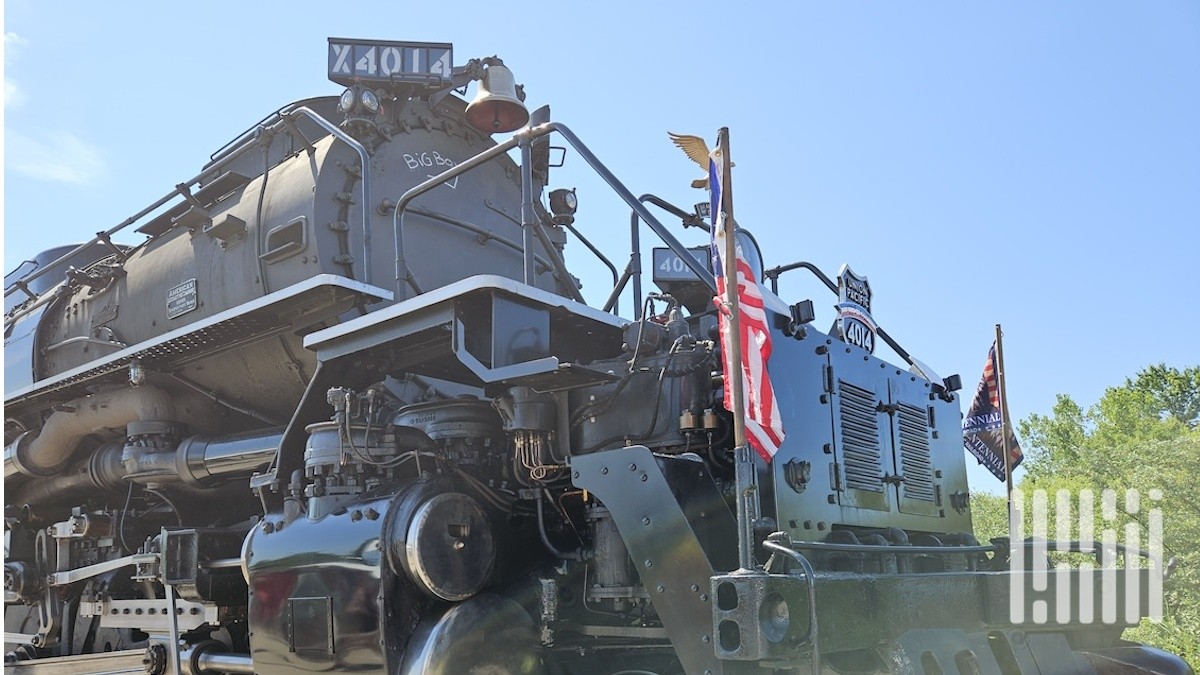
According to www.freightwaves.com, Union Pacific CEO Jim Vena and Norfolk Southern CEO Mark George discussed their proposed merger — valued at $32 billion — during a July 4, 2026 holiday event in Philadelphia, where Union Pacific’s historic Big Boy locomotive No. 4014 completed its first transcontinental tour since 1941.
Historic locomotive tour underscores symbolic timing
The 4014 steam engine’s journey began in Sacramento in April 2026 and concluded on the East Coast over the July 4 holiday weekend, drawing tens of thousands of spectators in Philadelphia. FreightWaves journalist Stuart Chirls interviewed both executives during the USA 250 celebration — marking 250 years since the nation’s founding — under the shade of the railroads’ executive train. The locomotive’s ocean-to-ocean run served as a backdrop to high-stakes discussions about consolidation in U.S. freight rail, a sector that has not seen a major merger since the 1950s.
Regulatory path and procedural concerns
Vena and George confirmed they have submitted additional data to the Surface Transportation Board (STB) following earlier requests, with filings completed ahead of the STB’s July 2026 deadline for supplemental information. Vena expressed regret that the STB did not issue early guidance on competitive analysis frameworks:
“I wish the STB had clarified its analytical methodology at the outset — it would have saved months of iterative submissions.” — Jim Vena, CEO of Union Pacific
Both executives emphasized that the merger is designed to eliminate redundant infrastructure across overlapping networks spanning 23 states, including key corridors in the Midwest and Southeast.
Economic scale and operational rationale
The combined entity would control approximately 57,000 miles of track and generate over $32 billion in annual revenue, positioning it as the largest Class I railroad in North America by route density and intermodal volume. According to the report, the merger aims to reduce system-wide operating costs by an estimated 12% through fleet rationalization, shared maintenance facilities, and optimized crew scheduling. Norfolk Southern’s Mark George noted that the integration plan includes phased consolidation of dispatch centers beginning in Q3 2027, with full operational alignment targeted by 2030.
Industry context and supply chain implications
This proposed combination follows two decades of regulatory caution toward rail mergers, with the STB rejecting the 2017 Canadian Pacific–Norfolk Southern bid and imposing strict conditions on the 2021 CSX–Pan Am Rail merger. Practitioners note that shippers relying on single-line service between Chicago and Atlanta — a corridor served by both UP and NS — may face transitional service adjustments but gain long-term reliability from integrated network redundancy. Intermodal volume across the four largest U.S. railroads rose 8.3% year-over-year in June 2026, per FreightWaves SONAR data, underscoring demand for seamless cross-border and domestic container movement.
FreightWaves’ upcoming Supply Chain AI Symposium takes place on July 15, 2026 at The Old Post in Chicago, IL, while the F3: Future of Freight Festival runs October 27–28, 2026 at The Signal at Chattanooga Choo Choo in Chattanooga, TN. These events will feature deep-dive sessions on rail automation, STB policy updates, and AI-driven capacity forecasting tools now being piloted by Union Pacific and Norfolk Southern.
Source: FreightWaves
Compiled from international media by the SCI.AI editorial team.