According to sustainabilitymag.com, four out of five (80%) companies assessed by EcoVadis have no documented process for identifying or managing sustainability risks within their own supply chains.
Data Gaps Undermine ESG Accountability
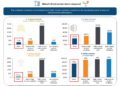
The absence of structured risk identification and management threatens the credibility of corporate environmental, social, and governance (ESG) commitments. EcoVadis’ latest Sustainability Ratings Index, compiled from nearly 200,000 scorecards across more than 100,000 companies rated globally between 2021 and 2025, reveals systemic measurement failures. Specifically, 73% of companies lack Scope 3 upstream emissions reporting, while 77% have no downstream tracking capability — despite Scope 3 emissions typically representing the majority of an organization’s total carbon footprint.
Less than 1% of suppliers provide granular, decision-grade sustainability data to buyer organizations. And only 2% of companies maintain an external grievance mechanism that workers deeper in multi-tier supply chains can actually use to report human rights violations — a critical gap in accountability infrastructure.
Verification Lags Behind Digital Ambition
While corporate buyers accelerate technology adoption, verification practices remain rudimentary. EcoVadis reports that 42% of companies still rely on unverified supplier questionnaires, just 46% require suppliers to sign a sustainability code of conduct, and only 20% conduct on-site audits — a figure unchanged over the past four years. This suggests remote assessment methods have not been meaningfully supplemented with direct verification.
Sylvain Guyoton, Chief Rating Officer at EcoVadis, observes:
“Organisations have built sophisticated tools to analyse supplier sustainability data. The suppliers either don’t have that data or can’t report it in a form the tools can use.” — Sylvain Guyoton, Chief Rating Officer at EcoVadis
AI Deployment Confronts Data Readiness Shortfall
Technology adoption is outpacing supplier capability. EcoVadis data shows 68% of corporate buyers have deployed AI tools in sustainable procurement programmes, with carbon data validation cited as a top application by 62% of those users. Yet the supplier base remains largely unequipped: 30% of suppliers provide no carbon data at all, and 26% supply only aggregated estimates — insufficient for AI-driven analysis or regulatory reporting.
This aligns with broader industry trends: a Boston Consulting Group survey found 44% of companies are deploying AI in supply chain management — a higher rate than in finance, HR, or procurement functions. But as EcoVadis emphasizes, digital transformation requires dual readiness: both buyers and suppliers must shift toward standardized, auditable, and machine-readable data practices.
Sustained Engagement Over Episodic Compliance
Closing the gap between procurement policy and verifiable outcomes demands long-term investment in supplier capacity. Sylvain Guyoton stresses:
“Better software does not close that gap. The measurement problem lives in the supply base itself, and closing it requires sustained engagement over time: structured assessment, scored performance and documented follow-through.” — Sylvain Guyoton, Chief Rating Officer at EcoVadis
He adds:
“Companies willing to treat supplier engagement as an ongoing process, rather than a one-time compliance exercise, close the distance between what they intend and what they can actually verify.” — Sylvain Guyoton, Chief Rating Officer at EcoVadis
The data confirms that transparency remains a structural challenge — not a technical one. Without documented processes and consistent measurement protocols, corporate sustainability commitments risk remaining theoretical rather than operational, especially where environmental and social impacts physically occur: deep within tier-two and tier-three supplier networks.
Source: sustainabilitymag.com
Compiled from international media by the SCI.AI editorial team.