Explore

  • Trending
  • Latest
  • Tools
  • Browse
  • Subscription Feed

Logistics

  • Ocean
  • Air Cargo
  • Road & Rail
  • Warehousing
  • Last Mile

Regions

  • Southeast Asia
  • North America
  • Middle East
  • Europe
  • South Asia
  • Latin America
  • Africa
  • Japan & Korea
SCI.AI
  • Supply Chain
    • Strategy & Planning
    • Logistics & Transport
    • Manufacturing
    • Inventory & Fulfillment
  • Procurement
    • Strategic Sourcing
    • Supplier Management
    • Supply Chain Finance
  • Technology
    • AI & Automation
    • Robotics
    • Digital Platforms
  • Risk & Resilience
  • Sustainability
  • Research
  • English
    • Chinese
    • English
No Result
View All Result
  • Login
  • Register
SCI.AI
No Result
View All Result
Home Supply Chain Logistics & Transport

Africa’s Port Resilience Surge: 2026 Hormuz Closure Tests Supply Chains

2026/03/27
in Logistics & Transport, Supply Chain
0 0
Africa’s Port Resilience Surge: 2026 Hormuz Closure Tests Supply Chains

According to www.inonafrica.com, the closure of the Strait of Hormuz on 2 March 2026 triggered an immediate rerouting of global container and oil-cargo vessels around Africa — validating a strategic pivot in African port infrastructure investment from pure capacity expansion to strategic resilience.

Africa’s Infrastructure Pivot: From Growth to Resilience

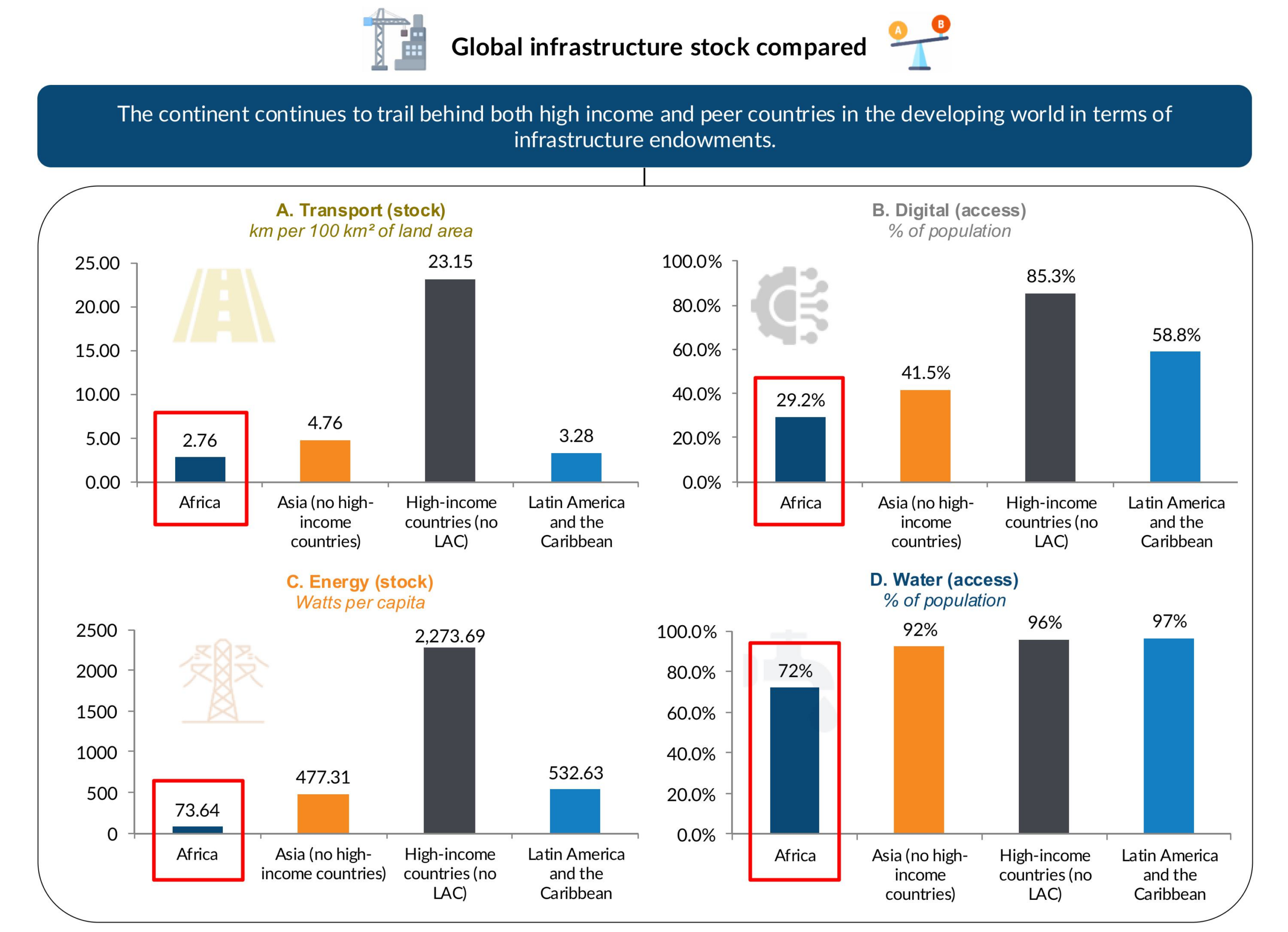
Historically focused on expanding transport networks to move raw materials to export terminals, African nations are now reconfiguring ports, airports, rail systems, and logistics platforms to withstand environmental stressors and geopolitical disruptions. This shift is evident across conflict-affected states like the Democratic Republic of Congo and Libya — where infrastructure upgrades continued despite instability. As noted by the Organisation for Economic Co-operation and Development (OECD), sustained annual investments of US$155 billion through 2040 could elevate Africa’s transportation infrastructure to parity with much of Asia, Europe, and North America.

Economic & Structural Drivers

Such investment is tightly linked to broader economic goals: achieving industrialisation by enabling local value-addition — for example, processing rare earth elements into EV batteries or refining crude oil domestically — rather than exporting unprocessed commodities. The OECD estimates that this infrastructure modernisation could lift average annual GDP growth to 4.5% by 2040, doubling current growth trajectories and advancing the African Union’s Agenda 2063 target of 7% annual GDP growth.

Transportation dominates Africa’s infrastructure spending needs, accounting for the largest share of required investment. According to OECD data:

  • Roads: 32% of total transportation investment
  • Railways: 24%
  • Maintenance of existing infrastructure: 42% of transportation investment

Airports are also expanding cargo-handling capacity, while river ports and inland logistics systems — including warehousing and multimodal terminals — receive growing attention. Crucially, Afrobarometer’s 2023 survey confirms that poor infrastructure remains the most urgent issue Africans want governments to address, granting policymakers strong public mandate to proceed.

Geopolitical Catalysts: Hormuz and Suez Disruptions

The 2026 Hormuz closure followed earlier strain on Africa’s ports from the October 2023 de facto closure of the Suez Canal due to militant activity in the Gulf of Aden and Red Sea. In both cases, major carriers — including Maersk, CMA CGM, and Hapag-Lloyd — diverted vessels to the Cape of Good Hope route around South Africa. Oil tankers especially shifted southward to ensure uninterrupted delivery to international markets.

While the detour added two weeks of sailing time and contributed to higher global oil prices, it exposed Africa’s latent capacity — and its urgent need for adaptable infrastructure. As the article observes:

“No matter how modern and sizeable an African seaport becomes after investment in upgrades, the facility cannot be utilised if the shipping routes leading to and from it are insecure. Ships will sail to other ports if necessary.”

Strategic Adaptations Underway

To mitigate such vulnerabilities, African governments are diversifying infrastructure partnerships — moving away from overreliance on single foreign suppliers (e.g., Germany for rail hardware or China for construction) toward greater use of public-private partnerships (PPPs). Regional integration has accelerated: national road and rail networks now interlock as components of continental corridors, including the African highway system. This integration supports implementation of the African Continental Free Trade Agreement (AfCFTA) and expands routing redundancy — offering shippers viable alternatives when storms or conflict disrupt key corridors.

Source: www.inonafrica.com

Compiled from international media by the SCI.AI editorial team.

More on This Topic

  • Logistics Reshapes North America’s Trade Map: 3 Key Shifts (Mar 28, 2026)
  • LATAM Infrastructure Gap Needs 3–5% of GDP Annually (Mar 28, 2026)
  • Trailer Storage Demand Up 37% Amid Tariffs, Nearshoring (Mar 28, 2026)
  • Mobile Storage Trailers Surge: 37K Units Deployed Amid Tariffs, Nearshoring (Mar 28, 2026)
  • Agentic AI in Supply Chains: 2026 Resilience Blueprint (Mar 28, 2026)

Related Posts

Logistics Reshapes North America’s Trade Map: 3 Key Shifts
Geopolitics

Logistics Reshapes North America’s Trade Map: 3 Key Shifts

March 28, 2026
0
LATAM Infrastructure Gap Needs 3–5% of GDP Annually
Supply Chain

LATAM Infrastructure Gap Needs 3–5% of GDP Annually

March 28, 2026
4
Trailer Storage Demand Up 37% Amid Tariffs, Nearshoring
Supply Chain

Trailer Storage Demand Up 37% Amid Tariffs, Nearshoring

March 28, 2026
1
Mobile Storage Trailers Surge: 37K Units Deployed Amid Tariffs, Nearshoring
Logistics & Transport

Mobile Storage Trailers Surge: 37K Units Deployed Amid Tariffs, Nearshoring

March 28, 2026
1
Agentic AI in Supply Chains: 2026 Resilience Blueprint
Manufacturing

Agentic AI in Supply Chains: 2026 Resilience Blueprint

March 28, 2026
1
Iran War Costs Hapag-Lloyd $40-50 Million Weekly: CEO Reveals Severe Impact on Global Maritime Logistics
Logistics & Transport

Iran War Costs Hapag-Lloyd $40-50 Million Weekly: CEO Reveals Severe Impact on Global Maritime Logistics

March 28, 2026
1

Leave a Reply Cancel reply

Your email address will not be published. Required fields are marked *

Recommended

The Inland Shift: How Rising Port Proximity Costs Are Reshaping U.S. Industrial Real Estate and Supply Chain Architecture

The Inland Shift: How Rising Port Proximity Costs Are Reshaping U.S. Industrial Real Estate and Supply Chain Architecture

6 Views
March 23, 2026
IMO 2026 Regulations Take Effect: Thailand Hazardous Materials Logistics Face Compliance Upgrade as Southeast Asia Chemical Transport Management Reaches Critical Turning Point

IMO 2026 Regulations Take Effect: Thailand Hazardous Materials Logistics Face Compliance Upgrade as Southeast Asia Chemical Transport Management Reaches Critical Turning Point

19 Views
February 27, 2026
The Complexities and Speed of Supply Chains in the Era of Nearshoring

The Complexities and Speed of Supply Chains in the Era of Nearshoring

4 Views
March 17, 2026
泰国物流行业吸引了近一半的八月份外商直接投资

Thai Logistics Sector Attracts Nearly Half of August’s FDI

13 Views
February 15, 2026
Show More

SCI.AI

Global Supply Chain Intelligence. Delivering real-time news, analysis, and insights for supply chain professionals worldwide.

Categories

  • Supply Chain Management
  • Procurement
  • Technology


  • Risk & Resilience
  • Sustainability
  • Research

© 2026 SCI.AI. All rights reserved.

Powered by SCI.AI Intelligence Platform

Welcome Back!

Sign In with Facebook
Sign In with Google
Sign In with Linked In
OR

Login to your account below

Forgotten Password? Sign Up

Create New Account!

Sign Up with Facebook
Sign Up with Google
Sign Up with Linked In
OR

Fill the forms below to register

All fields are required. Log In

Retrieve your password

Please enter your username or email address to reset your password.

Log In

Add New Playlist

No Result
View All Result
  • Supply Chain
    • Strategy & Planning
    • Logistics & Transport
    • Manufacturing
    • Inventory & Fulfillment
  • Procurement
    • Strategic Sourcing
    • Supplier Management
    • Supply Chain Finance
  • Technology
    • AI & Automation
    • Robotics
    • Digital Platforms
  • Risk & Resilience
  • Sustainability
  • Research
  • English
    • Chinese
    • English
  • Login
  • Sign Up

© 2026 SCI.AI