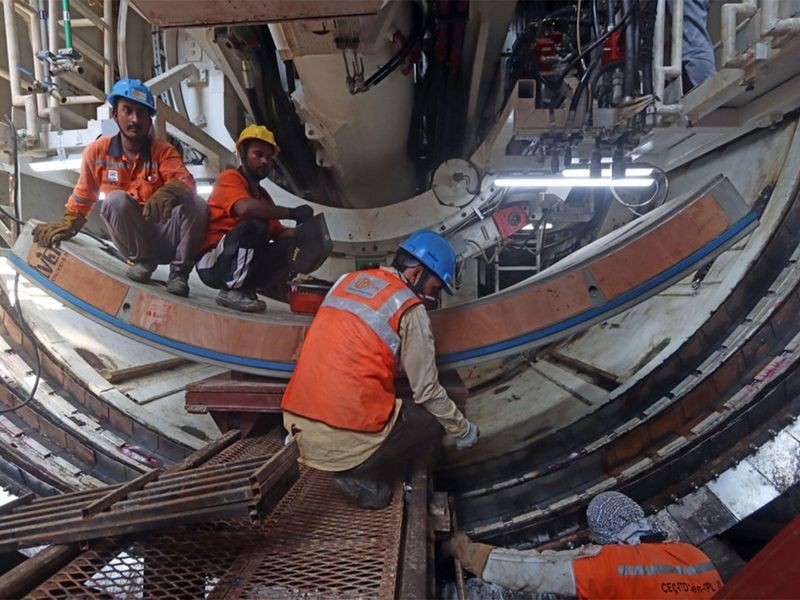
According to www.tribuneindia.com, India’s manufacturing growth increased from 3.44% during the pre-pandemic period (2016–2019) to 4.15% between 2022 and 2025, lifting the country nearly two percentage points above the global manufacturing growth benchmark.
Global supply chain realignment drives India’s ascent
A new study by ASSOCHAM, titled “Global manufacturing undergoing strategic realignment: India emerges as a key beneficiary of supply chain diversification”, identifies India as one of the world’s “emerging manufacturing leaders.” The analysis covers the world’s 10 largest manufacturing economies, which collectively account for nearly 65% of global manufacturing output. Before the pandemic, only China, Mexico, and Russia recorded manufacturing growth above the global average; in the post-pandemic period, India joined the United States, France, Germany, Italy, and the United Kingdom in surpassing that benchmark.
Structural enablers behind sustained growth
The report attributes India’s improved performance to multiple structural strengths, including expanding domestic demand, robust infrastructure development, and improved logistics networks. It highlights investor confidence driven by the China+1 strategy — under which multinational firms diversify production beyond China — as a critical catalyst. Proactive government initiatives also played a decisive role: the Production Linked Incentive (PLI) scheme, industrial corridor development, and the PM Gati Shakti national master plan for multimodal connectivity are all cited as key policy levers accelerating manufacturing capacity.
Resilience over efficiency: a strategic pivot
According to Nirmal K Minda, President of ASSOCHAM, global companies have shifted focus from pure cost-efficiency toward resilience and geographic diversification. “Companies were no longer focused solely on efficiency, but were placing equal emphasis on resilience and supply chain diversification,” he said. He added that India’s gains reflect the cumulative impact of sustained reforms and rising investor confidence. “The opportunity before us is significant, but the next phase must focus on implementation, scale and creating globally competitive manufacturing ecosystems that can make India a preferred partner in global value chains,” Nirmal K Minda stated.
From below-average to above-benchmark performer
The study underscores a pivotal inflection point: India moved from registering manufacturing growth below the global average in the pre-pandemic era to achieving growth nearly two percentage points above it in the 2022–2025 window. This shift coincides with intensified global adoption of nearshoring and friend-shoring strategies — efforts to shorten supply lines and align sourcing with trusted geopolitical partners. While China remains the world’s largest manufacturing economy, the report notes that new manufacturing investments are increasingly distributed across multiple jurisdictions, with India capturing disproportionate share due to its policy coherence, scale of domestic market, and improving ease of doing business.
Source: tribuneindia.com
Compiled from international media by the SCI.AI editorial team.