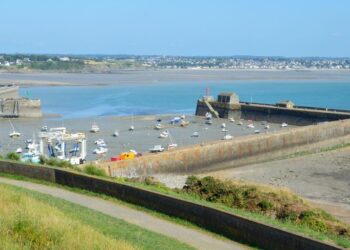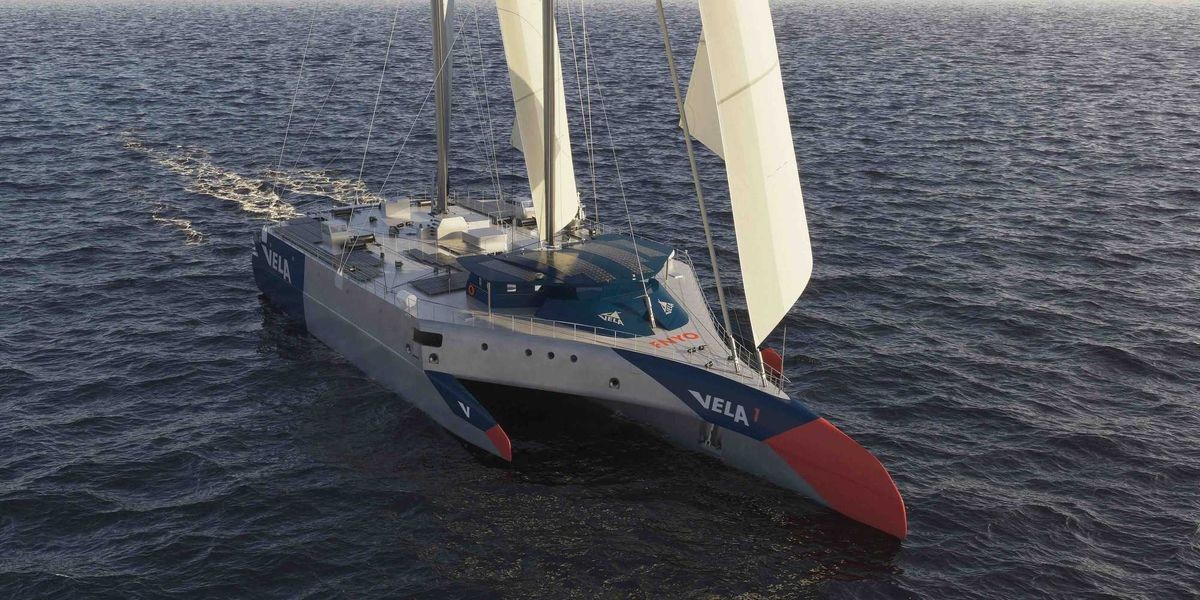
According to www.dcvelocity.com, DHL Global Forwarding France has partnered with French wind-powered cargo operator VELA to launch a transatlantic less-than-containerload (LCL) shipping service using sail-equipped trimarans — carrying 600 EU pallets per voyage between secondary ports including Caen-Ouistreham in France and New Haven in the United States.
Wind-Powered Transatlantic LCL Solution
The initiative marks a concrete step toward decarbonizing ocean freight for time-sensitive, high-value cargo. Unlike conventional container vessels reliant on heavy fuel oil, VELA’s trimarans use wind as the primary propulsion source at sea — significantly reducing greenhouse gas emissions without sacrificing service reliability. The service is explicitly designed for industries where carbon footprint transparency and product integrity are critical: pharmaceuticals, luxury goods, cosmetics, aerospace components, and wine & spirits. Each vessel operates on a direct route between strategically selected secondary ports, avoiding congestion at major hubs while maintaining end-to-end traceability and security standards equivalent to DHL’s existing ocean offerings.
Strategic Partnership Structure
DHL Global Forwarding France contributes its full suite of logistics capabilities — including pre-carriage coordination, customs clearance, warehousing, and on-carriage delivery — while VELA provides the proprietary wind-powered maritime platform. This division of labor enables seamless integration into existing supply chains: shippers retain standard documentation, booking workflows, and service-level agreements. As Michaël Fernandez-Ferri, Managing Director of VELA, stated:
“By partnering with DHL Global Forwarding France, we are making wind-powered freight for transatlantic shipping available to a broader range of customers. This collaboration aims to provide a lower-emission alternative that is designed to integrate into existing supply chains with standard logistics processes, while maintaining consistent service standards.”
Target Industries and Operational Scope
The service targets five vertically aligned sectors: pharmaceuticals requiring temperature-controlled handling and strict chain-of-custody protocols; high-value and luxury goods demanding premium security and minimal transit variability; cosmetics with stringent regulatory compliance needs across EU and U.S. markets; aerospace components subject to exacting certification and documentation requirements; and wine & spirits, where provenance tracking and gentle handling are essential. All shipments are palletized LCL consignments — not full-container loads — allowing smaller-volume shippers to access low-emission ocean transport without consolidating with unrelated cargo. According to the report, the first commercial voyages began in June 2026, with biweekly sailings planned between Europe and the U.S. on a year-round schedule.
Industry Context and Precedent
This move follows growing pressure from both regulators and corporate procurement teams to reduce Scope 3 emissions — particularly in ocean freight, which accounts for an estimated 2.5% of global CO₂ emissions. While Maersk has invested heavily in green methanol-powered vessels and C.H. Robinson launched its “Eco-Ship” program in 2024, DHL’s collaboration with VELA represents the first commercially scaled application of wind propulsion for dedicated LCL freight on the transatlantic corridor. Notably, VELA’s trimarans do not rely on auxiliary engines for propulsion during open-sea legs — distinguishing them from hybrid vessels that use sails only as supplementary power. The project aligns with DHL Group’s broader 2030 climate target to achieve net-zero emissions across all operations and value chain activities.
Source: DC Velocity
Compiled from international media by the SCI.AI editorial team.