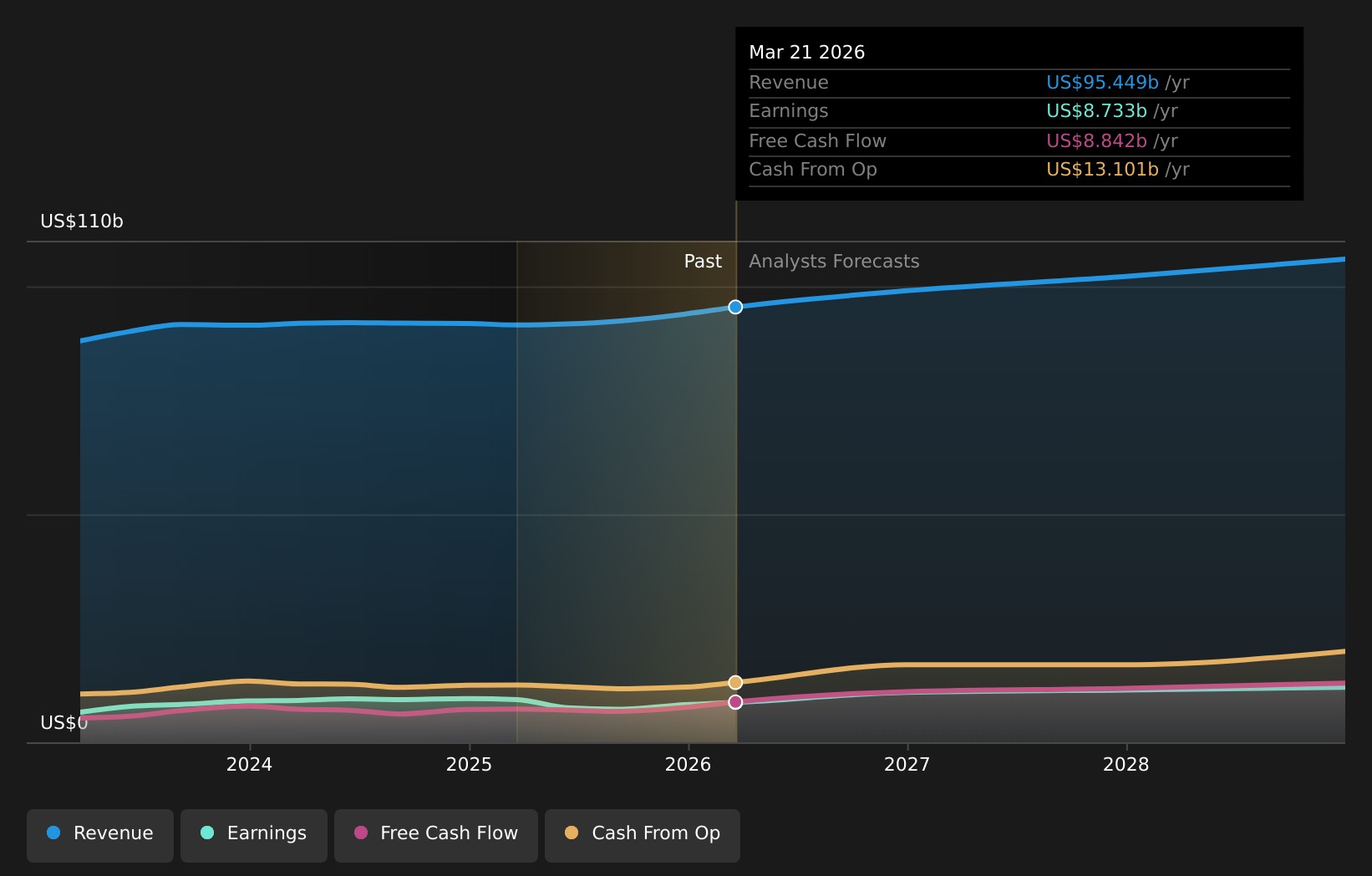
According to simplywall.st, PepsiCo Foundation — the philanthropic arm of NasdaqGS:PEP — has launched the Future Harvest program in partnership with EIT Food. The initiative targets around 900 young farmers across key European countries, aiming to strengthen intergenerational continuity in agriculture amid Europe’s rapidly aging farming population.
Linking ESG Action to Core Supply Chain Resilience
Future Harvest directly connects PepsiCo’s environmental, social, and governance (ESG) commitments to operational realities: the company relies on long-term, stable access to staple crops including grains and potatoes for its beverage and snack portfolio. With over 45.3% below its estimated fair value per Simply Wall St’s May 2026 valuation model, PepsiCo faces investor scrutiny not only on financial metrics but also on how sustainability initiatives mitigate tangible business risks. The program addresses a structural demographic challenge — the median age of EU farmers is 57.6 years (Eurostat 2023 data), and only 11.2% of EU farm managers are under 35 — making youth engagement critical for future sourcing stability.
Investor Implications and Financial Context
For shareholders, Future Harvest represents a strategic alignment of social impact and supply chain risk management — rather than treating ESG as a standalone reporting exercise. As of May 29, 2026, PepsiCo’s stock traded at US$146.29, approximately 14% below the US$171.05 analyst target price. However, short-term sentiment faced headwinds: the stock declined 5.8% over the prior 30 days. Investors are advised to monitor program-specific disclosures, including participation rates, on-farm outcomes (e.g., yield improvements or sustainable practice adoption), and any explicit references to sourcing stability in Europe within PepsiCo’s quarterly reports or sustainability updates.
Broader Industry Context and Practitioner Relevance
This initiative follows similar agricultural capacity-building efforts by food multinationals. Nestlé’s Nestlé Cocoa Plan trained over 300,000 farmers globally between 2009–2023; Unilever’s Sustainable Agriculture Code covers 100% of its direct agricultural suppliers as of 2024. For supply chain professionals, Future Harvest signals growing corporate investment in upstream resilience — particularly where climate volatility, labor shortages, and regulatory shifts (e.g., the EU’s EU Soil Strategy) compound procurement uncertainty. Capital allocation for such programs remains a watchpoint: PepsiCo reported total debt of $83.2 billion as of its most recent fiscal year-end (2025), prompting investors to assess whether Future Harvest requires material incremental funding or leverages existing ESG infrastructure.
Source: simplywall.st
Compiled from international media by the SCI.AI editorial team.