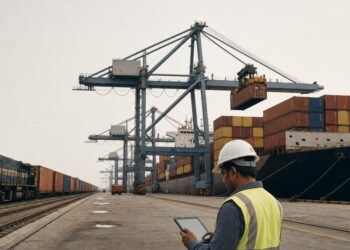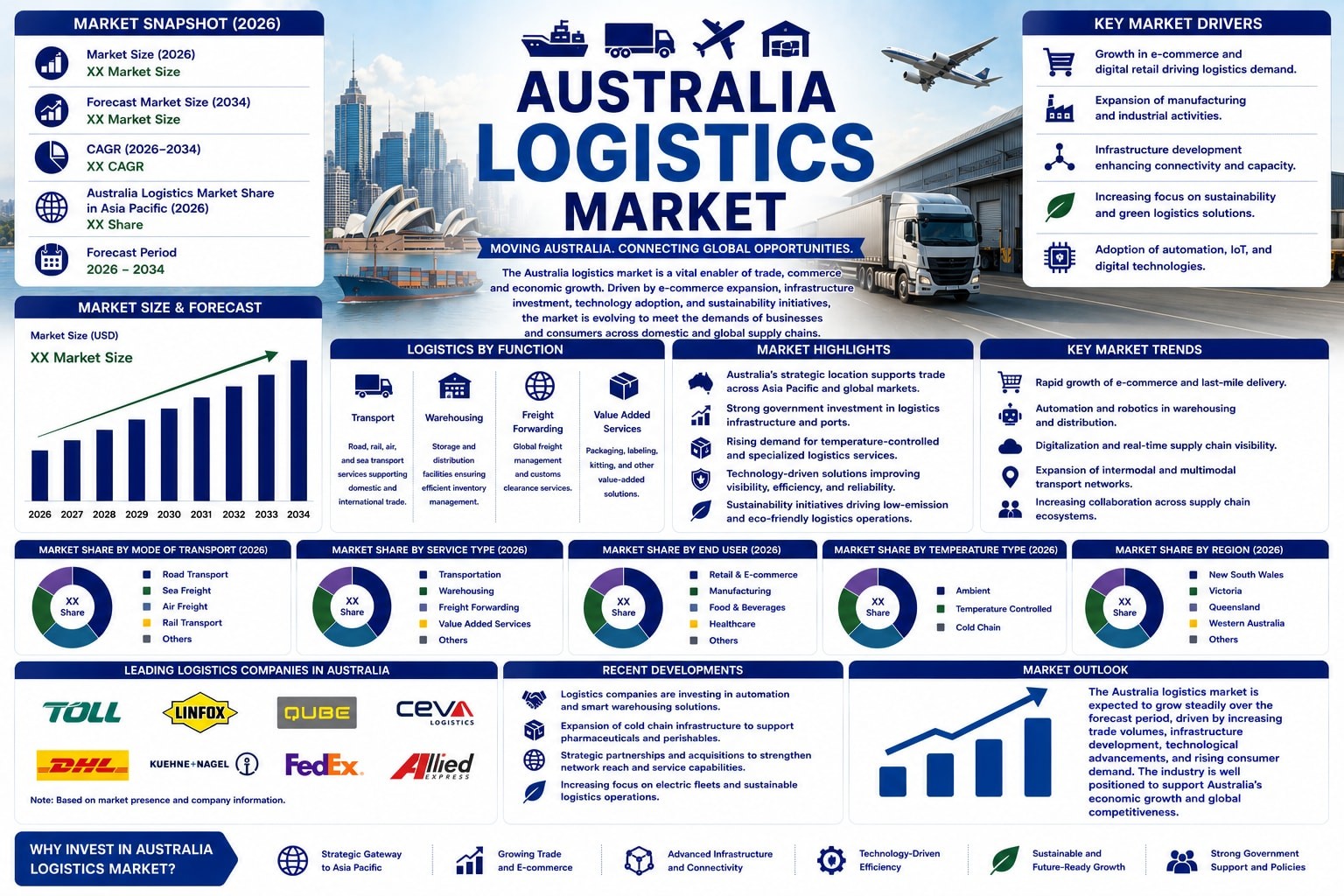
According to vocal.media, Australia’s logistics industry is undergoing a significant transformation driven by e-commerce expansion, infrastructure modernization, and technology adoption. The market reached a value of USD 163.6 billion in 2025 and is projected to grow to USD 223.4 billion by 2034, exhibiting a compound annual growth rate (CAGR) of 3.35% during the period 2026–2034, as reported by IMARC Group.
Market drivers and key segments
The rapid expansion of Australia’s e-commerce sector is a primary growth driver, with consumers demanding fast, flexible, and reliable delivery services. This has forced retailers and logistics providers to upgrade fulfillment capabilities through warehousing automation, real-time shipment tracking, and advanced inventory systems. According to the report, infrastructure investment is also strengthening the logistics ecosystem, with ongoing modernization of roads, rail networks, ports, and freight corridors to improve transportation efficiency and reduce bottlenecks.
Technology adoption is reshaping operations through artificial intelligence, cloud-based fleet management, predictive analytics, and Internet of Things (IoT) technologies. These tools help companies optimize route planning, monitor cargo conditions, and improve operational efficiency while lowering costs. IMARC categorizes the market by model type (1PL, 2PL, 3PL, 4PL), transportation mode (roadways, seaways, railways, airways), and end-use industries including manufacturing, consumer goods, retail, food and beverages, IT hardware, healthcare, chemicals, construction, automotive, telecommunications, oil and gas, among others.
Growth catalysts and sustainability trends
International trade growth remains an important catalyst, with Australia’s strong export activity across agriculture, mining, manufacturing, and consumer goods generating demand for freight forwarding and supply chain management services. The rise of third-party logistics (3PL) services is further driving market expansion as businesses outsource warehousing, transportation, and distribution to specialized providers to reduce costs and improve flexibility.
Sustainability initiatives are influencing market dynamics, with logistics providers increasingly investing in fuel-efficient transportation fleets, electric delivery vehicles, and environmentally responsible warehousing systems. The report notes growing pressure on businesses to reduce emissions and improve supply chain sustainability, creating opportunities for green logistics innovation.
Key opportunities identified
- E-commerce fulfillment expansion — Growth in online shopping creates opportunities for fulfillment centers, last-mile delivery providers, and automated warehousing solutions.
- Smart warehousing technologies — AI-powered inventory systems, robotics, and automated storage solutions can improve productivity and reduce labor costs.
- Cold chain logistics development — Australia’s food, pharmaceutical, and healthcare industries are increasing demand for temperature-controlled transportation and storage.
- Sustainable transportation solutions — Electric delivery vehicles, alternative fuels, and carbon-efficient freight systems present opportunities for meeting environmental targets.
- Third-party logistics (3PL) services — As outsourcing of supply chain functions continues, 3PL providers can expand integrated services including inventory management, transportation, and order fulfillment.
- Regional infrastructure growth — Government-backed investments in freight corridors, rail connectivity, and port modernization are expected to unlock logistics opportunities in underserved areas.
- Digital supply chain platforms — Cloud-based logistics management platforms, predictive analytics tools, and real-time shipment visibility solutions are increasingly valuable for supply chain transparency.
Recent developments in 2025
The report highlights several key events from 2025. In February 2025, the Australian government announced additional infrastructure funding focused on freight rail modernization and regional supply chain efficiency improvements, aiming to strengthen national transportation connectivity while reducing congestion across key logistics corridors. Industry analysts projected the investment would support long-term freight capacity growth and improve delivery efficiency nationwide.
In June 2025, major logistics operators expanded automated warehousing and fulfillment capabilities across Sydney and Melbourne to meet rising e-commerce demand. Companies invested heavily in robotics, AI-driven inventory management, and high-speed distribution systems to improve delivery turnaround times. Industry reports indicated that warehouse automation adoption accelerated significantly during the year.
In September 2025, Australia’s logistics sector recorded continued growth in digital freight management adoption as businesses prioritized real-time supply chain visibility and operational resilience. Transportation firms increasingly deployed IoT-enabled tracking systems and predictive route optimization technologies. Market participants viewed these developments as a major step toward creating more agile and data-driven logistics networks.
Source: vocal.media
Compiled from international media by the SCI.AI editorial team.