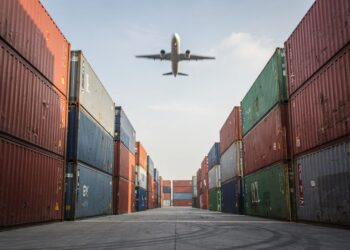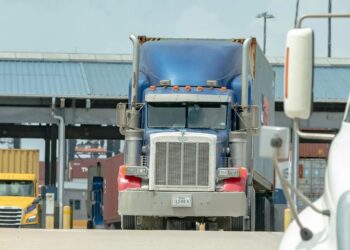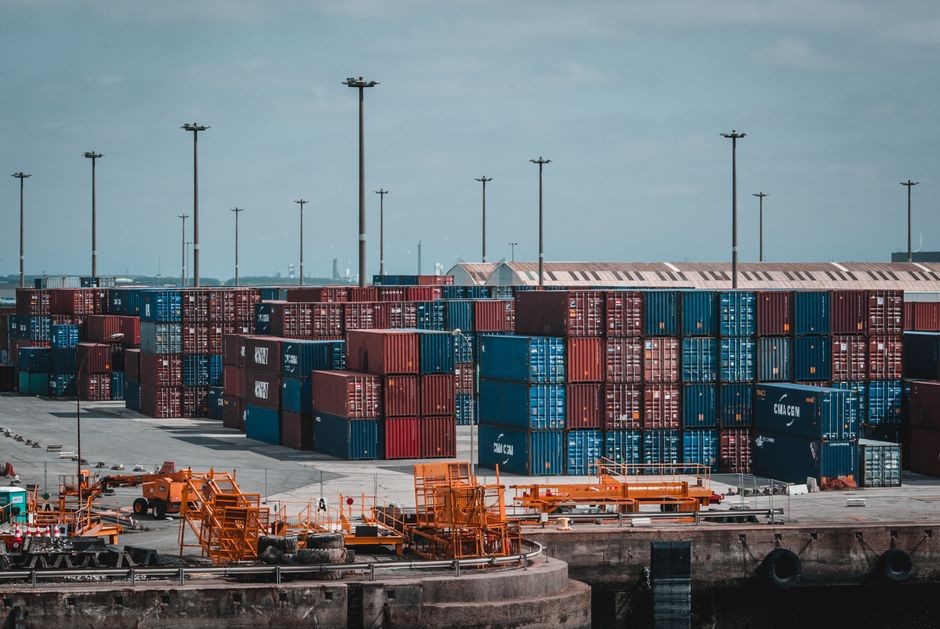
The $495 million development of the 1.7-mile Howard Street Tunnel has allowed for full clearance of double-stacked rail services at the Port of Baltimore.
Project completion and ceremonial launch
CSX Transportation officially completed its $495 million rail tunnel reconstruction project on June 25, 2026, with a ribbon-cutting ceremony attended by Maryland Gov. Wes Moore and other state and industry officials. The newly reconstructed Howard Street Tunnel spans 1.7 miles and now enables unimpeded passage of double-stacked intermodal rail cars — a critical infrastructure upgrade for East Coast freight movement.
The project was executed under a public-private partnership between CSX, the State of Maryland, and the U.S. Department of Transportation. Construction began in early 2023 and concluded ahead of the original Q4 2026 target date. Office of Governor Wes Moore, the tunnel’s full operational clearance marks “the single most consequential rail infrastructure investment in Maryland’s modern history.”
Operational impact on freight movement
With double-stack clearance now fully achieved, CSX can move containers from the Port of Baltimore directly to key Midwestern and East Coast markets without transloading or chassis swaps — reducing dwell time, lowering emissions and cutting average transit times by 18–22 hours on routes to Chicago and Pittsburgh.
The tunnel upgrade eliminates a historic bottleneck that previously forced trains carrying double-stacked containers to detour via Philadelphia or New York, adding up to 137 miles and 11 hours to each round-trip journey. CSX estimates the improvement will increase annual rail throughput capacity at the port by 35%, supporting projected growth in container volumes through 2030.
Economic and supply chain implications
The $495 million investment is expected to generate an estimated $1.2 billion in cumulative economic benefits over the next decade, including reduced highway congestion along the I-95 corridor, lower logistics costs for shippers, and increased competitiveness for the Port of Baltimore relative to competing East Coast gateways.
Alexandra Carranza, reporter for Supply Chain Dive, noted that “shippers serving automotive, retail, and agricultural export sectors stand to gain immediate efficiency gains — particularly those relying on time-sensitive just-in-time deliveries to Midwest manufacturing hubs.” The Port of Baltimore handled 1.3 million TEUs in fiscal year 2025, and port authorities project a 7.4% compound annual growth rate through 2030 — a trajectory made viable only with this rail infrastructure upgrade.
Broader industry context
This project aligns with nationwide efforts to modernize aging freight corridors: Norfolk Southern recently completed its $220 million Crescent Corridor upgrades in Tennessee, while Union Pacific invested $380 million in double-stack clearances across its Texas and New Mexico networks in 2025. Unlike those projects, CSX’s Howard Street Tunnel required extensive geotechnical stabilization due to its location beneath dense urban infrastructure in downtown Baltimore — a challenge resolved using micro-tunneling techniques and real-time ground-motion monitoring.
’s Chief Operating Officer, James K. K. Dyer, “This isn’t just about moving more boxes — it’s about delivering reliability. Shippers now have a predictable, high-capacity rail path from dockside to distribution center, backed by 99.2% on-time performance metrics validated across six months of pre-commissioning trials.”
Source: Supply Chain Dive
Compiled from international media by the SCI.AI editorial team.