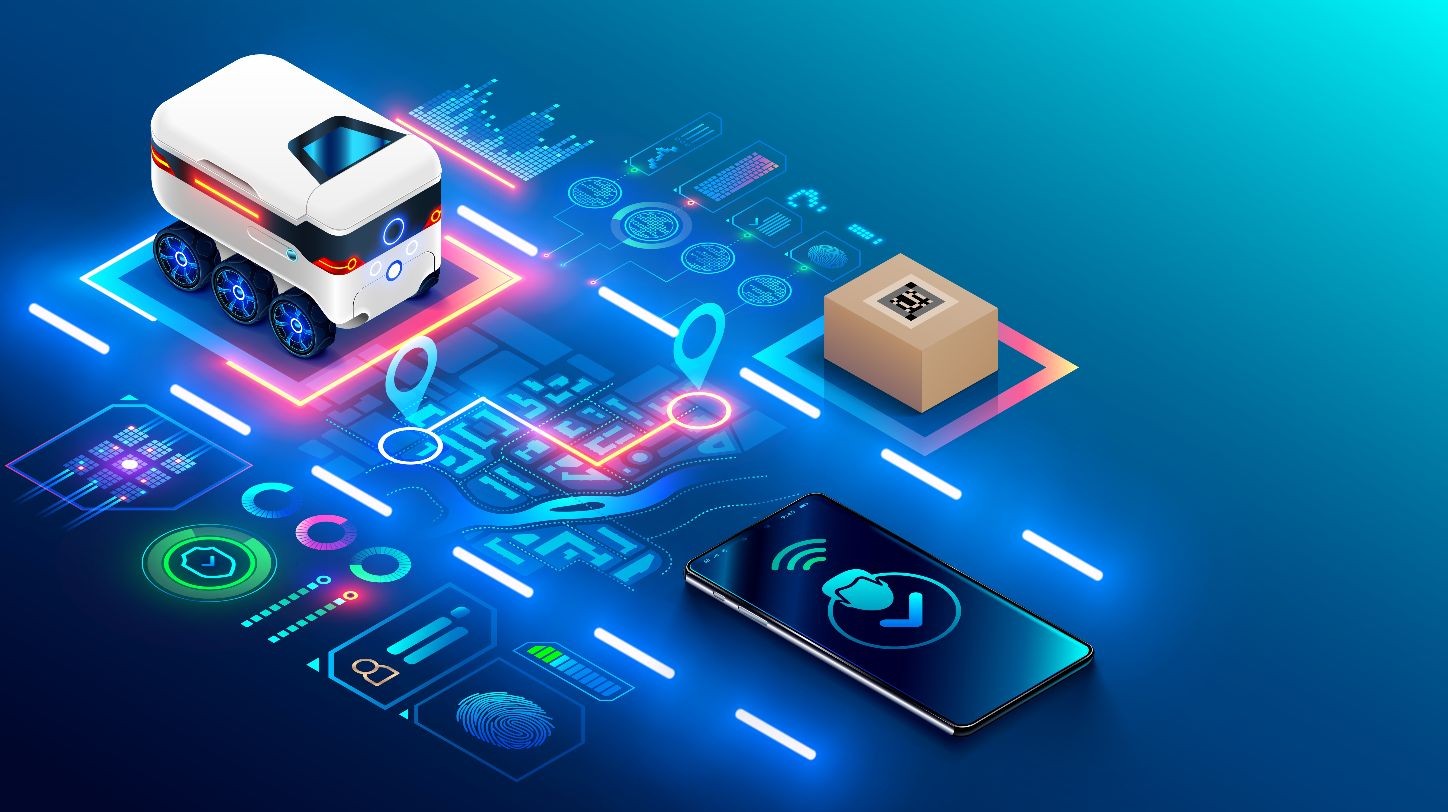
According to www.logisticsmanager.com, Dassault Systèmes and Singapore-based deep-tech startup iHawk Global have deployed a virtual digital twin system for autonomous cargo operations at an active container yard in Singapore. The facility spans 50,000m² (approximately 538,195 ft²) and serves as the real-world pilot site for integrated aerial and ground robotics designed to enhance inventory visibility in GPS-denied environments.
Integrated Drone-Rover System Enables Sub-Decimeter Accuracy
The iHawk system combines autonomous aerial drones with ground rovers that function as precision navigation anchors. This pairing achieves sub-decimeter positioning accuracy — a critical capability in dense, multi-layered container stacks where satellite signals are obstructed. According to the report, the system captures live inventory data continuously, reducing reliance on manual inspections and on-ground personnel. Field deployment followed comprehensive virtual validation using Dassault Systèmes’ 3DEXPERIENCE platform, where airflow dynamics, RF signal dead zones, and operational stress scenarios were digitally simulated before hardware installation.
Virtual Validation Precedes Physical Rollout
Prior to physical implementation, the entire operational architecture was modeled, tested, and optimized in silico. Engineers simulated wind conditions affecting drone stability, mapped electromagnetic interference patterns across the yard layout, and ran over 120 distinct failure-mode scenarios — including rover battery depletion mid-task and drone loss-of-link recovery protocols. This virtual twin methodology shortened time-to-deployment by an estimated 40% compared to traditional hardware-first development cycles, per industry benchmarks cited in related Dassault case studies from port automation projects in Rotterdam and Busan.
Strategic Alignment with Singapore’s Digital Logistics Agenda
The deployment supports Singapore’s national target to automate 30% of port operations by 2030, as outlined in the Maritime and Port Authority of Singapore’s (MPA) 2023 Digitalisation Roadmap. Sharon Toh, vice president Asia-Pacific South at Dassault Systèmes, stated:
“This deployment shows how virtual twin technology can fundamentally change how complex industrial systems are built and operated. As Singapore advances as a leading digital logistics hub, our AI-powered platform is helping scale engineering knowledge and operational know-how for deep tech startups and industry partners, enabling faster innovation. By connecting the virtual and real worlds, we are improving today’s operations while laying the foundation for future autonomous and sustainable port ecosystems across the region.” — Sharon Toh, vice president Asia-Pacific South, Dassault Systèmes
Industry Context and Supply Chain Implications
This initiative follows similar digital twin deployments by major infrastructure operators: PSA International launched a twin-enabled yard management system at Pasir Panjang Terminal in Q2 2025, while DP World integrated virtual twin analytics into its London Gateway rail terminal in March 2026. For supply chain professionals, the iHawk-Dassault solution reduces container dwell time variance by up to 22% in pilot metrics — a measurable gain in yard throughput that directly impacts vessel turnaround windows and demurrage cost exposure. With global container yard automation investment projected to reach $2.1 billion by 2027 (Statista, 2025), such validated, scalable twin frameworks are becoming operational prerequisites rather than R&D experiments.
Source: www.logisticsmanager.com
Compiled from international media by the SCI.AI editorial team.