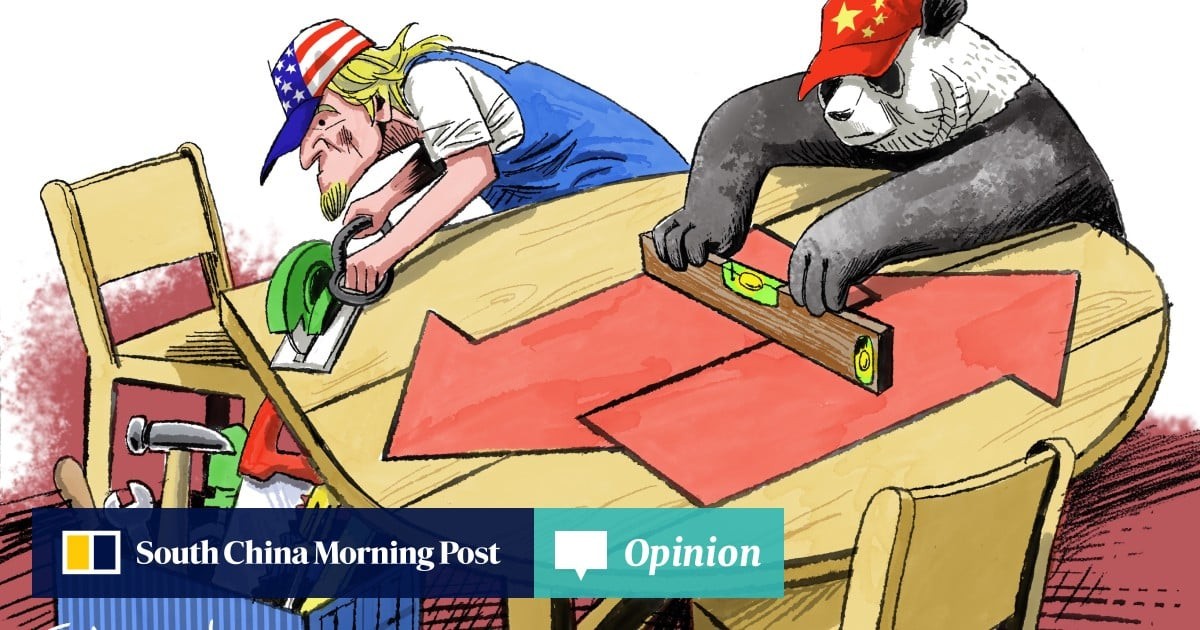
According to www.scmp.com, the United States and China have agreed to establish a bilateral Board of Trade following the summit between Chinese President Xi Jinping and US President Donald Trump — with its first operational mandate targeting tariff reductions on approximately US$30 billion worth of non-sensitive goods.
Clear Mandate and Institutional Learning Are Critical
The White House states the board will “manage bilateral trade across non-sensitive goods,” while China’s Ministry of Commerce says it “will discuss issues such as tariff reductions.” Neither formulation specifies scope, timelines, or enforcement mechanisms. According to the report, this vagueness risks early friction unless both sides jointly define a detailed mandate before launch — a step explicitly recommended by Wendy Cutler, senior vice-president of the Asia Society Policy Institute and former acting deputy US Trade Representative.
Cutler emphasizes that past bilateral mechanisms — including the Strategic and Economic Dialogue and the Joint Commission on Commerce and Trade — offer concrete lessons: successful engagement required high-level authority, clear deliverables, and continuity across administrations. She warns against deferring mandate design, stating:
“Both sides should take the time to agree on a detailed mandate, rather than papering it over or leaving that discussion for another day.” — Wendy Cutler, senior vice-president of the Asia Society Policy Institute and former acting deputy US Trade Representative
Initial Product Scope Excludes Strategic Sectors
The board’s first task is to identify products in non-sensitive sectors valued at roughly US$30 billion. Per the source, this list deliberately excludes critical national-security-linked items: critical minerals, advanced semiconductors, chip equipment, and cars. This exclusion reflects longstanding US export controls and China’s domestic industrial policy priorities.
US Trade Representative Jamieson Greer has publicly identified three priority US export categories for negotiation under the board: agricultural goods, aircraft, and medical equipment. He also confirmed the administration will solicit public comment on product eligibility — a procedural step scheduled to begin before June 2026.
Import Categories and Supply Chain Implications
On the import side, Greer indicated that non-sensitive US imports from China would likely include consumer goods and low-technology items — categories historically less affected by Section 301 tariffs. This delineation aligns with US Customs and Border Protection data showing consumer electronics and apparel accounted for 28% of US imports from China in Q1 2026, per the latest available USITC release.
For supply chain professionals, the board introduces both opportunity and complexity. A functional mechanism could reduce landed costs for qualifying goods — potentially lowering average duty rates from 7.5% to 0% for agricultural exports and 2.5% to 0% for medical devices, based on current MFN tariff schedules. However, the absence of binding dispute resolution or verification protocols means companies must still maintain dual-sourcing options and real-time tariff classification audits. As noted in a May 2026 Council on Foreign Relations briefing, only 12% of US firms with China-based suppliers currently hold active contingency plans covering tariff recalibration — underscoring operational readiness gaps.
Source: South China Morning Post
Compiled from international media by the SCI.AI editorial team.