Dollar Tree Expands Network to Enhance Supply Chain Resilience
According to news.google.com, Dollar Tree is expanding its distribution infrastructure by launching five new distribution centers across the United States. This expansion is part of a broader strategy to improve supply chain resilience amid rising volatility in logistics and inventory management.
New Hubs to Increase Capacity and Reduce Delivery Times
The five newly announced distribution centers are located in strategic regions: Texas, Ohio, Georgia, Pennsylvania, and California. These locations were selected based on proximity to major retail markets and existing transportation corridors. According to the report, the expansion will increase Dollar Tree’s total distribution capacity by 28%, supporting its goal to reduce average delivery times from 5.2 days to 3.8 days for regional stores.
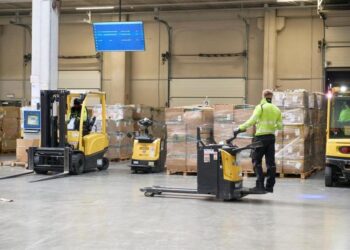
Each distribution center will cover approximately 750,000 square feet of warehouse space and will be equipped with automated sorting systems and real-time inventory tracking. The rollout is expected to be completed in phases, with the first facility opening in Q3 2024 and the final one operational by Q2 2025.
Investment and Operational Timeline
Dollar Tree has allocated a total of $210 million for the construction and equipping of the new hubs. This capital investment includes $135 million for facility buildouts and $75 million for technology integration. The company has also hired 1,400 new warehouse and logistics staff to support operations across the new centers.
According to the source, the expansion is part of a larger initiative to reduce dependency on third-party logistics providers. In 2023, third-party providers handled 62% of Dollar Tree’s outbound shipments. By 2026, the company aims to reduce that figure to 40% through internal distribution network scaling.
Industry Context and Strategic Rationale
Dollar Tree’s move reflects a broader trend among U.S. retailers to strengthen in-house logistics. In 2023, Walmart invested $2.4 billion in expanding its private logistics network, while Amazon increased its fulfillment center count by 33% year-over-year. These actions are driven by persistent supply chain disruptions, including port congestion and labor shortages.
Industry experts note that nearshoring and regional distribution hubs are becoming critical for cost and speed control. A 2023 study by the Council of Supply Chain Management Professionals (CSCMP) found that companies using regional distribution centers reduced delivery delays by an average of 39% compared to those relying on centralized hubs.
“This expansion is not just about scale—it’s about control. With five new hubs, Dollar Tree can respond faster to regional demand spikes and reduce exposure to national disruptions.” — Jason Lin, Supply Chain Operations Director, Retail Logistics Insights
Future Implications for Retail Supply Chains
The new distribution network is expected to support Dollar Tree’s forecast of 7.5% annual sales growth through 2026. The company currently operates over 18,000 stores in the U.S. and Canada, with 83% located within 50 miles of a distribution center. This proximity is projected to improve inventory turnover by 12% by 2026.
Supply chain professionals say the move sets a benchmark for value retailers seeking to balance cost efficiency with resilience. As inflation and transportation volatility persist, in-house distribution is emerging as a key differentiator in competitive retail environments.
Source: news.google.com
Compiled from international media by the SCI.AI editorial team.