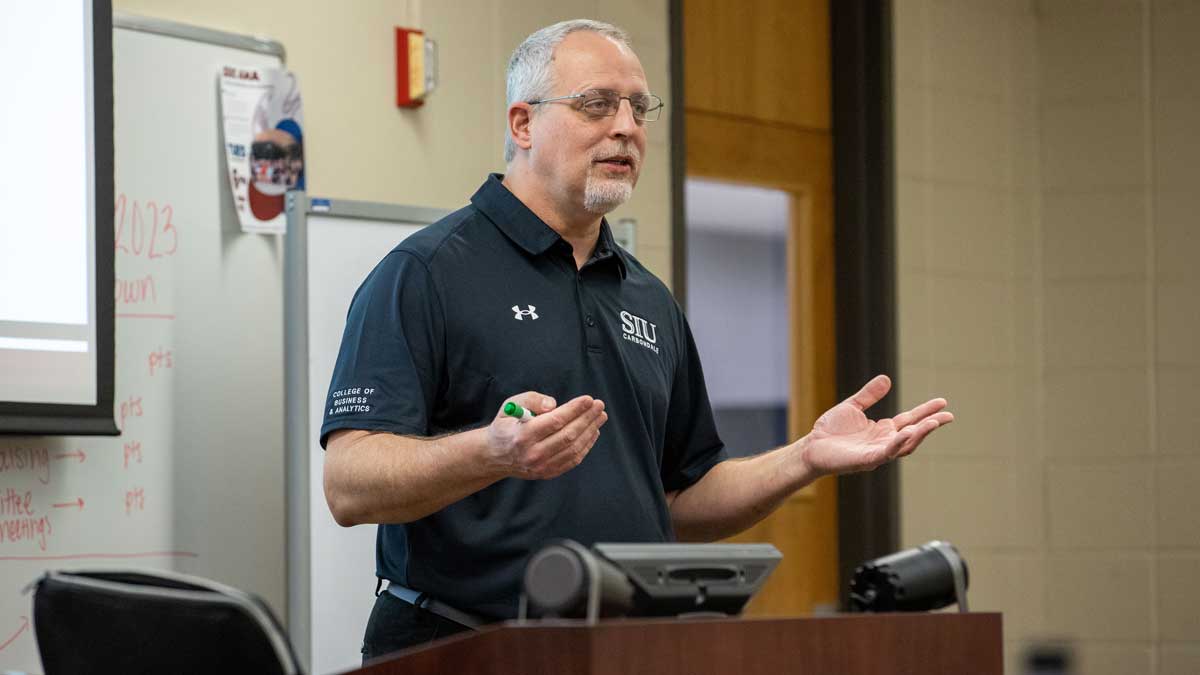
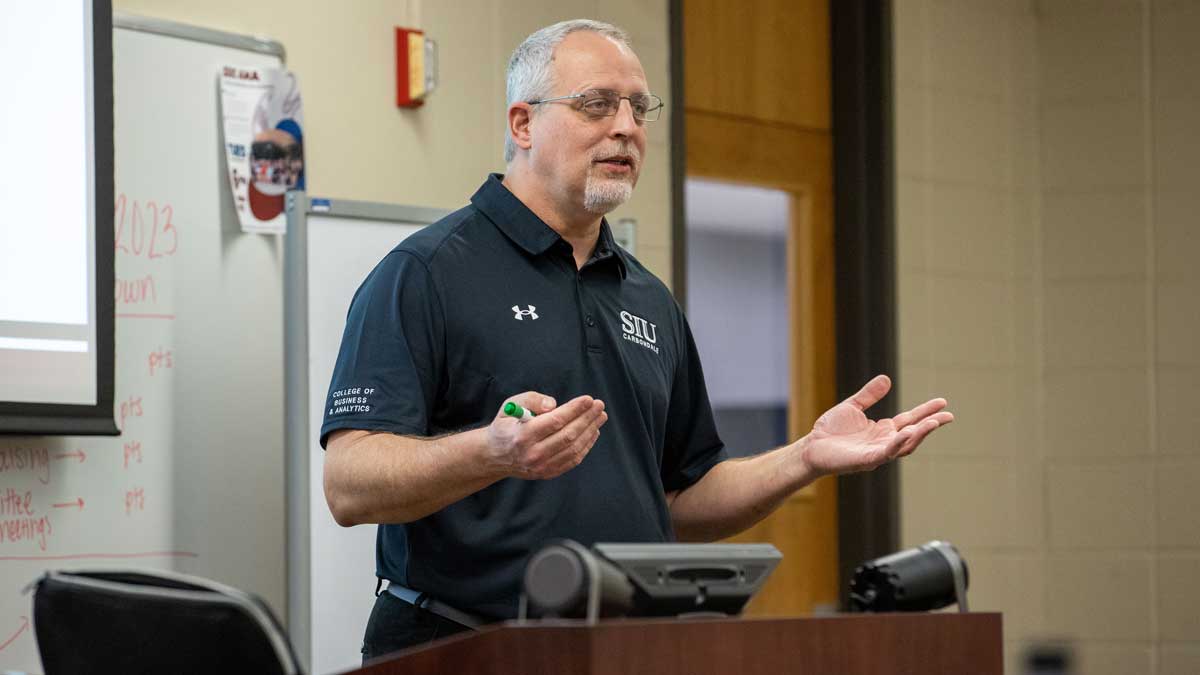
Gregory D. DeYong is an Associate Professor of Operations Management at Southern Illinois University Carbondale. _(Photo by Russell Bailey)_
September 26, 2024
## **SIU Logistics Expert: Potential Dock Strike Could Have Major Supply Chain Impact**
By Christi Mathis
CARBONDALE, Ill.—If the nation’s largest maritime union goes on strike next week at ports along the East Coast and Gulf of Mexico, nearly half of the country’s imports could be blocked from entering the U.S., potentially causing supply chain disruptions similar to those seen during the pandemic, according to Gregory D. DeYong, an Associate Professor of Operations Management at Southern Illinois University Carbondale.
As contract expiration looms, the International Longshoremen’s Association (ILA), which represents about 85,000 members, is preparing for a strike that could shut down 36 ports. JPMorgan analysts estimate that such a work stoppage could cost $5 billion per day in economic losses.
“The U.S. imports around $3 trillion worth of goods annually, so the potential scale of this disruption would be enormous,” DeYong said. “Even a short strike could easily disrupt billions of dollars in trade. Additionally, these ports handle a significant portion of American exports, particularly to Europe, which will also be affected.”
* * *
**Media Availability**
Gregory D. DeYong, Associate Professor of Operations Management at Southern Illinois University Carbondale.
* * *
**Inevitable Impacts**
DeYong noted that nearly all types of products could be impacted, but automobile imports and agricultural and manufactured goods exports may be particularly severe.
“Unfortunately, U.S. importers and exporters have few good options to avoid the impact of this potential strike,” DeYong said. “Firstly, for transportation, especially between the U.S. and Europe, there are no real alternatives to avoid East Coast ports. Air freight is expensive and has lower capacity compared to maritime transport.
“Shipping goods to West Coast ports would be time-consuming and costly, and the West Coast ports do not have enough capacity to handle even a small portion of East Coast cargo, in addition to their existing traffic. Other North American ports like those in Canada and Mexico can process some cargo, but diverting shipments to these ports would require long overland transport and customs issues.”
He pointed out that supply chain managers have been taking measures to mitigate the potential strike by accelerating shipments before October 1st and rerouting vessels where possible. Ports are also extending operating hours with overtime and weekend operations, but despite these efforts, the impact remains limited due to the large volume of goods entering these ports.
“Companies that allow for domestic procurement have more flexibility under emergency plans, but such a massive trade disruption will have widespread effects,” he said.
These impacts include product shortages, price increases, and delivery delays. The situation is further exacerbated by the upcoming holiday shopping season.
**Risk Factors**
At the heart of the labor dispute is the issue of port activity automation, DeYong said.
“Port management, represented by the American Maritime Alliance, is keen on reducing costs and dependency on labor through automating tasks such as unloading and moving containers. The ILA strongly opposes these efforts,” DeYong said.
Compensation issues are also a point of contention in negotiations, with reports indicating that no agreement has been reached yet. Meanwhile, the Biden administration has indicated reluctance to intervene, even though the Taft-Hartley Act does give the executive branch authority to force longshoremen back to work, he added.
“As we saw during the recent rail strike, breaking a strike comes at a political cost,” DeYong said. “Moreover, if workers are forced back to work, unions have hinted that they might take measures to slow down work.”
Adding to the situation is the fact that more than 700 dockworkers in Vancouver, represented by International Longshore and Warehouse Union (ILWU) Local 514, are voting on a strike. The Association of Cargo Management and Greater Vancouver Trade Council have stated that such a strike could close key ports along Canada’s West Coast, leading to trade disruptions.
DeYong not only has expertise in supply chain management but also practical experience. Before becoming an instructor, he worked as an import/export manager overseeing approximately $100 million worth of products annually. DeYong is currently working on establishing the Supply Chain Management and Logistics Center at Southern Illinois University’s Business and Analytics College.
—
Source: SIU News