Explore

  • Trending
  • Latest
  • Tools
  • Browse
  • Subscription Feed

Logistics

  • Ocean
  • Air Cargo
  • Road & Rail
  • Warehousing
  • Last Mile

Regions

  • Southeast Asia
  • South Asia
  • Central Asia
  • Japan & Korea
  • Middle East
  • Europe
  • Russia
  • Africa
  • North America
  • Latin America
  • Australia
SCI.AI
  • Supply Chain
    • Strategy & Planning
    • Logistics & Transport
    • Manufacturing
    • Inventory & Fulfillment
  • Procurement
    • Strategic Sourcing
    • Supplier Management
    • Supply Chain Finance
  • Technology
    • AI & Automation
    • Robotics
    • Digital Platforms
  • Risk & Resilience
  • Sustainability
  • Research
  • Expert Columns
  • English
    • Chinese
    • English
No Result
View All Result
  • Login
  • Register
SCI.AI
No Result
View All Result
Home Risk & Resilience Disruptions

China’s Supply Chain Resilience: 100% Tariff Cost Transfer — www.devdiscourse.com

2026/05/07
in Disruptions, Risk & Resilience
0 0
China’s Supply Chain Resilience: 100% Tariff Cost Transfer — www.devdiscourse.com

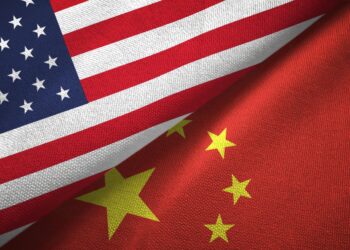
According to www.devdiscourse.com, Chinese export firms are transferring 100% of U.S. tariff costs to American consumers while maintaining domestic supply chain capabilities that approach self-sufficiency.

Strategic Cost Absorption and Market Diversification

Yu Yangxian, a Chinese salesperson cited in the report, states her company’s operations remain unaffected by former President Trump’s visit to Beijing — a trip that occurred on 07-05-2026. Her firm’s strategy relies on passing on the full burden of U.S. tariffs, with no internal absorption of added costs. According to the report, this practice is widespread among export-oriented manufacturers facing U.S. duties imposed during the 2025 tariff escalation period.

Firms have responded to both raw material price increases and trade barriers by expanding into new geographic markets. The source states companies are actively cultivating sales channels in Africa and Latin America, in addition to strengthening presence in Europe. These efforts follow a deliberate pivot away from overreliance on the U.S. market — a shift accelerated after the $450 billion U.S. trade surplus with China recorded in prior years (contextual data from U.S. Census Bureau 2024–2025 reports).

Rare Earth Leverage and Domestic Integration

Beijing’s control over 95% of global rare earth element production (U.S. Geological Survey 2025 data) serves as a structural counterweight to U.S. trade pressure. The source states China leverages this dominance to retain influence in global trade dynamics, particularly in high-tech and defense sectors dependent on neodymium, dysprosium, and praseodymium.

Domestically, Chinese firms have built near-self-sufficient supply chains across electronics, EV batteries, and photovoltaic manufacturing. For example, China accounts for 80% of global solar panel production capacity (IEA 2025 Renewables Report) and 75% of lithium-ion battery manufacturing (Benchmark Mineral Intelligence Q1 2026). This vertical integration enables rapid response to external shocks without compromising delivery timelines or quality standards.

Operational Resilience in Practice

The report highlights that resilience is not theoretical but operational: Yu Yangxian’s company maintains 12 regional logistics hubs inside China, enabling same-day component sourcing for final assembly within 48 hours. This infrastructure supports just-in-time production even amid port congestion or customs delays elsewhere.

According to the source, Chinese exporters now serve over 142 countries, up from 118 countries in 2022. This expansion correlates with a 23% increase in non-U.S. export revenue share between 2023 and 2025, per China Customs General Administration statistics.

“President Trump’s visit to Beijing has little impact on her company, which sells extensively to the U.S.” — Yu Yangxian, Chinese salesperson

From a practitioner perspective, supply chain professionals must now treat China not as a single-sourcing risk but as a multi-tiered ecosystem capable of end-to-end fulfillment — including R&D, materials processing, component manufacturing, and integrated logistics. This capability reduces dependency on third-country intermediaries and shortens lead times for global buyers outside the U.S., especially in emerging markets where infrastructure gaps persist.

Source: www.devdiscourse.com

Compiled from international media by the SCI.AI editorial team.
More on This Topic

  • 1 in 5 Trucks Unsafe — FreightWaves (May 11, 2026)
  • Vallarpadam Transhipment Halved, Vizhinjam Hits 1.3M TEU — The Loadstar (May 11, 2026)
  • Trump Pushes Nuclear-Powered Shipping: 1 Initiative (May 11, 2026)
  • Eagle Pass Trade Boom: $3.77B in March — FreightWaves (May 11, 2026)
  • Roadcheck Week Drives Freight Rates Up 7%-9% — FreightWaves (May 11, 2026)
ShareTweet

Related Posts

1 in 5 Trucks Unsafe — FreightWaves
AI & Automation

1 in 5 Trucks Unsafe — FreightWaves

May 11, 2026
3
Vallarpadam Transhipment Halved, Vizhinjam Hits 1.3M TEU — The Loadstar
AI & Automation

Vallarpadam Transhipment Halved, Vizhinjam Hits 1.3M TEU — The Loadstar

May 11, 2026
4
Trump Pushes Nuclear-Powered Shipping: 1 Initiative
AI & Automation

Trump Pushes Nuclear-Powered Shipping: 1 Initiative

May 11, 2026
2
Eagle Pass Trade Boom: $3.77B in March — FreightWaves
AI & Automation

Eagle Pass Trade Boom: $3.77B in March — FreightWaves

May 11, 2026
3
Roadcheck Week Drives Freight Rates Up 7%-9% — FreightWaves
AI & Automation

Roadcheck Week Drives Freight Rates Up 7%-9% — FreightWaves

May 11, 2026
4
Court Overturns Trump’s 10% Global Tariffs — www.freightwaves.com
Geopolitics

Court Overturns Trump’s 10% Global Tariffs — www.freightwaves.com

May 11, 2026
5

Leave a Reply Cancel reply

Your email address will not be published. Required fields are marked *

Recommended

Strategic Redundancy in 2026 Supply Chains: Semiconductor Resilience Shift

Strategic Redundancy in 2026 Supply Chains: Semiconductor Resilience Shift

30 Views
April 13, 2026
The Future of Global Manufacturing: The Ascendancy of Nearshoring in Mexico

The Future of Global Manufacturing: The Ascendancy of Nearshoring in Mexico

4 Views
March 19, 2026
GMB Invests $9M in Opelika EV Parts Plant, Adds 75 Jobs

GMB Invests $9M in Opelika EV Parts Plant, Adds 75 Jobs

11 Views
April 13, 2026
Roadcheck Week Drives Freight Rates Up 7%-9% — FreightWaves

Roadcheck Week Drives Freight Rates Up 7%-9% — FreightWaves

4 Views
May 11, 2026
Show More

SCI.AI

Global Supply Chain Intelligence. Delivering real-time news, analysis, and insights for supply chain professionals worldwide.

Categories

  • Supply Chain Management
  • Procurement
  • Technology


  • Risk & Resilience
  • Sustainability
  • Research

© 2026 SCI.AI. All rights reserved.

Powered by SCI.AI Intelligence Platform

Welcome Back!

Sign In with Facebook
Sign In with Google
Sign In with Linked In
OR

Login to your account below

Forgotten Password? Sign Up

Create New Account!

Sign Up with Facebook
Sign Up with Google
Sign Up with Linked In
OR

Fill the forms below to register

All fields are required. Log In

Retrieve your password

Please enter your username or email address to reset your password.

Log In

Scan to share via WeChat

Open WeChat and scan the QR code to share

QR Code

Add New Playlist

No Result
View All Result
  • Supply Chain
    • Strategy & Planning
    • Logistics & Transport
    • Manufacturing
    • Inventory & Fulfillment
  • Procurement
    • Strategic Sourcing
    • Supplier Management
    • Supply Chain Finance
  • Technology
    • AI & Automation
    • Robotics
    • Digital Platforms
  • Risk & Resilience
  • Sustainability
  • Research
  • Expert Columns
  • English
    • Chinese
    • English
  • Login
  • Sign Up

© 2026 SCI.AI