Explore

  • Trending
  • Latest
  • Tools
  • Browse
  • Subscription Feed

Logistics

  • Ocean
  • Air Cargo
  • Road & Rail
  • Warehousing
  • Last Mile

Regions

  • Southeast Asia
  • South Asia
  • Central Asia
  • Japan & Korea
  • Middle East
  • Europe
  • Russia
  • Africa
  • North America
  • Latin America
  • Australia
SCI.AI
  • Supply Chain
    • Strategy & Planning
    • Logistics & Transport
    • Manufacturing
    • Inventory & Fulfillment
  • Procurement
    • Strategic Sourcing
    • Supplier Management
    • Supply Chain Finance
  • Technology
    • AI & Automation
    • Robotics
    • Digital Platforms
  • Risk & Resilience
  • Sustainability
  • Research
  • Expert Columns
  • English
    • Chinese
    • English
No Result
View All Result
  • Login
  • Register
SCI.AI
No Result
View All Result
Home Sustainability ESG & Regulation

Epic Group Opens India’s First Net-Zero Apparel Factory — www.just-style.com

2026/05/06
in ESG & Regulation, Green Supply Chain, Sustainability
0 0
Epic Group Opens India’s First Net-Zero Apparel Factory — www.just-style.com

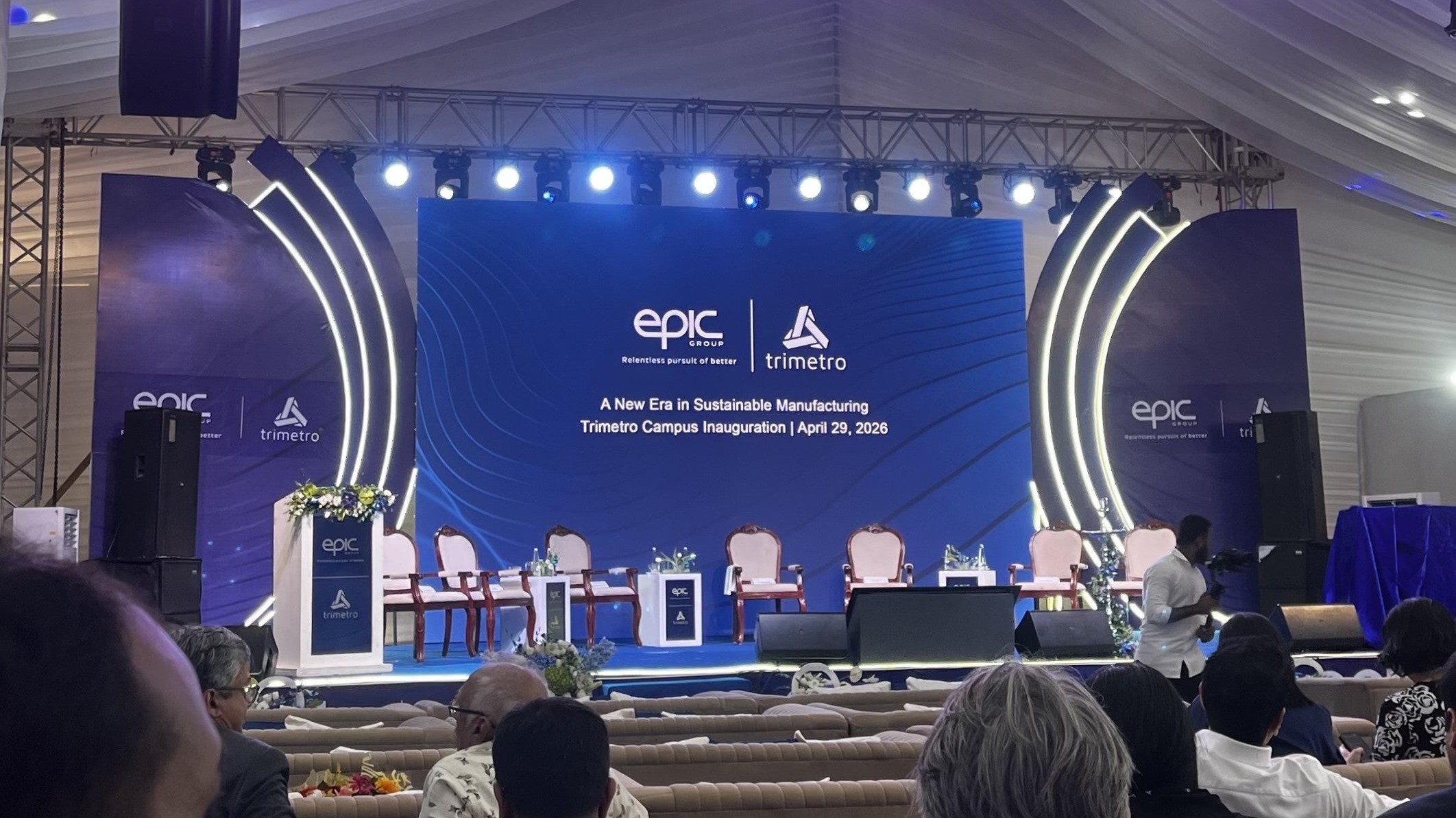
According to www.just-style.com, Epic Group inaugurated its Trimetro campus in Khordha, Odisha — a net-zero operational facility designed for apparel manufacturing — on May 5, 2026.

Location and Cultural Integration

The factory is situated in Khordha district, adjacent to Bhubaneswar — the capital city of Odisha and widely recognized as India’s ‘temple city’ due to its concentration of historic Hindu temples, including the Lingaraja Temple (built c. 11th century) and the Rajarani Temple. The campus was launched with a traditional opening ceremony reflecting local customs and craftsmanship. Epic Group selected this location to anchor long-term investment in eastern India, where formal apparel manufacturing infrastructure has historically lagged behind Gujarat, Tamil Nadu, and Maharashtra. Odisha’s state government reported a 23% year-on-year increase in textile and apparel FDI inflows between FY2023–FY2024, according to its Department of Industries and Commerce.

Sustainability Architecture and Energy Systems

The Trimetro campus achieves net-zero operational emissions through three integrated systems: on-site solar generation, biomass-based thermal energy recovery, and rainwater harvesting with 95% water recycling efficiency. A rooftop photovoltaic array spans 12,800 square meters, supplying an estimated 4.2 megawatts of peak capacity — sufficient to power all production lines, administrative functions, and worker housing during daylight hours. Biomass boilers use agricultural residue sourced within 75 kilometers of the site, displacing fossil fuel consumption by 92% for steam generation. According to the report, the facility is certified under the U.S. Green Building Council’s LEED-ND v4.1 Platinum standard — the highest tier available for neighborhood development.

Workforce and Inclusion Metrics

Epic Group committed to hiring at least 65% of its initial workforce from within Odisha, with priority given to women and persons from Scheduled Castes and Scheduled Tribes. As of May 2026, the campus employed 1,842 workers, of whom 57% were women and 41% belonged to officially recognized marginalized communities. All staff receive on-site childcare, subsidized meals, and vocational upskilling through partnerships with the Odisha State Skill Development Authority. The source states that Epic Group allocated $2.1 million in its first-year budget specifically for inclusive workforce development programs.

Supply Chain Implications for Global Brands

The Trimetro campus serves as Epic Group’s primary production hub for European and North American clients including Hugo Boss, Hugo Boss, and Marks & Spencer — all of which require Tier 1 suppliers to disclose Scope 1 and 2 emissions by 2027 per their public ESG roadmaps. This aligns with growing regulatory pressure: the EU’s Corporate Sustainability Due Diligence Directive (CSDDD) mandates supply chain climate accountability for large companies operating in Europe starting in 2026. For supply chain professionals, the facility demonstrates how localized renewable energy procurement, regional raw material sourcing, and structured inclusion targets can simultaneously meet compliance thresholds and reduce audit overhead. Unlike typical Indian garment units averaging 38% energy self-sufficiency, Trimetro operates at 99.4% energy independence during daylight hours — cutting grid reliance and associated carbon intensity by 87% per unit output.

Source: Just Style

Compiled from international media by the SCI.AI editorial team.

More on This Topic

  • 1 in 5 Trucks Unsafe — FreightWaves (May 11, 2026)
  • Vallarpadam Transhipment Halved, Vizhinjam Hits 1.3M TEU — The Loadstar (May 11, 2026)
  • Trump Pushes Nuclear-Powered Shipping: 1 Initiative (May 11, 2026)
  • Eagle Pass Trade Boom: $3.77B in March — FreightWaves (May 11, 2026)
  • Roadcheck Week Drives Freight Rates Up 7%-9% — FreightWaves (May 11, 2026)
ShareTweet

Related Posts

1 in 5 Trucks Unsafe — FreightWaves
AI & Automation

1 in 5 Trucks Unsafe — FreightWaves

May 11, 2026
3
Vallarpadam Transhipment Halved, Vizhinjam Hits 1.3M TEU — The Loadstar
AI & Automation

Vallarpadam Transhipment Halved, Vizhinjam Hits 1.3M TEU — The Loadstar

May 11, 2026
4
Trump Pushes Nuclear-Powered Shipping: 1 Initiative
AI & Automation

Trump Pushes Nuclear-Powered Shipping: 1 Initiative

May 11, 2026
2
Eagle Pass Trade Boom: $3.77B in March — FreightWaves
AI & Automation

Eagle Pass Trade Boom: $3.77B in March — FreightWaves

May 11, 2026
3
Roadcheck Week Drives Freight Rates Up 7%-9% — FreightWaves
AI & Automation

Roadcheck Week Drives Freight Rates Up 7%-9% — FreightWaves

May 11, 2026
4
Expeditors Sets 100% Air & Sea Emissions Target — seekingalpha.com
ESG & Regulation

Expeditors Sets 100% Air & Sea Emissions Target — seekingalpha.com

May 11, 2026
1

Leave a Reply Cancel reply

Your email address will not be published. Required fields are marked *

Recommended

Hormuz Disruption: 5 Secondary Supply Chain Risks Beyond Oil

Hormuz Disruption: 5 Secondary Supply Chain Risks Beyond Oil

11 Views
March 25, 2026
Digital Platforms and SaaS in Modern Supply Chain Transformation: How Source Logistics’ IFS Softeon Deployment Redefines Scalable 3PL Operations

Digital Platforms and SaaS in Modern Supply Chain Transformation: How Source Logistics’ IFS Softeon Deployment Redefines Scalable 3PL Operations

10 Views
March 25, 2026
Harvard Business School Classic: How Toyota’s Lean Principles Reshape Organizational Learning Beyond Manufacturing

Harvard Business School Classic: How Toyota’s Lean Principles Reshape Organizational Learning Beyond Manufacturing

17 Views
February 18, 2026
SparkCognition重新更名为Avathon,推出工业人工智能平台

Avathon Unveils Industrial AI Platform Post-Rebrand from SparkCognition

22 Views
February 15, 2026
Show More

SCI.AI

Global Supply Chain Intelligence. Delivering real-time news, analysis, and insights for supply chain professionals worldwide.

Categories

  • Supply Chain Management
  • Procurement
  • Technology


  • Risk & Resilience
  • Sustainability
  • Research

© 2026 SCI.AI. All rights reserved.

Powered by SCI.AI Intelligence Platform

Welcome Back!

Sign In with Facebook
Sign In with Google
Sign In with Linked In
OR

Login to your account below

Forgotten Password? Sign Up

Create New Account!

Sign Up with Facebook
Sign Up with Google
Sign Up with Linked In
OR

Fill the forms below to register

All fields are required. Log In

Retrieve your password

Please enter your username or email address to reset your password.

Log In

Scan to share via WeChat

Open WeChat and scan the QR code to share

QR Code

Add New Playlist

No Result
View All Result
  • Supply Chain
    • Strategy & Planning
    • Logistics & Transport
    • Manufacturing
    • Inventory & Fulfillment
  • Procurement
    • Strategic Sourcing
    • Supplier Management
    • Supply Chain Finance
  • Technology
    • AI & Automation
    • Robotics
    • Digital Platforms
  • Risk & Resilience
  • Sustainability
  • Research
  • Expert Columns
  • English
    • Chinese
    • English
  • Login
  • Sign Up

© 2026 SCI.AI