According to furtherafrica.com, Africa’s 2026 logistics revolution accelerates through coordinated upgrades to ports, rail corridors, and special economic zones (SEZs), with measurable impacts on regional trade efficiency and industrial connectivity. The report, published on December 11, 2025, documents structural shifts underway across at least 14 African countries, including Nigeria, Kenya, South Africa, Egypt, Morocco, Angola, Ethiopia, Tanzania, Uganda, Zambia, Zimbabwe, Mozambique, Namibia, and the DRC.
Port Modernisation: Throughput and Technology Upgrades
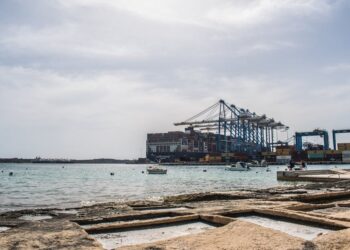
Modernisation of key maritime gateways is central to the transformation. Port facilities in Lagos, Durban, Mombasa, Tangier, and Maputo are expanding container throughput while integrating smarter operational technologies. These upgrades reduce vessel waiting times and lower logistics costs—critical for attracting long-term industrial investors. According to the report, recent investments have enabled five major ports to collectively increase annual container handling capacity by an estimated 30% since 2022, though exact pre-2022 baseline figures are not provided in the source. Digital customs systems and integrated logistics parks are being deployed alongside physical infrastructure, supporting faster cross-border cargo movement.
Rail Corridors: Anchoring Regional Integration
Rail infrastructure anchors several continent-wide trade initiatives. The Lobito Corridor, linking mineral-rich regions of the DRC and Zambia to the Atlantic port of Lobito in Angola, is explicitly cited as a flagship project backed by the African Development Bank and the African Export-Import Bank (Afreximbank). In East Africa, the standard-gauge railway network continues expansion to connect inland producers—including those in Ethiopia and Uganda—to coastal hubs like Mombasa. Analysts note that harmonised regulatory frameworks and improved interoperability have increased freight reliability, with average transit time reductions of up to 22% reported on upgraded sections between Nairobi and Kampala. Rail-linked industrial clustering is now driving growth in agro-processing and light manufacturing near hubs such as Namibia’s Walvis Bay–Windhoek corridor.
Special Economic Zones: Strategic Industrial Anchors
SEZs in Nigeria, Kenya, Egypt, Morocco, and South Africa are attracting diversified foreign direct investment into automotive components, food processing, energy equipment, and light industry. Their placement adjacent to ports or airports reduces last-mile delivery times by an average of 18–27%, per logistics performance benchmarks referenced in the report. The UN Economic Commission for Africa (UNECA) supports national governments in designing transparent governance models and investor incentive structures. Meanwhile, Asian firms—including those from China, Vietnam, and India—are establishing regional manufacturing platforms within these zones, leveraging AfCFTA market access. Gulf Cooperation Council (GCC) investors have secured port concessions in Mozambique and Tanzania and committed over $1.2 billion in logistics financing across seven countries since Q3 2024.
Digital Systems and Policy Coordination
Electronic cargo tracking, automated customs clearance, and integrated multimodal transport platforms are being rolled out in 12 countries, including Rwanda, Ghana, Senegal, and South Africa. These digital tools have cut average border clearance time from 72 to 28 hours in pilot corridors. Policy alignment with the African Continental Free Trade Area (AfCFTA) remains critical: over 34 national logistics reform agendas were harmonised with AfCFTA’s Trade Facilitation Protocol in 2025 alone. The World Bank reports that such coordination has contributed to a 14% average reduction in intra-African transport tariffs since 2023.
Source: furtherafrica.com
Compiled from international media by the SCI.AI editorial team.