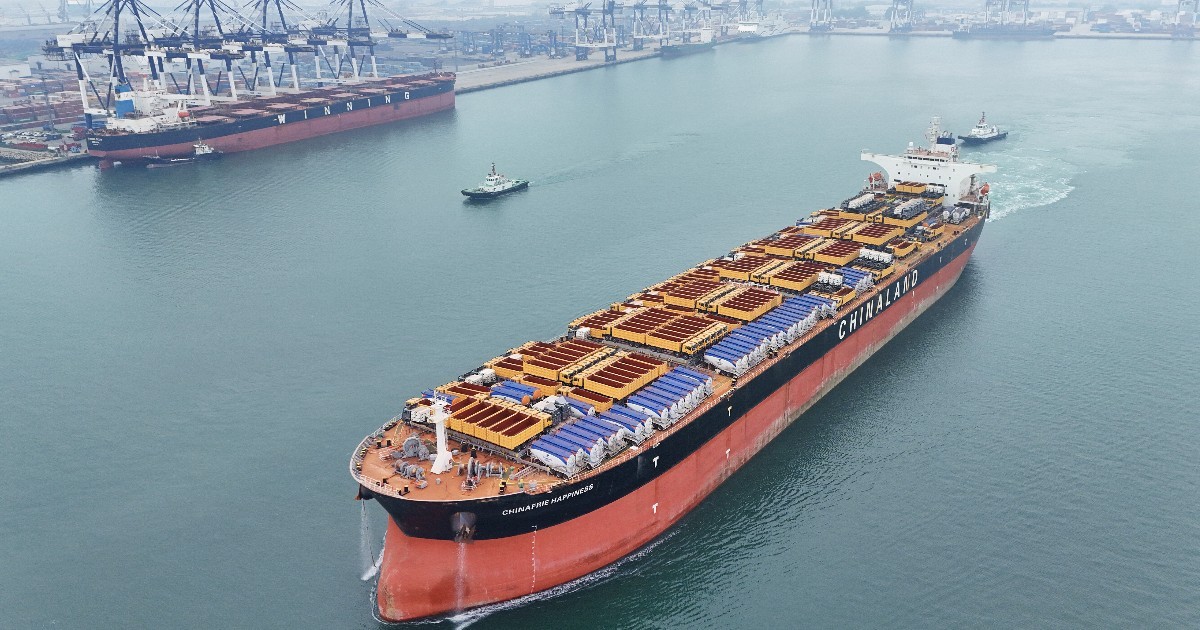
According to africa.businessinsider.com, China has launched new direct maritime shipping routes from major domestic ports—including Qingdao, Yantai, and Tianjin—to multiple African destinations, cutting transit times and lowering logistics costs ahead of a scheduled zero-tariff policy for 53 African countries effective 1 May 2026.
New Routes Accelerate Key Corridors
The expansion targets long-standing supply chain constraints in the China–Africa trade corridor. Qingdao Port recorded exports to Africa exceeding $6.37 billion in the first quarter of 2026—up more than 26% year-on-year. Demand is strongest for machinery, electronics, and high-tech products, reflecting Africa’s rising import needs in industrial and technology sectors.
Yantai Port has expanded its network with new direct services to both North and Southern Africa, reporting a cargo surge of over 30% in Q1 2026 and handling more than 2 million tonnes for the first time—marking a milestone in corridor utilisation.
Tianjin Port launched a dedicated container service to South Africa, reducing average transit time by roughly 10 days to about 40 days. Authorities state this improves predictability and lowers logistics costs for businesses trading industrial goods, raw materials, and manufactured products.
Policy and Infrastructure Alignment
The route expansions align with Beijing’s broader trade strategy, which pairs improved logistics connectivity with tariff liberalisation. According to the report, China’s zero-tariff policy now covers 53 of Africa’s 54 countries, excluding one in Southern Africa. The policy builds on earlier full tariff exemptions granted to least-developed countries, many of which are in Africa.
Analysts cited in the source note the combined impact of faster shipping and reduced tariff barriers could further accelerate trade volumes—particularly in manufacturing inputs, consumer goods, and infrastructure-related equipment, where China–Africa exchange has been expanding steadily.
Practical Implications for Supply Chain Professionals
For global supply chain professionals, these developments signal measurable shifts in lead time reliability and landed cost structures across key Africa-facing lanes. The 10-day reduction on the Tianjin–South Africa route alone may influence inventory planning cycles, safety stock calculations, and modal selection decisions—especially for time-sensitive industrial components or capital equipment shipments. Meanwhile, Qingdao’s 26% YoY export growth and Yantai’s 30% cargo surge suggest increasing port capacity and service frequency, potentially easing booking volatility previously associated with transshipment-dependent routes via Dubai or Singapore.
Industry context reinforces the strategic timing: concurrent with these developments, Asia and Europe have seen record traffic diverting around the Red Sea due to Middle East tensions—highlighting Africa’s growing role not just as a destination, but also as a geographic pivot in global maritime routing. While no single carrier is named in the source, the infrastructure upgrades reflect coordinated action by Chinese port authorities and state-linked shipping stakeholders operating under national trade objectives.
Source: africa.businessinsider.com
Compiled from international media by the SCI.AI editorial team.