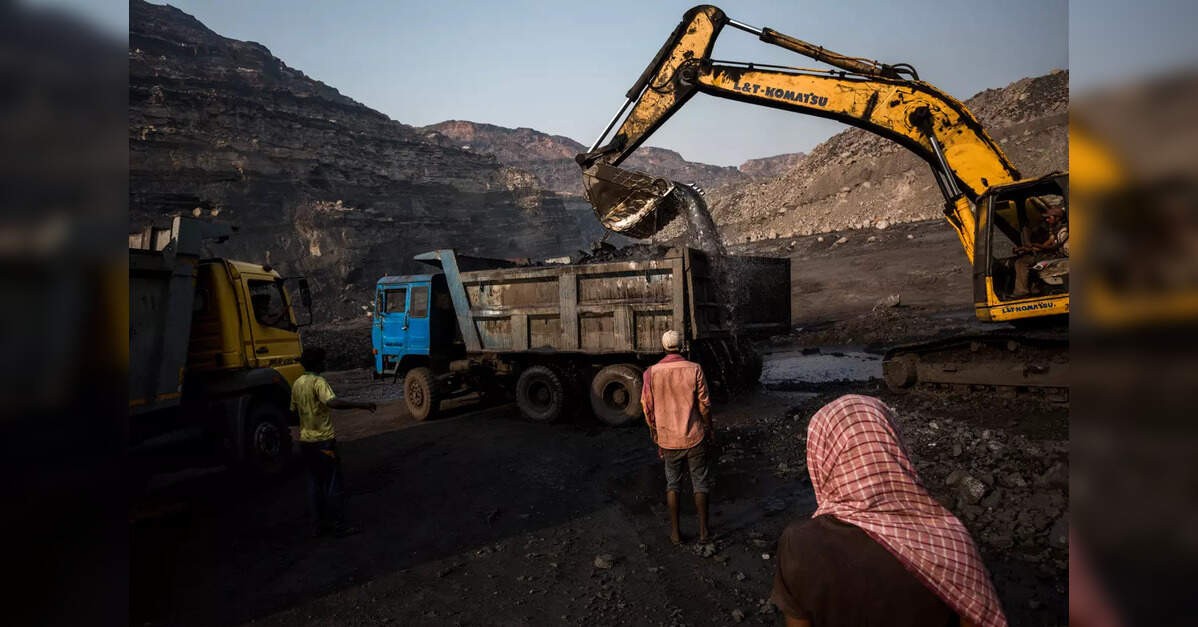
According to manufacturing.economictimes.indiatimes.com, Coal India Ltd (CIL) produced 56.1 million tonnes (MT) of coal in April 2025–26 — a 9.7 per cent drop year-on-year. The state-owned Maharatna enterprise reported this decline despite record national power demand, which hit 255.85 GW on Monday, May 1, 2026 — the second-highest peak in three days and just below the all-time high of 256.11 GW recorded on Saturday, April 29, 2026.
Production and Offtake Data
CIL’s April output fell to 56.1 MT from 62.1 MT in April 2024–25. Its offtake — sales to customers — also declined by 2 per cent to 63.2 MT, down from 64.5 MT in the same month of FY25. The company’s full-year production for FY26 stood at 768.1 million tonnes, a 1.7 per cent decrease from 781.1 million tonnes in FY25. March 2026 output was 84.5 MT, compared to 85.8 MT in March 2025.
Subsidiary-Level Performance
- Eastern Coalfields Ltd (ECL): Reported production decline
- Bharat Coking Coal Ltd (BCCL): Reported production decline
- Western Coalfields Ltd (WCL): Reported production decline
- South Eastern Coalfields Ltd (SECL): Reported positive growth
- Central Coalfields Ltd (CCL): Reported positive growth
CIL did not disclose reasons for the declines in either production or offtake, according to its filing with the Bombay Stock Exchange (BSE). The company contributes 80 per cent of total domestic coal production and supplies 75 per cent of coal-based electricity generation. It accounts for 55 per cent of total power generation and meets 40 per cent of India’s primary commercial energy requirements.
Energy Demand Context and Supply Chain Implications
The April shortfall coincides with extreme heatwave conditions across north, central, and western India — driving unprecedented use of air-conditioners and desert coolers. According to the Ministry of Power, peak demand surged to 255.85 GW amid temperatures exceeding 45°C in multiple states. Thermal power plants — which rely on coal for over 70 per cent of electricity output — face mounting pressure to maintain fuel inventories. Industry leaders warned the production gap could strain supply chains and raise reliance on imported coal, increasing costs for generators and end consumers.
Strategic Positioning and Market Role
CIL remains central to India’s energy security architecture. Its subsidiaries collectively operate over 100 mines across eight states, including Jharkhand, Odisha, Chhattisgarh, and West Bengal. The company’s FY26 output of 768.1 million tonnes still represents the largest annual coal volume among any single producer globally. Despite the dip, CIL maintains contractual supply commitments to over 120 thermal power stations and more than 150 industrial customers, including steel, cement, and fertilizer units. Notably, the government had previously stated that domestic coal production is “steadily matching consumer demands”, citing CIL’s implementation of measures to secure uninterrupted dry fuel supply — particularly amid regional geopolitical tensions in West Asia.
Source: manufacturing.economictimes.indiatimes.com
Compiled from international media by the SCI.AI editorial team.