Escalating Tensions in the Middle East
The recent escalation of tensions in the Middle East, triggered by US strikes on Iran on 28 February 2026, has placed global supply chains under intense scrutiny. Logistics UK head of trade policy James Mills says the supply chain sector is better prepared than it was five years ago, but warns that resilience comes at a price. The Strait of Hormuz has become a focal point of instability, with Iran declaring it closed — this crucial waterway handles one fourth of the world’s oil and gas exports daily. The halt in tanker traffic has prompted shipping lines to fundamentally reassess risk exposures, with cascading effects across energy and freight markets globally.
Countries including China have called for protection for vessels in the Strait of Hormuz, but as of 6 March 2026, no international action has been taken to reopen the vital sea passage. This lack of intervention has exacerbated market volatility: gas prices surged 93 per cent to their highest level in three years, and Brent crude oil briefly rose above $85 a barrel — the first time since July 2024. These figures reflect the immediate pricing response of energy markets to geopolitical risk, underscoring how a single chokepoint closure can ripple through interconnected global supply chains within days.
For UK retail, still recalibrating after Covid and Red Sea disruptions, the question is no longer whether the system can cope, but at what cost. Mills positions the industry as entering this turbulence from a position of relative strength: “UK retail is probably far better prepared than it was during Covid. Supply chains are more diversified, and stock management is more sophisticated, and there’s much greater contingency planning.” Yet improved preparedness does not eliminate exposure — it merely changes the form that cost burden takes.

VLCC Rates Hit Record $423,736/Day — Up 94% in a Single Week
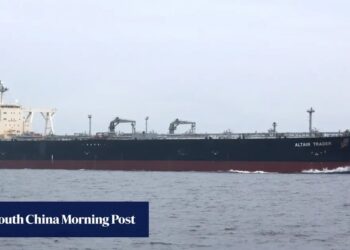
The most dramatic market signal from the crisis came via the benchmark freight rate for Very Large Crude Carriers (VLCCs) — the vessels that transport 2 million barrels of oil from the Middle East to China per voyage. Data from the London Stock Exchange showed the VLCC daily rate soared to a historic high of $423,736 per day on Monday, 2 March 2026, representing a 94 per cent increase from Friday’s level. This near-doubling within a single trading week is without precedent in modern energy shipping history and reflects a convergence of factors: physical routing constraints, insurance cost inflation, and acute uncertainty about the duration of the Strait closure.
Further compounding market stress, QatarEnergy — responsible for 20 per cent of global liquified natural gas (LNG) supplies — declared force majeure on 4 March 2026, excusing itself from fulfilling existing contracts with buyers. Even once gas production restarts, it is understood the company will require weeks to return to full capacity. This declaration removes a critical volume of LNG from global supply precisely when energy demand is already strained by rerouting disruptions. For Asian buyers who depend on Middle Eastern LNG — including major importers in China, Japan, and South Korea — the force majeure compounds an already acute supply crunch with uncertain timeline for resolution.
“Fuel is the transmission mechanism. It affects pretty much every category to some degree because transport underpins it all.” — James Mills, Logistics UK Head of Trade Policy
Cape of Good Hope Rerouting: Cost of Resilience in Practice
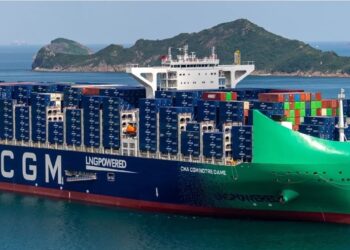
With the Strait of Hormuz closed, vessels traveling between Asia and Europe have been rerouting around the Cape of Good Hope rather than passing through the Red Sea corridor. This deviation is the most visible adaptation — but it comes with substantial cost. As Mills explains: “Ships re-running around the Cape of Good Hope can add 10 to 14 days to Asia–Europe journeys. That’s significantly increased fuel burn, and that obviously translates into higher operating costs.” The delay is not simply a scheduling inconvenience; it tightens effective vessel availability, concentrates demand on an already constrained alternative route, and prolongs the working capital cycle for exporters and importers alike.
Air freight, rerouting, and alternative lanes exist as contingency options — but none are cost-free. The 10 to 14-day extension builds in cost pressures across the system, particularly for time-sensitive cargo categories. Mills is explicit: “Fresh produce and time-sensitive goods are probably the most exposed to transport disruption. They have to arrive within a certain window to remain classified as fresh. Refrigerated goods need consistent cold-chain logistics, and high-value goods moved by air can see cost pressures if airspace capacity tightens.” For supply chain practitioners managing perishable goods, pharmaceutical cold chains, or just-in-time industrial inputs, the Cape rerouting represents a qualitatively different risk profile than simple delay.
The broader structural concern is that this adaptation — while effective in the short term — suppresses long-term investment confidence. Mills warns that “volatility becoming the new normal” could make carriers and logistics service providers more cautious about capital expenditure. “It’s very hard for businesses, with small margins and large overheads, to invest confidently in a volatile environment… it suppresses investment and raises price levels.” This caution has systemic implications: under-investment in logistics infrastructure today creates the bottlenecks that amplify the next disruption.

War-Risk Insurance Surcharges Rise 40–60%: The Hidden Cost Layer
Beyond visible freight rate inflation, the perception of geopolitical risk has triggered a parallel surge in war-risk insurance costs. For vessels operating near Middle Eastern waters, war-risk surcharges have risen by 40 to 60 per cent or more in some reported cases, compounding existing pressure on freight economics. These surcharges are not a minor line item: they reflect the cumulative risk assessment of insurers globally, who adjust premiums in near-real-time based on declared hostilities, naval incident reports, and geopolitical threat indices. The result is tighter insurance capacity — fewer underwriters willing to cover high-risk routes at any price — and higher costs for those that do.
Fuel represents the ultimate cost transmission vector in this crisis. Mills is direct about the mechanism: “Fuel is one of the largest input costs in logistics, and sustained increases move through freight contracts relatively quickly. Retail pricing effects tend to follow if volatility persists.” The pressure begins in the most energy-intensive transport modes — road haulage, maritime, and air freight — and radiates outward through transport contracts into wholesale margins and ultimately retail prices. British Retail Consortium director of food and sustainability Andrew Opie underscores this for the consumer end: “Since energy is a significant component of our production costs, sustained increases directly impact the prices of the goods we sell.” For supply chain managers, this transmission chain defines where cost mitigation efforts need to focus.
The decisive variable, as Mills frames it, is duration. “Short-term volatility can be absorbed. But sustained increases in fuel and freight costs are difficult to contain indefinitely. Duration is the real big issue, that’s the unknown.” A week of elevated VLCC rates and insurance surcharges can be absorbed in carrier margins; months cannot. The economic stakes of prolonged disruption — particularly for energy-intensive supply chains in Asia and Europe — are substantial, and the timeline for resolution remains entirely contingent on geopolitical developments beyond supply chain operators’ control.
What UK Retail Experience Reveals About Global Preparedness
The UK retail sector’s handling of this crisis offers a revealing benchmark for global supply chain preparedness. Mills credits the sector’s relative resilience to the hard lessons learned from consecutive disruptions: the Covid pandemic, the Russia-Ukraine conflict’s energy shock, and the Red Sea disruptions of 2023–2025. Each event forced operational improvements — more diversified supplier networks, more sophisticated inventory management, more robust contingency planning — that now provide a meaningful buffer in 2026. The sector entered this crisis with established playbooks and tested relationships with alternative logistics providers, enabling faster activation of contingency routes.
However, this accumulated resilience is not a permanent asset — it must be continuously refreshed. Andrew Opie reflects on the trajectory: “We saw this following the Russian invasion of Ukraine, when higher energy prices drove up manufacturing costs. Retailers and their suppliers are adept at managing this type of disruption, with recent experiences of challenges to shipping in the Red Sea, and will work hard to minimise the impact on customers.” This institutional memory is valuable, but it also reveals a pattern: the industry responds well to disruption types it has previously encountered, while novel combinations of simultaneous crises — a Hormuz closure concurrent with residual Red Sea risk and LNG supply disruption — test the limits of established playbooks.
Logistics UK has urged government to avoid compounding the problem domestically. As Mills puts it: “You want to avoid additional domestic cost pressures, such as fuel duty increases. That’s why our CEO has called for fuel duty to be frozen rather than increased.” This call for policy restraint reflects a broader principle applicable globally: when supply chains are under external stress, domestic policy choices that add cost burden reduce the system’s capacity to absorb shocks. For governments in Asia and Europe whose trade flows depend on Middle Eastern energy, similar logic applies to port handling fees, customs procedures, and import tariff structures during crisis periods.
Allianz Risk Barometer: Supply Chain Paralysis as the #1 Black Swan Risk
The Hormuz crisis did not arrive without warning — at least in terms of risk scenarios. New analysis from the Allianz Risk Barometer 2026, drawing on responses from 3,338 risk management experts from almost 100 countries, found that more than 51 per cent of respondents identified global supply chain paralysis due to geopolitical conflict as the most plausible Black Swan scenario globally for the next five years. In Asia Pacific specifically, respondents from China and Hong Kong, Singapore, and South Korea ranked it as the single biggest likely risk. In the Philippines, supply chain disruption was the top concern for 54 per cent of respondents. These figures contextualise the Hormuz crisis not as a surprise but as the materialisation of a long-anticipated risk that the industry had not fully operationalised its defenses against.
The financial stakes of full-scale materialisation are enormous. Allianz Research estimates that global GDP losses over a two-year horizon from a supply chain disruption on the scale of the war in Ukraine could total US$1.5 trillion. Allianz Commercial CEO Thomas Lillelund frames the strategic imperative: “Growing interconnectivity across both physical and digital supply chains means disruptions now cascade much faster and can turn into major losses. In today’s fragmented geopolitical environment, companies must double down on resilience and integrated risk management to ride out the next perfect storm.” The practical translation of this guidance for supply chain practitioners involves three distinct dimensions: visibility (knowing where vulnerabilities are), diversification (reducing single-source dependencies), and response speed (activating contingency options before disruptions peak).
Michael Bruch, Global Allianz Commercial head of Risk Consulting Advisory Services, offers the most actionable framework: “Building organizational agility, fostering a risk-aware culture and developing scalable response plans for a range of scenarios remain the most practical steps to best prepare for Black Swan events.” For China and Asia practitioners whose supply chains run directly through the Middle Eastern energy corridor — as the source notes, VLCCs transport oil from the Middle East specifically to China — the $1.5 trillion estimate is not an abstract headline. It represents the aggregate cost of systemic unpreparedness, priced across manufacturing delays, energy cost inflation, insurance surcharges, and lost export revenue.
Related Reading
- Strait of Hormuz Crisis: A Structural Supply Chain Disruption with Cascading Global Implications
- Hormuz Strait Alert Meets Red Sea Reopening: How the Middle East’s Twin Chokepoint Crisis Is Reshaping Global Shipping in 2026
- Tariff Volatility and the Irreversible Regionalization of Global Supply Chains in 2026
Source: retailgazette.co.uk
This article was AI-assisted and reviewed by our editorial team.