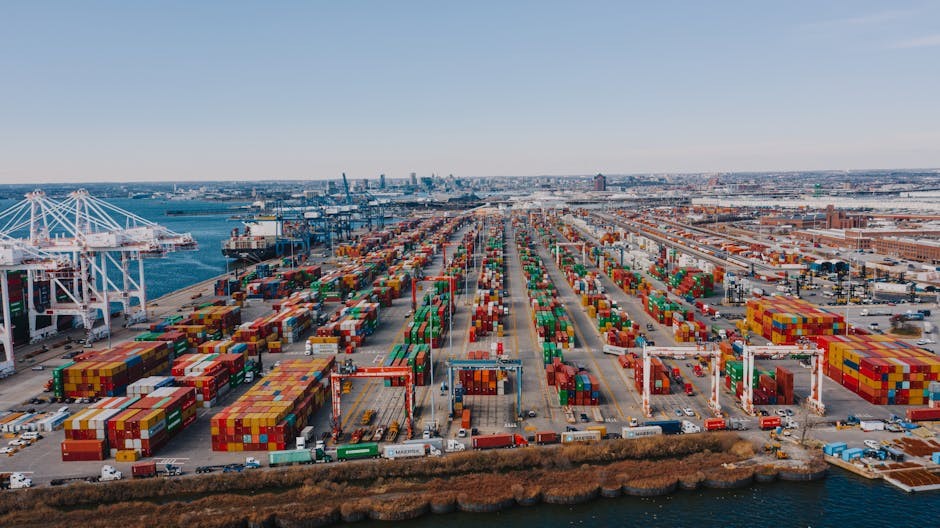
According to www.twobirds.com, the EU Council and European Parliament reached a landmark political agreement on 26 March 2026 on the most significant overhaul of EU customs law since 1968 — amending Regulation (EU) 952/2013, the Union Customs Code (UCC), and introducing a new data-driven framework.
Three-Pillar Reform Framework
The reform rests on three pillars: (i) smarter risk management and customs controls; (ii) a modern framework for e-commerce; and (iii) a stronger partnership with businesses. As Bird & Bird’s trade lawyers explain, this signals a fundamental shift away from a declaration-based system towards a data-driven, automated model.
A Centralised EU Customs Data Hub
Under the new model, businesses will submit data directly to the EU Customs Data Hub — a single, centralised interface replacing national customs systems. The Data Hub is scheduled to first become available to e-commerce platforms in July 2028, with a phased rollout bringing all movements of goods into its scope by 1 March 2034. The source states the Hub is expected to deliver EUR 26 billion in business savings over 15 years and over EUR 2 billion per year in operational savings for member states.
Trust and Check Trader Status
A new Trust and Check Trader (T&C Trader) status is introduced to coexist with the existing Authorised Economic Operator (AEO) scheme. T&C Traders — importers, exporters, or indirect representatives established in the EU — must provide real-time data on consignment movements and evidence of compliance via the Data Hub. In return, they gain access to fully automated customs clearance, with minimal direct involvement from customs authorities.
However, the source notes that supply chains are complex: not all businesses may be positioned to apply for T&C status due to structural arrangements — particularly around storage models and data access. Carriers and warehousing facilities acting as indirect representatives may become critical enablers, with some potentially being the only actors capable of meeting the requirements.
New Architecture: Single Point of Contact & EU Customs Authority
- Each T&C Trader will interface solely with the national customs administration of their member state of establishment
- The newly established EU Customs Authority (EUCA), headquartered in Lille, will centralise risk management — analysing Data Hub inputs and issuing binding control recommendations to national authorities
- The EUCA will coordinate customs action and cooperate with Europol and Frontex
E-commerce: End of EUR 150 Threshold & New Liability Rules
The reform eliminates the threshold-based customs relief for consignments valued at not exceeding EUR 150. Instead, platforms and distance sellers are now deemed importers and bear full responsibility for customs formalities and payments — not the final EU consumer.
As a transitional measure, a flat-rate customs duty of EUR 3 per item applies to such consignments from 1 July 2026 to 1 July 2028. A handling fee on goods imported into the EU will be introduced no later than 1 November 2026; its amount will be determined by delegated act.
Implementation Timeline & Immediate Actions
The final text of the reform is expected to be published in October/November 2026, coinciding with the introduction of the e-commerce handling fee. The reforms will enter into force 12 months after publication in the Official Journal. According to the report, businesses should not wait to act: the changes demand a thorough impact assessment and likely require adjustments to supply chain arrangements, IT infrastructure, and trade compliance resourcing.
“The reforms represent far more than a technical update — they signal a fundamental shift in customs compliance, moving away from a declaration-based system towards a data-driven, automated model.” — Florentine Sneij, Senior Associate, Bird & Bird, Brussels
Source: www.twobirds.com
Compiled from international media by the SCI.AI editorial team.