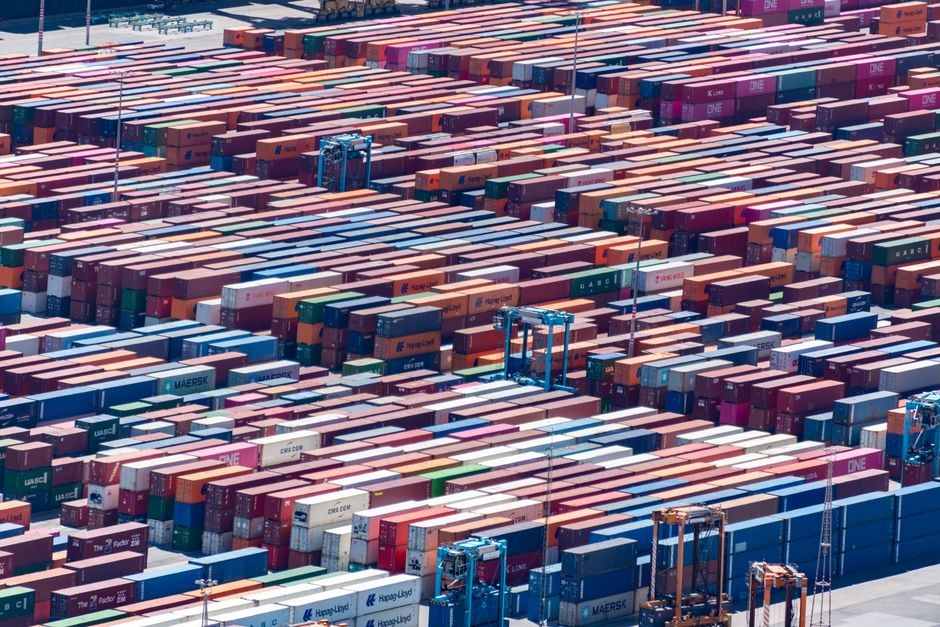
According to blogs.tarangya.com, 55% of global logistics leaders now rank geopolitics as their top 'meta-risk'—a structural shift driven by tariff volatility, Red Sea disruptions, and chokepoint insecurity. Key responses include holding 20–30% more safety stock, regionalizing manufacturing across Southeast Asia, India, and Eastern Europe, and adopting digital twins for real-time scenario simulation. Rerouting 40% of Europe–Asia cargo around the Cape of Good Hope adds 10–14 days per voyage, while BRICS Pay pilots and TSMC’s Arizona fab signal deepening financial and semiconductor decoupling. Sub-tier intelligence and boardroom-level geopolitical governance are now operational imperatives.
According to blogs.tarangya.com, a startling 55% of global logistics leaders now rank geopolitics as their single greatest “meta-risk”—surpassing traditional concerns like demand volatility, natural disasters, or labor shortages.
From Efficiency to Resilience: The End of Just-in-Time
For three decades, supply chains were optimized for efficiency, lean inventories, and lowest-cost sourcing. But the mid-2020s—marked by BRICS expansion and persistent Red Sea disruptions—shattered the assumption of an open, predictable global trade system. Geopolitics is now a “meta-risk” because it doesn’t just affect one node; it undermines the entire ecosystem.
The Tariff Fog and Sourcing Paralysis
The source states that in 2026, “reciprocal tariffs” shift week by week, pushing the average effective tariff rate for many US-bound goods to levels not seen since the 1930s. This volatility has triggered “sourcing paralysis”: importers hesitate to commit long-term to partners in Vietnam or Mexico when a new trade agreement—or withdrawal from one—could alter landed costs by 25% overnight.
Building Geopolitical Resilience
Leading firms are responding with intentional redundancy and structural diversification:
- Buffer stocks: Holding 20–30% more safety stock of critical components, treating carrying cost as a “geopolitical insurance premium”
- Regional clusters: Shifting from single mega-factories (e.g., in China) to modular production nodes in Southeast Asia, India, and Eastern Europe
- Ally-shoring and friend-shoring: Prioritizing countries with shared values and stable treaties—even at higher cost—for greater predictability
Chokepoints and Strategic Corridors
The geography of trade has become a weapon. Approximately 30% of global oil flows and a massive share of Europe’s LNG transit through the Middle East. With tensions involving Iran remaining acute, 40% of European imports from Asia are now permanently rerouted around the Cape of Good Hope. This adds 10–14 days to voyages, incinerates thousands of tons of extra fuel, and spikes CO2 emissions—just as new environmental regulations take effect.
The instability is accelerating adoption of alternatives like the India-Middle East-Europe Economic Corridor (IMEC), watched closely by forwarders as the ultimate “Plan B” for the Suez Canal.
The Semiconductor Siege and Financial Weaponization
Taiwan remains the world’s most delicate nerve center for advanced semiconductors. In 2026, governments treat high-end chips and AI infrastructure as national security assets. The source notes the “diversification race”—from TSMC’s expansion in Arizona to new “fab” plants in Germany and India—as “the most expensive logistics project in human history.”
Simultaneously, geopolitical finance is evolving: the China-Russia Axis, bolstered by the 2025 BRICS expansion, is stress-testing “dollar-free” trade. Pilot programs for BRICS Pay, a blockchain-based settlement system, are now live. For exporters in Brazil or buyers in the UAE, bypassing SWIFT isn’t convenience—it’s a survival strategy against Western secondary sanctions.
Tech as Antidote: Digital Twins and Real-Time Visibility
In 2026, successful freight forwarders deploy AI-driven tools to “see through the fog.” The source states that predictive analytics models run millions of “what-if” scenarios hourly—including Panama Canal water levels or rare earth export bans—and pattern recognition detects early signals like surging port insurance premiums or container accumulation.
“End-to-end visibility is no longer a ‘nice-to-have’ feature; it is a strategic requirement.” — blogs.tarangya.com
Governance Integration and Sub-Tier Intelligence
Modern supply chain strategy now requires Sub-Tier Intelligence: knowing not just your supplier, but their supplier’s supplier—to ensure no serial numbers or raw materials originate from an “axis of risk.” The source emphasizes moving the “Geopolitical Advisor” out of the back office and into the boardroom, because supply chain decisions are now foreign policy decisions.
Source: blogs.tarangya.com
Compiled from international media by the SCI.AI editorial team.