Explore

  • Trending
  • Latest
  • Tools
  • Browse
  • Subscription Feed

Logistics

  • Ocean
  • Air Cargo
  • Road & Rail
  • Warehousing
  • Last Mile

Regions

  • Southeast Asia
  • South Asia
  • Central Asia
  • Japan & Korea
  • Middle East
  • Europe
  • Russia
  • Africa
  • North America
  • Latin America
  • Australia
SCI.AI
  • Supply Chain
    • Strategy & Planning
    • Logistics & Transport
    • Manufacturing
    • Inventory & Fulfillment
  • Procurement
    • Strategic Sourcing
    • Supplier Management
    • Supply Chain Finance
  • Technology
    • AI & Automation
    • Robotics
    • Digital Platforms
  • Risk & Resilience
  • Sustainability
  • Research
  • Expert Columns
  • English
    • Chinese
    • English
No Result
View All Result
  • Login
  • Register
SCI.AI
No Result
View All Result
Home Supply Chain Logistics & Transport

Bangladesh Air Freight Rates Surge 40% Amid Middle East Disruption

2026/04/23
in Logistics & Transport, Supply Chain
0 0
Bangladesh Air Freight Rates Surge 40% Amid Middle East Disruption

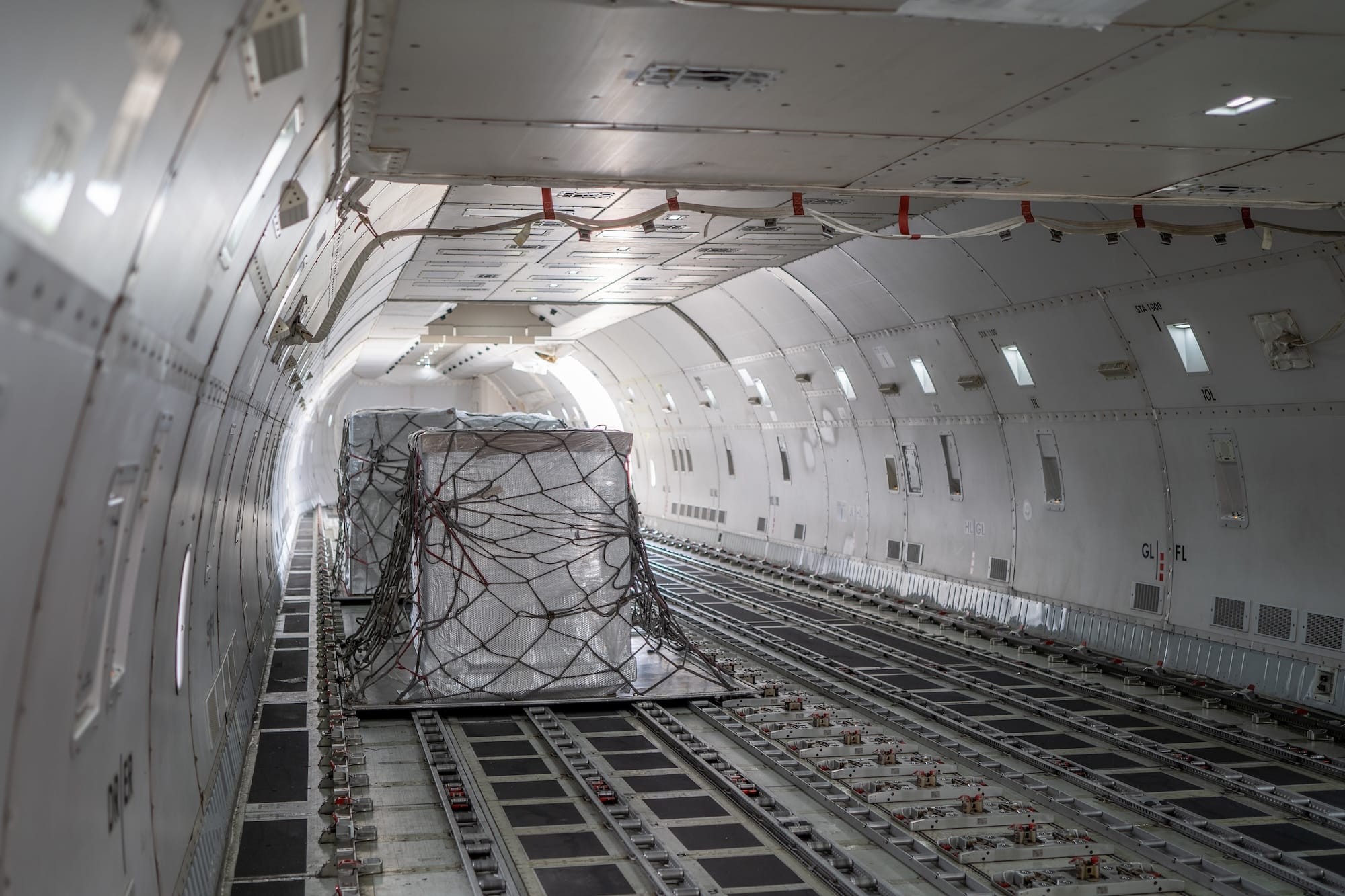
According to aircargoweek.com, air cargo rates from Bangladesh have surged sharply due to Middle East airspace disruptions, reducing effective capacity on key trade lanes linking South Asia with Europe and North America. The disruption has exposed structural vulnerabilities in Bangladesh’s export logistics model — particularly its heavy reliance on Gulf transit hubs like Dubai and Doha for time-sensitive ready-made garment shipments.

The Catalyst: Middle East Corridor Constraints

The immediate trigger is the rerouting of airline services to avoid sensitive Middle East airspace, driven by escalating geopolitical tensions. Airlines are reassessing operational risks, extending flight paths, increasing fuel consumption, and tightening aircraft utilisation — all contributing to cost escalation. Bangladesh is among the most affected markets, given its near-total dependence on hub-and-spoke routing through Gulf airports.

Impact on Export Competitiveness

Rising freight costs are directly pressuring garment exporters’ margins and global price competitiveness. Air cargo — traditionally used selectively for urgent orders and replenishment cycles — is now both more necessary and more expensive, creating a complex cost–speed trade-off. As the source states: “Manufacturers operating on thin margins face difficult choices: absorbing logistics costs erodes profitability, while passing them on risks weakening price competitiveness in a fiercely contested global market.”

Operational Adjustments and Capacity Limits

  • Rerouted flights reduce aircraft productivity by limiting rotations within operational windows
  • Passenger aircraft belly-hold capacity — a major source of cargo uplift — is highly sensitive to changes in passenger frequencies or aircraft type
  • Frequent forwarder responses include alternative hubs, indirect routings, and multimodal repositioning through neighbouring countries
  • These workarounds introduce extra handling stages and complexity but cannot fully offset the underlying capacity deficit

Multimodal Shifts and Systemic Dependencies

Exporters are increasingly evaluating combinations of air, sea, and land transport to balance cost and transit time. Maritime transport offers lower-cost alternatives for less time-sensitive cargo, though with longer lead times. Yet high-value, perishable, or time-critical goods remain dependent on airfreight — reinforcing its systemic role in global trade networks. As the report notes: “The inability to fully substitute transport modes highlights the strategic importance of stable aviation capacity.”

Human and Economic Implications

Beyond metrics, the disruption affects livelihoods: factory operators adjust production schedules amid logistical uncertainty, smaller exporters face financial pressure from rising costs and limited capacity, and workers in labour-intensive industries risk income instability if export volumes slow. According to the report, “logistics resilience is not only operational but also socio-economic.”

Strategic Implications for Resilience

The episode underscores the need for more resilient, diversified air cargo networks and reduced dependence on single corridors. For policymakers, it highlights the importance of strengthening domestic logistics infrastructure and pursuing more direct connectivity — though such efforts are capital-intensive and complex. Airlines may increasingly explore alternative corridors and secondary gateways to reduce concentration risk. As the source concludes: “Logistics economics are inseparable from the stability of the corridors through which goods move.”

Source: aircargoweek.com

Compiled from international media by the SCI.AI editorial team.

More on This Topic

  • 5 Key Challenges Facing U.S. Manufacturing (Apr 23, 2026)
  • Reshoring Is Real But Takes Years, $Billions (Apr 23, 2026)
  • Rivian R2 Production Launches Amid Tornado Damage (Apr 23, 2026)
  • Tornado Damages Rivian’s Illinois Factory Amid R2 EV Launch (Apr 23, 2026)
  • Middle East Air Freight Capacity Up 37% as Gulf Carriers Resume Flights (Apr 23, 2026)
ShareTweet

Related Posts

5 Key Challenges Facing U.S. Manufacturing
Manufacturing

5 Key Challenges Facing U.S. Manufacturing

April 23, 2026
1
Reshoring Is Real But Takes Years, $Billions
Manufacturing

Reshoring Is Real But Takes Years, $Billions

April 23, 2026
1
Rivian R2 Production Launches Amid Tornado Damage
Manufacturing

Rivian R2 Production Launches Amid Tornado Damage

April 23, 2026
2
Tornado Damages Rivian’s Illinois Factory Amid R2 EV Launch
Manufacturing

Tornado Damages Rivian’s Illinois Factory Amid R2 EV Launch

April 23, 2026
2
Middle East Air Freight Capacity Up 37% as Gulf Carriers Resume Flights
Manufacturing

Middle East Air Freight Capacity Up 37% as Gulf Carriers Resume Flights

April 23, 2026
2
India-ROK Shipbuilding Pact Targets $25B Vessel Demand
Logistics & Transport

India-ROK Shipbuilding Pact Targets $25B Vessel Demand

April 23, 2026
1

Leave a Reply Cancel reply

Your email address will not be published. Required fields are marked *

Recommended

USMCA 2026 Review: Supply Chain Resilience, Labor Enforcement & AI

USMCA 2026 Review: Supply Chain Resilience, Labor Enforcement & AI

7 Views
April 1, 2026
Huangyan: Tesla’s Hidden Plastic Mould Hub in China

Huangyan: Tesla’s Hidden Plastic Mould Hub in China

0 Views
April 23, 2026
5 Global Sustainability Shifts Reshaping Supply Chain Risk in 2026

5 Global Sustainability Shifts Reshaping Supply Chain Risk in 2026

4 Views
April 4, 2026
AGV/AMR Robots Reshape Manufacturing Logistics: 2026 Deep Dive into Autonomous Mobile Robot Scale Adoption

AGV/AMR Robots Reshape Manufacturing Logistics: 2026 Deep Dive into Autonomous Mobile Robot Scale Adoption

3 Views
February 28, 2026
Show More

SCI.AI

Global Supply Chain Intelligence. Delivering real-time news, analysis, and insights for supply chain professionals worldwide.

Categories

  • Supply Chain Management
  • Procurement
  • Technology


  • Risk & Resilience
  • Sustainability
  • Research

© 2026 SCI.AI. All rights reserved.

Powered by SCI.AI Intelligence Platform

Welcome Back!

Sign In with Facebook
Sign In with Google
Sign In with Linked In
OR

Login to your account below

Forgotten Password? Sign Up

Create New Account!

Sign Up with Facebook
Sign Up with Google
Sign Up with Linked In
OR

Fill the forms below to register

All fields are required. Log In

Retrieve your password

Please enter your username or email address to reset your password.

Log In

Scan to share via WeChat

Open WeChat and scan the QR code to share

QR Code

Add New Playlist

No Result
View All Result
  • Supply Chain
    • Strategy & Planning
    • Logistics & Transport
    • Manufacturing
    • Inventory & Fulfillment
  • Procurement
    • Strategic Sourcing
    • Supplier Management
    • Supply Chain Finance
  • Technology
    • AI & Automation
    • Robotics
    • Digital Platforms
  • Risk & Resilience
  • Sustainability
  • Research
  • Expert Columns
  • English
    • Chinese
    • English
  • Login
  • Sign Up

© 2026 SCI.AI