Explore

  • Trending
  • Latest
  • Tools
  • Browse
  • Subscription Feed

Logistics

  • Ocean
  • Air Cargo
  • Road & Rail
  • Warehousing
  • Last Mile

Regions

  • Southeast Asia
  • South Asia
  • Central Asia
  • Japan & Korea
  • Middle East
  • Europe
  • Russia
  • Africa
  • North America
  • Latin America
  • Australia
SCI.AI
  • Supply Chain
    • Strategy & Planning
    • Logistics & Transport
    • Manufacturing
    • Inventory & Fulfillment
  • Procurement
    • Strategic Sourcing
    • Supplier Management
    • Supply Chain Finance
  • Technology
    • AI & Automation
    • Robotics
    • Digital Platforms
  • Risk & Resilience
  • Sustainability
  • Research
  • Expert Columns
  • English
    • Chinese
    • English
No Result
View All Result
  • Login
  • Register
SCI.AI
No Result
View All Result
Home North America Supply Chain

USMCA Review 2026: North American Supply Chain Stress Test

2026/04/19
in North America Supply Chain
0 0
USMCA Review 2026: North American Supply Chain Stress Test

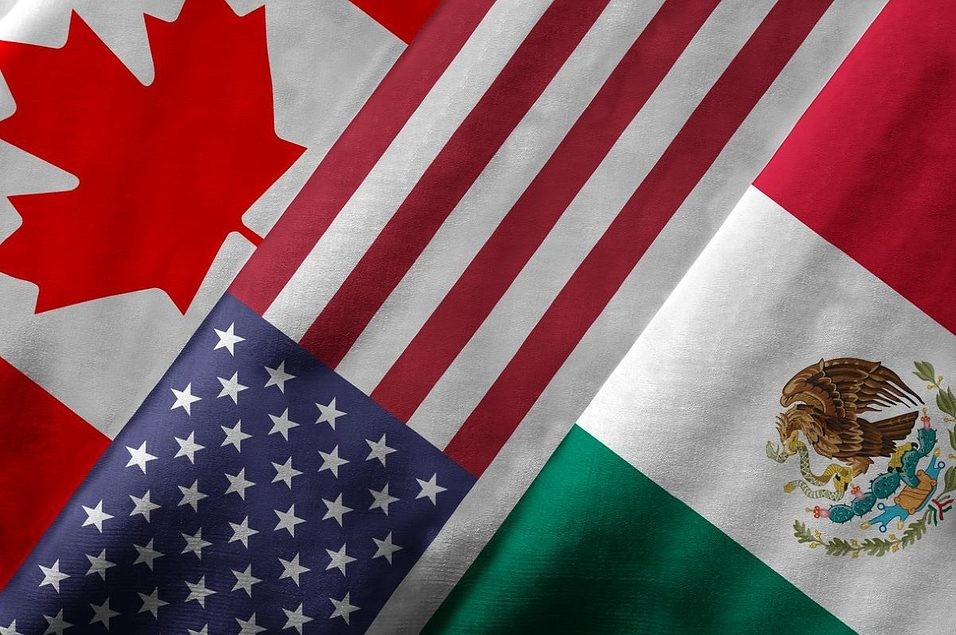
According to www.supplychainbrain.com, the United States, Mexico, and Canada are set to begin a joint review of the U.S.-Mexico-Canada Agreement (USMCA) on July 1, 2026, a process that could determine whether the agreement continues, is renegotiated, or terminates entirely. Should the three nations choose not to end it, the USMCA will expire in 2036.

Political Uncertainty and Exit Risk

Former President Donald Trump—who originally championed the USMCA’s replacement of NAFTA in 2020—has publicly dismissed the deal as “irrelevant” and claimed “there’s no real advantage to it,” during a January 13, 2026 visit to Detroit, Michigan. This rhetoric has intensified concerns among supply chain professionals about potential U.S. withdrawal. As Irina Tsukerman, president of political risk assessment firm Scarab Rising, explains:

“There are real concerns that the United States could threaten to pull out of the agreement, mainly because the deal has an explicit exit ramp.”

The USMCA permits any member to withdraw unilaterally upon providing six months’ written notice.

Industry-Specific Vulnerabilities

The auto industry faces acute exposure: auto parts and partially built vehicles may cross U.S.–Mexico–Canada borders seven or eight times before final assembly. Without USMCA protections, each crossing would be subject to tariffs. The American Automotive Policy Council labeled the USMCA “the most vital trade agreement for America’s automakers” and urged preservation of its core structure with only “targeted refinements.” Similarly, the U.S. Chamber of Commerce called the agreement “critical to our economic future,” citing its role in enabling tariff-free U.S. exports to North American markets.

Operational Impacts on Supply Chains

Even modest renegotiation introduces prolonged uncertainty, affecting long-term investment and sourcing decisions. According to Allan Hou, sales director for logistics company TSL Australia:

“The greatest risk for supply chains isn’t an impasse in trade talks, but a prolonged period of negotiation that causes shippers to hold off on bookings, delay sourcing decisions, and add additional layers to inventory buffers… These delays have a ripple effect throughout all aspects of the logistics process, including carriers, warehouses and trucking companies.”

Logistics providers are already preparing for tighter compliance requirements—especially around rules of origin for steel, automobiles, and critical minerals. Customs authorities are expected to intensify origin and labor-content verification at borders, raising risks of congestion and delays along key trade corridors. In response, firms are investing in new compliance systems and real-time visibility tools, while shippers revisit contracts to clarify tariff liability and build routing flexibility.

Resilience Through Adaptability

As Matt Lekstutis, director at supply chain and procurement consultancy Eff, observes, all three countries retain strong incentives to preserve trade stability. Babak Hafezi, adjunct professor of international business at American University, notes that while U.S. withdrawal remains possible under the current administration, the economics of integrated North American production make a clean break costly to all three countries. Still, Hou emphasizes that this review functions as a de facto stress test: companies able to maintain compliance, shipment visibility, and agile sourcing strategies will be better positioned to absorb associated costs.

Source: Supply Chain Brain

Compiled from international media by the SCI.AI editorial team.

More on This Topic

  • North American Intermodal Volumes to Rise 4.4% Amid Labor Constraints (Apr 22, 2026)
  • US-Mexico Launch USMCA Sectoral Talks Amid Supply Chain Pressures (Apr 21, 2026)
  • Nippon Express Acquires Metro Supply for $1.6B (Apr 20, 2026)
  • US Launches Two 301 Investigations, 100% Pharma Tariffs Set for July 31 (Apr 15, 2026)
  • 2026 North America Customs Shifts: Data, Origin, Compliance (Apr 14, 2026)
ShareTweet

Related Posts

North American Intermodal Volumes to Rise 4.4% Amid Labor Constraints
North America Supply Chain

North American Intermodal Volumes to Rise 4.4% Amid Labor Constraints

April 22, 2026
2
US-Mexico Launch USMCA Sectoral Talks Amid Supply Chain Pressures
North America Supply Chain

US-Mexico Launch USMCA Sectoral Talks Amid Supply Chain Pressures

April 21, 2026
5
Nippon Express Acquires Metro Supply for $1.6B
North America Supply Chain

Nippon Express Acquires Metro Supply for $1.6B

April 20, 2026
4
US Launches Two 301 Investigations, 100% Pharma Tariffs Set for July 31
North America Supply Chain

US Launches Two 301 Investigations, 100% Pharma Tariffs Set for July 31

April 15, 2026
14
2026 North America Customs Shifts: Data, Origin, Compliance
North America Supply Chain

2026 North America Customs Shifts: Data, Origin, Compliance

April 14, 2026
13
North America Supply Chain

Trump Second-Term Tariffs Hit 47%: Supply Chain Disruption

April 13, 2026
17

Leave a Reply Cancel reply

Your email address will not be published. Required fields are marked *

Recommended

Africa’s $Billion Infrastructure Boom Needs Trade Facilitation Now

Africa’s $Billion Infrastructure Boom Needs Trade Facilitation Now

7 Views
March 29, 2026
Energy-Efficient Robotics: 3 Key Levers for Supply Chain Automation

Energy-Efficient Robotics: 3 Key Levers for Supply Chain Automation

5 Views
March 31, 2026
Digital Twin Supply Chain: Revolutionizing Logistics and Efficiency (1)

Digital Twin Supply Chain: Revolutionizing Logistics and Efficiency (1)

7 Views
March 24, 2026
SIU物流专家:可能的码头罢工对供应链可能产生巨大的影响

SIU Logistics Expert: Potential Dockworker Strikes Could Have Significant Impact on Supply Chains

9 Views
February 16, 2026
Show More

SCI.AI

Global Supply Chain Intelligence. Delivering real-time news, analysis, and insights for supply chain professionals worldwide.

Categories

  • Supply Chain Management
  • Procurement
  • Technology


  • Risk & Resilience
  • Sustainability
  • Research

© 2026 SCI.AI. All rights reserved.

Powered by SCI.AI Intelligence Platform

Welcome Back!

Sign In with Facebook
Sign In with Google
Sign In with Linked In
OR

Login to your account below

Forgotten Password? Sign Up

Create New Account!

Sign Up with Facebook
Sign Up with Google
Sign Up with Linked In
OR

Fill the forms below to register

All fields are required. Log In

Retrieve your password

Please enter your username or email address to reset your password.

Log In

Scan to share via WeChat

Open WeChat and scan the QR code to share

QR Code

Add New Playlist

No Result
View All Result
  • Supply Chain
    • Strategy & Planning
    • Logistics & Transport
    • Manufacturing
    • Inventory & Fulfillment
  • Procurement
    • Strategic Sourcing
    • Supplier Management
    • Supply Chain Finance
  • Technology
    • AI & Automation
    • Robotics
    • Digital Platforms
  • Risk & Resilience
  • Sustainability
  • Research
  • Expert Columns
  • English
    • Chinese
    • English
  • Login
  • Sign Up

© 2026 SCI.AI