According to thetraceabilityhub.com, digital twins are emerging as foundational infrastructure for intelligent supply chain systems—enabling real-time visibility and predictive optimization across global operations.
What Digital Twins Deliver
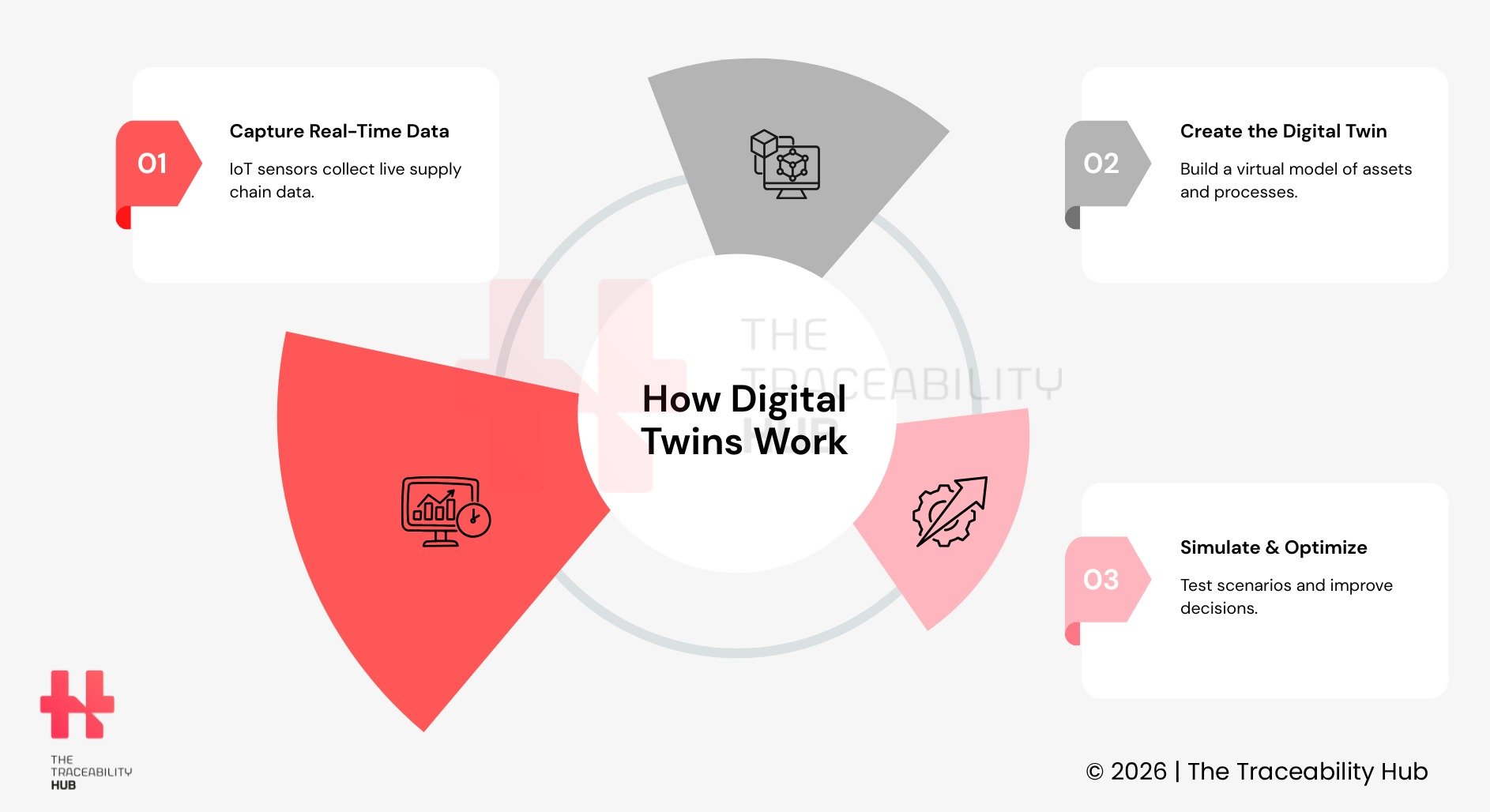
Digital twins in supply chains are dynamic, virtual representations synchronized with physical assets, processes, and networks through continuous data ingestion from IoT sensors, ERP systems, transportation management platforms, and warehouse execution systems. The article emphasizes that their value lies not in static modeling but in real-time visibility and predictive optimization. Unlike traditional dashboards, digital twins simulate cause-and-effect relationships—allowing users to test scenarios such as port congestion delays, supplier capacity shortfalls, or demand spikes before they impact operations.

Industry Adoption Context
While the source material does not name specific companies or geographies, industry-wide adoption is accelerating. According to MarketsandMarkets, the global digital twin market in manufacturing and logistics is projected to grow from $10.5 billion in 2023 to $35.8 billion by 2028, at a CAGR of 27.9%. This reflects broader momentum: DHL launched its Resilience Twin platform in 2022 to model end-to-end network risks; Maersk integrated digital twin capabilities into its remote container monitoring system in 2023; and Walmart has publicly disclosed using digital twin models to optimize inventory placement across its US distribution network. These deployments align with rising practitioner demand for tools that unify fragmented data sources—especially amid persistent volatility in shipping lanes, labor availability, and regulatory reporting requirements.
Technical Architecture and Implementation
Digital twin architecture typically consists of four layers: perception layer, data layer, model layer, and application layer. The perception layer collects real-time data through IoT sensors, RFID tags, cameras, and other devices. The data layer is responsible for data cleaning, storage, and fusion, building a unified data lake. The model layer uses machine learning algorithms and physical simulation technology to build virtual models. The application layer provides visual operation interfaces and decision support tools. Implementation usually starts with critical assets or processes and gradually expands to the entire supply chain network.
ROI and Cost-Benefit Analysis
According to McKinsey research, companies deploying digital twins typically achieve ROI within 12-18 months. Main benefits include: operational cost reduction of 15-25%, inventory holding cost reduction of 20-30%, and customer service level improvement of 10-15 percentage points. Initial investments mainly focus on sensor deployment, data platform construction, and talent training. However, in the long term, digital twins can significantly enhance supply chain resilience and agility, helping companies better respond to market fluctuations and unexpected events.
Future Development Trends
Digital twin technology is developing towards greater intelligence and autonomy. Future trends include: deep integration with generative AI to achieve natural language interaction and intelligent decision-making; collaboration between edge computing and cloud computing to improve real-time response capabilities; integration of blockchain technology to ensure data security and traceability; and the rise of Digital Twin as a Service (DTaaS) model to lower application barriers for SMEs. Additionally, the rise of the metaverse concept provides new application scenarios for digital twins, such as virtual factory inspections and immersive training.
Practical Implications for Supply Chain Professionals
For practitioners, digital twin implementation hinges on three prerequisites: interoperable data standards (e.g., GS1 EPCIS for event capture), high-fidelity connectivity across tiers (including Tier 2 and 3 suppliers), and cross-functional governance to align IT, operations, and procurement teams. Without these, models risk becoming isolated ‘digital showrooms’ rather than decision-support engines. As noted in the article, success depends on treating the digital twin not as an endpoint but as a living system requiring continuous calibration. This means supply chain professionals must prioritize data lineage, latency tolerance thresholds, and use-case prioritization—starting with high-impact, high-visibility nodes like import gateways or cold-chain handoffs.

Conclusion and Recommendations
Digital twin technology is reshaping global supply chain operations, shifting from traditional experience-driven approaches to data-driven and intelligent decision-making. Companies should plan early, develop clear digital transformation roadmaps, start with pilot projects, and gradually expand application scope. At the same time, cross-departmental collaboration needs to be strengthened to break down data silos and establish unified data standards and governance systems. For SMEs, cloud-based digital twin services can be considered to reduce initial investment and operational costs. Ultimately, digital twins will become core competitiveness for companies building intelligent, resilient, and sustainable supply chains.
Source: thetraceabilityhub.com
Compiled from international media by the SCI.AI editorial team.