Explore

  • Trending
  • Latest
  • Tools
  • Browse
  • Subscription Feed

Logistics

  • Ocean
  • Air Cargo
  • Road & Rail
  • Warehousing
  • Last Mile

Regions

  • Southeast Asia
  • North America
  • Middle East
  • Europe
  • South Asia
  • Latin America
  • Africa
  • Japan & Korea
SCI.AI
  • Supply Chain
    • Strategy & Planning
    • Logistics & Transport
    • Manufacturing
    • Inventory & Fulfillment
  • Procurement
    • Strategic Sourcing
    • Supplier Management
    • Supply Chain Finance
  • Technology
    • AI & Automation
    • Robotics
    • Digital Platforms
  • Risk & Resilience
  • Sustainability
  • Research
  • English
    • Chinese
    • English
No Result
View All Result
  • Login
  • Register
SCI.AI
No Result
View All Result
Home Supply Chain Logistics & Transport Last Mile

Amazon’s Last-Mile Delivery Network: 310M Users, 2025 Infrastructure Scale

2026/03/30
in Last Mile, Supply Chain
0 0
Amazon’s Last-Mile Delivery Network: 310M Users, 2025 Infrastructure Scale

According to www.upperinc.com, Amazon’s last-mile delivery system — the final leg from delivery station to customer doorstep — powers one of the world’s most responsive e-commerce logistics ecosystems, serving 310 million active users as of 2025.

How Amazon Structures Its Final-Leg Infrastructure

Last-mile delivery is operationally distinct from upstream logistics: while fulfillment centers store millions of items and sortation centers organize regionally (typically 50–100 miles from customers), Amazon’s delivery stations are smaller, hyper-local facilities positioned under 20 miles from end consumers. These stations receive pre-sorted packages by ZIP code, assign them to dynamically optimized routes, and load vehicles in sequence matching delivery order — enabling precise time windows and real-time tracking.

  • Fulfillment Center: Storage & picking; distance to customer typically 100+ miles
  • Sortation Center: Regional organization; distance 50–100 miles
  • Delivery Station: Final route sorting; distance under 20 miles

When a tracking status reads “Package arrived at delivery station,” the package is usually hours away from delivery — a direct outcome of this geographically compressed network design.

Evolution and Key Initiatives (2009–2025)

Amazon’s last-mile strategy has evolved across three phases:

  • 2009–2015: Launched same-day delivery (local express), Amazon Locker, Prime Now, Amazon Flex, and Operation Dragon Boat; acquired 25% stakes in Colis Privé and 4.2% of Yodel
  • 2016–2019: Fully acquired Colis Privé; introduced Amazon Logistics; launched free one-day delivery; began large-scale deployment of electric delivery vans via partnership with Rivian
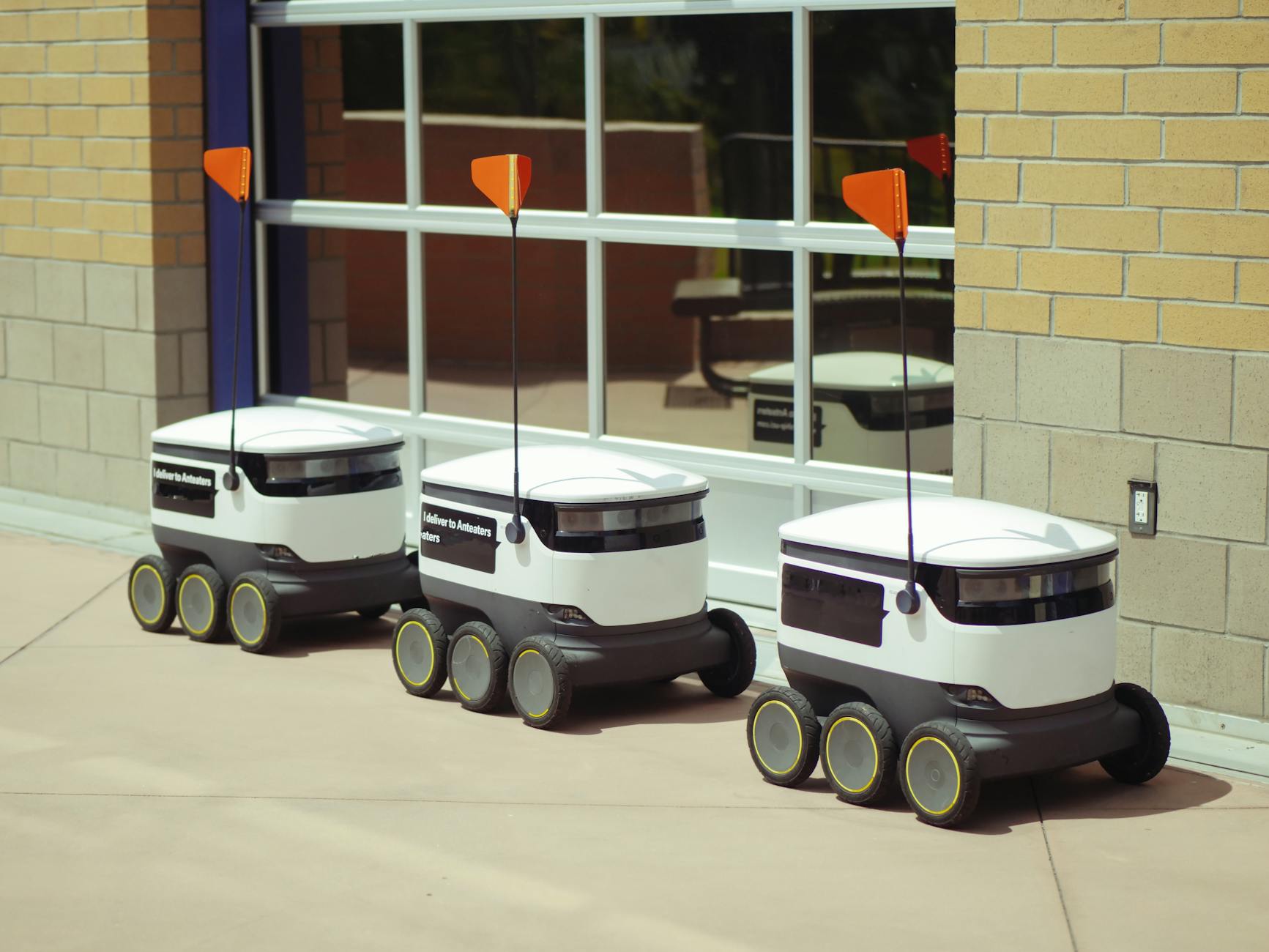
  • 2020–present: Accelerated automation and robotics in fulfillment centers; advanced drone-delivery via Amazon Prime Air; tested autonomous ground robots (e.g., Amazon Scout); optimized facility placement to reduce average travel distance; announced major expansion into rural delivery networks

Core Delivery Programs and Partnerships

Amazon operates multiple complementary last-mile services:

  • Amazon Flex: Gig-economy program where independent contractors use personal vehicles; drivers earn $18–$25/hour, selected for peak demand (e.g., Prime Day)
  • Amazon Fresh: Dedicated grocery and perishable delivery with temperature-controlled storage and tight time windows
  • Amazon Logistics: Proprietary network using Amazon-employed drivers and contracted Delivery Service Partners (DSPs), handling the majority of U.S. deliveries
  • Prime Now / Same-Day Delivery: Available in 110 US metro areas; some orders delivered in 1–2 hours via urban micro-fulfillment centers
  • Amazon Lockers & Hub Counters: Secure pickup options in public locations or local businesses
  • Hub Delivery Program: Enables small businesses to deliver 20–50 packages daily, earning up to $27,000 annually — critical for rural coverage where dedicated stations are uneconomical

The Delivery Service Partner (DSP) Program

The DSP program empowers entrepreneurs to launch Amazon-branded delivery businesses. Partners begin with an initial investment of approximately $10,000, complete Amazon’s vetting and training, and gain access to Amazon-branded delivery vehicles, routing software, and operational support. The model provides flexibility and improved work-life balance for drivers while offering financial opportunity — described in the source as “financially rewarding” for qualified partners.

Source: www.upperinc.com

Compiled from international media by the SCI.AI editorial team.
More on This Topic

  • Wing Launches First US Urban Drone Delivery (Bay Area) (Mar 30, 2026)
  • FedEx Launches Two-Hour SameDay Local Delivery (Mar 30, 2026)
  • Africa’s $Billion Infrastructure Boom Needs Trade Facilitation Now (Mar 29, 2026)
  • Nearshoring Infrastructure Gap: LATAM Needs 3–5% GDP Annually (Mar 29, 2026)
  • Geopolitics & Supply Chains: Gita Gopinath on India’s Challenges (Mar 29, 2026)

Related Posts

Wing Launches First US Urban Drone Delivery (Bay Area)
Last Mile

Wing Launches First US Urban Drone Delivery (Bay Area)

March 30, 2026
1
FedEx Launches Two-Hour SameDay Local Delivery
Last Mile

FedEx Launches Two-Hour SameDay Local Delivery

March 30, 2026
0
Africa’s $Billion Infrastructure Boom Needs Trade Facilitation Now
Logistics & Transport

Africa’s $Billion Infrastructure Boom Needs Trade Facilitation Now

March 29, 2026
2
Nearshoring Infrastructure Gap: LATAM Needs 3–5% GDP Annually
Geopolitics

Nearshoring Infrastructure Gap: LATAM Needs 3–5% GDP Annually

March 29, 2026
1
Geopolitics & Supply Chains: Gita Gopinath on India’s Challenges
Supply Chain

Geopolitics & Supply Chains: Gita Gopinath on India’s Challenges

March 29, 2026
3
Tariffs Trigger Supply Chain Reset: India and Vietnam Emerge as Key Diversification Hubs
Manufacturing

Tariffs Trigger Supply Chain Reset: India and Vietnam Emerge as Key Diversification Hubs

March 29, 2026
3

Leave a Reply Cancel reply

Your email address will not be published. Required fields are marked *

Recommended

Africa’s Port Resilience Surge: 2026 Hormuz Closure Tests Supply Chains

Africa’s Port Resilience Surge: 2026 Hormuz Closure Tests Supply Chains

2 Views
March 27, 2026
The Digital Transformation of Logistics: Harnessing ERP, WMS, and TMS for Sustainable Efficiency

The Digital Transformation of Logistics: Harnessing ERP, WMS, and TMS for Sustainable Efficiency

4 Views
March 18, 2026
Arctic Corridors and Eurasian Resilience: How China-Russia Logistics Integration Is Rewriting Global Supply Chain Geography

Arctic Corridors and Eurasian Resilience: How China-Russia Logistics Integration Is Rewriting Global Supply Chain Geography

5 Views
March 19, 2026
DHL Deploys SVT Robotics’ SOFTBOT Platform Across 30 Global Warehouses, Plans 100+ Sites in 3 Years

DHL Deploys SVT Robotics’ SOFTBOT Platform Across 30 Global Warehouses, Plans 100+ Sites in 3 Years

6 Views
March 25, 2026
Show More

SCI.AI

Global Supply Chain Intelligence. Delivering real-time news, analysis, and insights for supply chain professionals worldwide.

Categories

  • Supply Chain Management
  • Procurement
  • Technology


  • Risk & Resilience
  • Sustainability
  • Research

© 2026 SCI.AI. All rights reserved.

Powered by SCI.AI Intelligence Platform

Welcome Back!

Sign In with Facebook
Sign In with Google
Sign In with Linked In
OR

Login to your account below

Forgotten Password? Sign Up

Create New Account!

Sign Up with Facebook
Sign Up with Google
Sign Up with Linked In
OR

Fill the forms below to register

All fields are required. Log In

Retrieve your password

Please enter your username or email address to reset your password.

Log In

Add New Playlist

No Result
View All Result
  • Supply Chain
    • Strategy & Planning
    • Logistics & Transport
    • Manufacturing
    • Inventory & Fulfillment
  • Procurement
    • Strategic Sourcing
    • Supplier Management
    • Supply Chain Finance
  • Technology
    • AI & Automation
    • Robotics
    • Digital Platforms
  • Risk & Resilience
  • Sustainability
  • Research
  • English
    • Chinese
    • English
  • Login
  • Sign Up

© 2026 SCI.AI