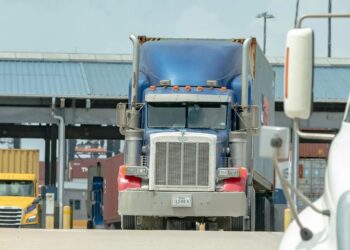
According to spendmatters.com, AI is increasingly being deployed to automate supply chain risk management — the category Bhavuk Chawla, Associate Procurement Director for wood-based packaging at Unilever (North America), identifies as the highest-value candidate for autonomous AI decision-making.
Risk Management Is AI’s Natural Fit
Chawla argues that unlike strategy development or supplier relationship management — which depend on cultural fluency, empathy and negotiation — risk management is inherently structured, time-sensitive and data-driven. Modern supply chains generate massive volumes of risk signals: commodity price swings, supplier financial instability, regulatory changes, port congestion, extreme weather patterns and social media sentiment. Humans cannot absorb and interpret these in real time.
“Risk management is, at its core, a speed game — and AI wins that game every time.” — Bhavuk Chawla, Associate Procurement Director for wood-based packaging, Unilever (North America)
Why Risk Decisions Are Codifiable
Chawla emphasizes that risk triggers can be precisely defined and automated within guardrails:
- If supplier probability of default > X → trigger mitigation
- If geopolitical tension index hits Y → activate alternative routes
- If lead-time variability exceeds Z → adjust inventory buffers
This codifiability enables practical autonomy without compromising the human-centric nature of strategic procurement.
AI in the Wild: 7 Documented Risk Interventions
Real-world deployments show measurable impact across multiple risk domains:
- Predicting global disruptions 60–90 days in advance: AI risk intelligence platforms analyzing satellite imagery and payment trends deliver 30%–40% faster response times and 20%–50% better forecast accuracy during volatility.
- Detecting supplier bankruptcy before it happens: A global electronics manufacturer reduced supplier-related disruptions by 30% using AI that monitors financials, news feeds and social media.
- Predicting port congestion months ahead: AI tools now forecast port delays up to three months early using weather systems, vessel movements and historical throughput — helping avoid multi-million-dollar delays.
- Real-time rerouting during weather disruptions: AI agents monitor logistics flows, detect anomalies and rebook shipments automatically within cost and service constraints.
- Continuous monitoring of geopolitical and economic risk: AI ingests sanctions, tariffs, political instability and currency data to maintain a real-time geopolitical risk map — flagging threats earlier than human analysis.
- Supplier stress detection via external data integration: Financial data, capacity signals and compliance alerts generate early warnings weeks or months ahead of traditional assessments.
- Climate risk forecasting and extreme weather prediction: Satellite data, climate models and sensor feeds enable proactive relocation of production or inventory ahead of floods, hurricanes and wildfires.
Barriers to Adoption
Despite strong alignment, full autonomy remains constrained by three solvable challenges:
- Fragmented data and legacy systems: Spreadsheets, siloed ERP modules and disconnected supplier portals prevent AI from accessing clean, structured, real-time data.
- Governance and accountability gaps: Clear frameworks defining human oversight, escalation paths and decision rights are still lacking.
- Cultural resistance and change management: Many procurement professionals view AI as a threat rather than an enabler — requiring demonstrable value over theoretical benefits.
Source: spendmatters.com
Compiled from international media by the SCI.AI editorial team.