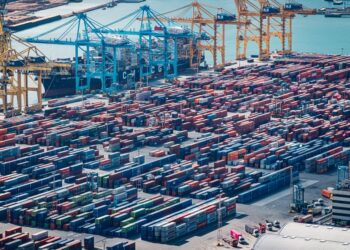
Real-time freight visibility is no longer a logistics convenience—it has evolved into a foundational financial infrastructure, fundamentally altering how banks assess risk, price credit, and release funds in international trade. Where once trade finance relied on static documents—bills of lading stamped with ambiguous timestamps or customs declarations processed days after cargo movement—today’s lenders demand dynamic, event-driven data streams that validate physical asset existence, location, condition, and chain-of-custody continuity. This shift is not incremental; it represents a structural decoupling of financial decision-making from paper-based verification toward algorithmic trust anchored in IoT sensors, GPS telemetry, blockchain-verified port calls, and AI-powered anomaly detection. According to the International Chamber of Commerce, over 68% of Tier-1 trade finance banks now require API-integrated shipment tracking as a mandatory condition for LC issuance, up from just 12% in 2019. The implications extend far beyond operational efficiency: they redefine collateral enforceability, shorten working capital cycles by an average of 14.3 days per transaction, and enable previously excluded SMEs—particularly those in emerging markets—to access financing based on verifiable movement rather than balance sheet strength alone.
The Collapse of the Document-Centric Paradigm
For over a century, international trade finance operated within a rigid documentary framework where the bill of lading functioned as both a receipt, a contract of carriage, and a negotiable title to goods. Its legal sanctity rested on physical possession and sequential endorsement—a system optimized for slow, paper-bound verification but catastrophically ill-suited for today’s volatile supply chains. When the Ever Given blocked the Suez Canal in March 2021, over 150 vessels carrying $9.6 billion in cargo were delayed, yet banks continued releasing letters of credit based on pre-blockage documentation, exposing themselves to massive contingent liability. That incident crystallized a systemic flaw: document-based assurance cannot reflect real-world disruption. The collapse accelerated post-pandemic, as global container dwell times spiked to 7.2 days at major ports (up from 3.1 in 2019), and transshipment errors rose by 41% across ASEAN corridors. Banks responded not by tightening documentation requirements—which would have choked trade—but by demanding integration with carrier TMS platforms and port community systems. Today, HSBC’s Trade Finance Platform ingests live AIS data, terminal gate-in/out timestamps, and refrigerated container temperature logs directly into its credit scoring engine, reducing manual document review time by 83% while cutting fraud-related losses by 57%.
This paradigm shift carries profound legal and regulatory consequences. Under UCP 600, discrepancies in shipping documents—even minor ones like mismatched vessel names—trigger automatic LC rejection. Yet when real-time GPS confirms a vessel’s actual position matches the contractual route, does a typographical error on a paper bill retain material relevance? Jurisdictions are beginning to answer ‘no’: Singapore’s Electronic Transactions Act was amended in 2023 to grant legal equivalence to digitally signed, timestamped freight events verified via distributed ledger, and the EU’s Digital Product Passport regulation now mandates traceable logistics metadata for all high-risk imports. As one senior counsel at Clifford Chance notes:
“The bill of lading is becoming a historical artifact—not because it’s obsolete, but because its evidentiary weight is being displaced by higher-fidelity, machine-verifiable data. Courts are increasingly treating GPS pings, sensor readings, and blockchain-anchored port logs as primary evidence of performance, relegating paper documents to secondary corroboration.” — Sarah Lin, Partner, Global Trade & Regulatory Practice
This legal evolution forces banks to redesign their KYC and AML workflows: instead of verifying counterparty identity through static corporate registries, they now monitor behavioral patterns—like abnormal routing deviations or repeated container repositioning—that signal potential diversion or sanctions evasion.
From Risk Mitigation to Value Creation: The New Role of Freight Data
Historically, freight visibility served exclusively as a risk containment tool—alerting shippers to delays so they could notify buyers or adjust inventory plans. Today, it functions as a strategic value accelerator embedded directly into financial instruments. Consider the rise of dynamic discounting facilities tied to shipment milestones: instead of waiting for delivery confirmation weeks after departure, suppliers receive early payment upon verified departure from origin port, then additional tranches triggered by crossing the equator, passing through the Panama Canal, or clearing destination customs—all validated via automated data feeds. J.P. Morgan’s TradeLens-enabled facility for automotive parts suppliers in Mexico reports a 22% reduction in DSO and a 3.8% improvement in gross margin due to predictable cash flow timing. Crucially, this isn’t just about speed—it’s about precision pricing. When lenders can observe that a particular carrier consistently delivers pharmaceutical shipments within ±0.4°C of required temperature bands across 94% of voyages, they offer lower interest rates on cold-chain financing than for carriers with 62% compliance. Such differentiation transforms logistics performance into a quantifiable, bankable asset class.
The financialization of freight data extends into insurance and collateral management. Lloyd’s of London now offers parametric trade credit insurance where payouts trigger automatically upon geofence breaches—e.g., if a container enters a sanctioned territory without prior notification—or sustained temperature excursions exceeding contractual thresholds. In 2024, parametric policies accounted for 29% of new trade credit insurance placements, up from 4% in 2020. Similarly, warehouse receipt financing has been revolutionized: instead of relying on third-party inspectors’ biweekly visits, lenders now integrate with IoT-enabled pallet trackers and humidity sensors in bonded warehouses, allowing continuous monitoring of inventory condition and location. When moisture levels in a cotton bale storage facility in Karachi exceeded 65% RH for >48 hours, the financing platform automatically froze further disbursements and alerted quality control teams—preventing $2.3 million in potential spoilage losses. This level of prescriptive control shifts trade finance from reactive loss recovery to proactive asset preservation. As a result, the World Bank estimates that enhanced freight visibility could unlock $1.2 trillion in previously underutilized working capital globally, primarily trapped in opaque, undocumented SME supply chains across Africa and South Asia.
- Top 5 freight data attributes now priced into trade finance terms: vessel ETA accuracy (weighted 22%), temperature variance (18%), port dwell time consistency (15%), customs clearance velocity (13%), and transshipment integrity (11%)
- Leading adopters of freight-data-linked financing: Maersk (via TradeLens), CMA CGM (with IBM Blockchain), DB Schenker (integrated with SAP TM), Kuehne + Nagel (using KN PULSE), and DHL (via Resilience360)
Infrastructure Gaps and Interoperability Friction
Despite rapid adoption, the freight visibility revolution faces critical infrastructure bottlenecks rooted in fragmented data ecosystems. Over 73% of global container movements pass through at least three independent TMS platforms, each using proprietary APIs, non-standardized event taxonomies, and inconsistent time zone tagging. A shipment from Shanghai to Rotterdam may generate 47 distinct data points across carrier, port, customs broker, and inland haulier systems—but only 19 are semantically aligned enough for automated ingestion. This creates “visibility deserts”: segments where data exists but cannot be fused meaningfully. For example, while Maersk’s platform provides precise GPS coordinates, many African inland hauliers still report via SMS-based check-ins with no geolocation metadata, creating unverifiable gaps in the last-mile leg. The ICC’s 2024 Trade Facilitation Index reveals that only 11 of 195 WTO member states mandate standardized digital freight data exchange protocols, leaving interoperability dependent on bilateral commercial agreements rather than regulatory harmonization. Without common data models—such as the UN/CEFACT Multi-Modal Transport Reference Data Model—banks must maintain costly, custom-built middleware stacks that increase latency and introduce reconciliation errors.
These technical fractures manifest as financial exclusion. Small exporters in Vietnam, for instance, often use low-cost local freight forwarders whose systems lack API capabilities, forcing them to submit screenshots or PDF reports for bank verification—a process that adds 5.7 days to LC processing time and increases rejection rates by 33%. Meanwhile, multinational corporations invest heavily in integrated visibility platforms, gaining preferential financing terms that widen the competitive gulf. The solution lies not in technology alone but in institutional coordination: the recent IMO Resolution MEPC.375(80) mandates standardized electronic port call notifications by 2026, and the EU’s Digital Transport and Logistics Forum has established a certification scheme for “interoperability-ready” logistics software vendors. Still, implementation lags severely—only 28% of EU-flagged vessels currently transmit compliant data streams. As one former head of trade finance at Standard Chartered observes:
“We’re building a Ferrari engine on a bicycle frame. Our algorithms can predict default probability with 92% accuracy using real-time freight signals—but if 40% of the inputs arrive as unstructured PDFs or require manual transcription, the model’s output degrades to noise. Interoperability isn’t a ‘nice-to-have’; it’s the oxygen for data-driven finance.” — Rajiv Mehta, Former Global Head of Trade Finance, Standard Chartered
Until foundational standards achieve critical mass, banks will continue subsidizing integration costs for strategic clients while excluding others—a dynamic that entrenches existing power structures rather than democratizing access.
Geopolitical Implications and Sanctions Enforcement
Freight visibility has become a frontline instrument of geopolitical strategy, transforming trade finance into a vector for extraterritorial policy enforcement. With traditional banking channels increasingly weaponized through SWIFT exclusions and correspondent banking restrictions, real-time logistics intelligence now serves as the primary mechanism for verifying sanctions compliance. OFAC’s 2024 guidance explicitly states that “failure to monitor vessel AIS history for prohibited port calls constitutes willful blindness”, making freight data not merely evidentiary but legally determinative. This has catalyzed a surge in maritime surveillance: companies like Windward and Pole Star now sell AI-analyzed vessel behavior profiles—including dark activity detection (AIS spoofing), prolonged loitering near sanctioned ports, and ship-to-ship transfers in international waters—to over 87% of top-20 global banks. When a vessel flagged to Panama spent 18 consecutive days anchored off Fujairah while allegedly transferring refined petroleum to Iranian tankers, multiple banks froze associated LCs within 90 minutes of the anomaly alert—despite no formal designation of the vessel itself.
This capability reshapes sovereign economic resilience. Countries targeted by sanctions—like Russia and Myanmar—are investing heavily in “visibility obfuscation”: deploying AIS-spoofing hardware, registering vessels under shell companies in jurisdictions with weak oversight (e.g., Cambodia, Tonga), and shifting to smaller, non-containerized vessels that evade satellite tracking. In response, the EU’s REPowerEU initiative now requires all LNG imports to carry tamper-proof IoT seals transmitting real-time seal integrity and location data—making 100% of EU energy imports subject to continuous, bank-auditable verification. Yet this arms race introduces systemic fragility: over-reliance on AIS data created blind spots during the 2023 Red Sea crisis, as Houthi attacks forced carriers to disable transponders for safety, triggering automatic LC suspensions for $1.4 billion in goods despite no actual sanctions violation. The lesson is stark: freight visibility enhances compliance but cannot replace contextual human judgment—especially when geopolitical volatility renders technical signals ambiguous. As sanctions regimes proliferate, trade finance institutions face an existential choice: double down on algorithmic enforcement and risk over-correction, or build hybrid governance models where data triggers alerts but humans retain final adjudication authority.
- Key freight data red flags triggering automatic LC review: AIS blackouts >4 hours, deviation >50 nautical miles from filed route, unscheduled port calls in sanctioned jurisdictions, vessel ownership changes within 90 days of shipment, and inconsistent container ID reporting across touchpoints
- Sanctions-related freight data mandates by jurisdiction: OFAC (USA), HM Treasury (UK), DG FISMA (EU), MAS (Singapore), and APRA (Australia) all now require real-time vessel monitoring for high-risk corridors
The Human Capital Imperative: Reskilling Finance Professionals
The integration of freight visibility into trade finance demands a fundamental transformation in professional competencies—moving beyond traditional banking acumen toward hybrid fluency in logistics engineering, data science, and regulatory technology. Today’s trade finance analyst must interpret not just a letter of credit’s terms but also understand why a 2.3°C temperature spike in a reefer container correlates with 17% higher spoilage probability in mango shipments, or how AIS signal latency affects ETA confidence intervals. Banks report a 64% shortfall in staff qualified to validate IoT sensor data integrity, leading to either dangerous over-reliance on vendor-provided analytics or costly external consultancy dependencies. This skills gap manifests operationally: Deutsche Bank’s internal audit found that 41% of rejected LC claims citing “freight data discrepancies” stemmed from analyst misinterpretation of time zone conversions, not actual anomalies. The consequence is eroded trust—both between banks and corporates, and among financial institutions themselves—when one bank accepts a shipment verification that another rejects based on identical data.
Addressing this requires institutional reinvestment in education infrastructure. Leading institutions like the London Institute of Banking & Finance now offer certified specializations in “Logistics Data Intelligence,” combining coursework in maritime law, sensor network architecture, and Python-based freight data analysis. Within banks, rotational programs pairing treasury analysts with carrier operations teams are proving effective: Citibank’s “Voyage Immersion” program reduced freight-data-related dispute resolution time by 58% and increased cross-departmental innovation proposals by 300%. Yet scalability remains constrained. Most training focuses on interpreting outputs rather than auditing inputs—few programs teach how to verify whether a GPS coordinate originated from a certified GNSS module versus a smartphone app, or how to detect synthetic AIS data generated by adversarial AI. As freight visibility matures, the profession must evolve from data consumers to data forensics specialists. Without this shift, the entire edifice of data-driven trade finance risks collapsing under the weight of unexamined assumptions—a vulnerability that adversaries, whether cybercriminals or sanction-evaders, are already exploiting with increasing sophistication.
Source: www.tradefinanceglobal.com
This article was AI-assisted and reviewed by our editorial team.