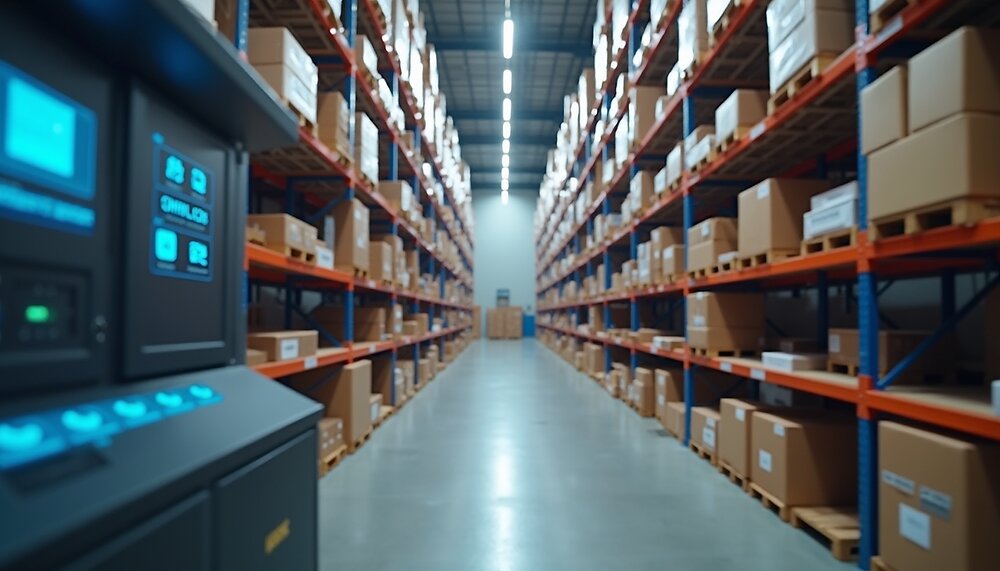
Amidst the relentless pursuit of efficiency and sustainability in logistics, the integration of Enterprise Resource Planning (ERP), Warehouse Management Systems (WMS), and Transportation Management Systems (TMS) has emerged as a cornerstone of modern supply chain management. This article delves into the reasons behind this digital transformation, highlighting how these systems are not just tools for automation but catalysts for orchestration, driving sustainable efficiency across the logistics landscape.
The Limits of Automation Without Integration
While automation has significantly improved speed and responsiveness in logistics, its true potential is often untapped due to fragmented systems and a lack of integration. Many logistics providers have invested in automation technologies at specific touchpoints, such as warehouse sorting or barcode scanning. However, these isolated initiatives fail to provide a holistic view of operations, leading to inefficiencies and limited visibility. McKinsey’s research underscores that both shippers and logistics providers grapple with common challenges like cost management and productivity improvement, largely due to the fragmentation of operational data across transportation and warehousing systems.
- Fragmentation leads to reduced visibility and slower decision-making processes.
- Operational data remains siloed, hindering effective cost management and productivity improvement.
- Without integration, warehouse activities are disconnected from transport planning, and financial reconciliation is delayed.
ERP: Establishing a Single Source of Truth
ERP systems serve as the central nervous system of digital logistics operations, consolidating data from various departments into a unified platform. Gartner identifies ERP platforms as crucial for standardizing data models and enabling enterprise-wide visibility. A prime example is DHL Supply Chain, which consolidated multiple ERP systems into a single cloud-based platform, streamlining global processes and enhancing business insights. For logistics providers, ERP offers several key benefits:
- Accurate cost tracking across warehouse and transport activities.
- Faster billing cycles and financial close after peak periods.
- Better resource and capacity planning ahead of demand surges.
WMS: Real-Time Control Inside the Warehouse
WMS systems act as the execution layer within the warehouse, translating plans into action. Gartner defines WMS as systems that manage receiving, storage, picking, packing, and shipping, providing near real-time inventory and operational data. The increasing adoption of WMS is driven by the need for productivity improvement, labor optimization, and real-time performance monitoring, particularly during peak demand periods. When integrated with ERP, WMS offers several advantages:
- Inventory data alignment with financial and order information.
- Support for broader business priorities through warehouse decisions.
- Reduction in manual reconciliation between systems.
TMS: Visibility and Control Across Transportation
Transportation Management Systems (TMS) are pivotal in providing visibility and control across the transportation network. TMS systems enable logistics providers to optimize routes, manage carrier relationships, and track shipments in real-time. This integration with ERP and WMS enhances overall supply chain efficiency and resilience. Key benefits of TMS include:
- Optimized routing and carrier selection.
- Real-time tracking of shipments.
- Enhanced carrier relationship management.
The Future of Logistics: A Unified Approach
The integration of ERP, WMS, and TMS is not just a technological advancement; it represents a shift towards a more unified and efficient logistics ecosystem. This approach allows logistics providers to move beyond automation to orchestration, where systems and processes work together seamlessly to drive sustainable efficiency. The future of logistics lies in leveraging these digital tools to create a cohesive and responsive supply chain that can adapt to the ever-changing demands of the market.
Source: www.thescanhub.com
Future Direction: From Integration to Ecosystem Orchestration
Looking ahead, the ERP-WMS-TMS convergence will evolve into a ‘supply chain operating system’—no longer confined within enterprise boundaries, but connecting heterogeneous systems of suppliers, logistics providers, and end customers through API economies. Malaysia’s Digital Economy Blueprint (MyDigital 2030) projects that by 2030,89% of cross-border trade will be automatically matched and settled via digital platforms, underpinned precisely by this cross-organizational semantic interoperability. For Chinese overseas enterprises, this means building a ‘China Production + ASEAN Hub + Global Distribution’ digital triangle: Shenzhen factory ERP directly对接海外仓 WMS inventory dashboards, Singapore hub TMS automatically synchronizes all carrier capacity pools, reducing full-link response time to 1/5.2 of industry average. Architecturally, API-first design replaces modular silos; AI agents become decision coordinators—when a shipment encounters port closure, smart agents can simultaneously trigger backup supplier procurement in ERP, alternative route picking in WMS, and multimodal switching in TMS, reducing human intervention to zero. This is not just an efficiency revolution but a business model reshaping: logistics service providers are no longer cost centers but value hubs creating real-time capital allocation capabilities for enterprises.
This article was AI-assisted and reviewed by our editorial team.