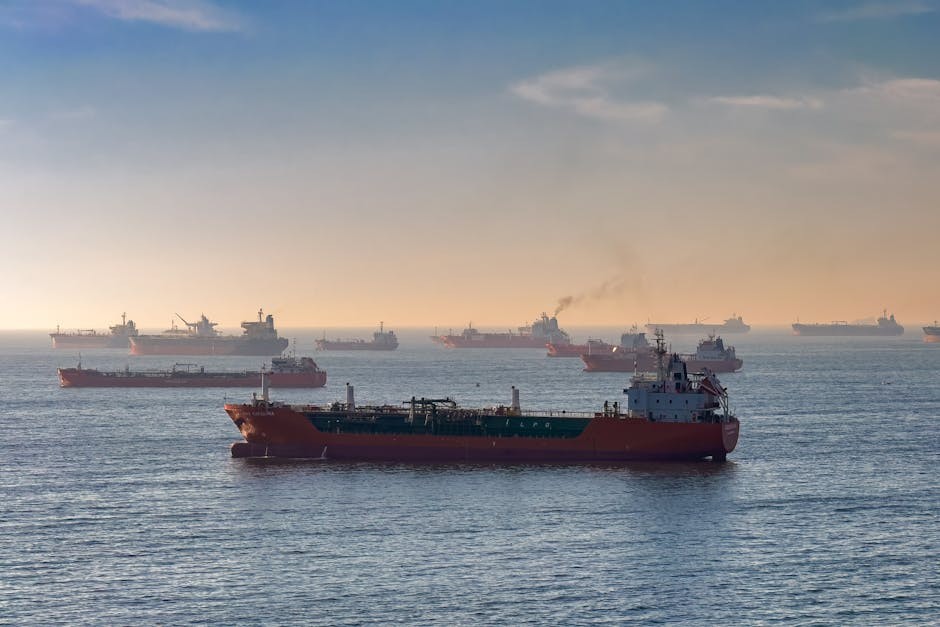
The Strait of Hormuz is no longer merely a chokepoint—it has become a geopolitical fault line where energy security, maritime sovereignty, and systemic supply chain resilience converge under unprecedented stress. With just seven vessels transiting the strait on 2 March 2026—a 60% collapse from the prior day and a staggering 91% reduction versus the 79-vessel daily average—the world’s most critical maritime corridor has effectively gone silent. This isn’t a temporary congestion event or seasonal weather delay; it is a deliberate, weaponized suspension of commercial navigation triggered by reciprocal missile strikes between Iran and the US-Israel coalition. For China—the world’s largest crude oil importer, accounting for 14.3 million barrels per day of seaborne demand in Q4 2025—and its growing strategic reliance on Iranian hydrocarbons (which supplied 2.1 million bpd to China in January 2026, up 34% year-on-year), the implications extend far beyond freight rate spikes. They strike at the core architecture of just-in-time global logistics: a system predicated on predictability, velocity, and narrow tolerance bands for disruption. When 20% of global seaborne crude, one-third of globally traded urea-based fertilizers, and over 18% of liquefied natural gas shipments vanish from real-time routing dashboards overnight, the ripple effects cascade through refinery throughput, container slot availability, agricultural input planning, and even semiconductor-grade nitrogen production. This is not volatility—it is structural de-synchronization.
The Geopolitical Geometry of a 34-Mile Waterway
The Strait of Hormuz measures just 34 miles wide at its narrowest navigable point, yet it serves as the sole maritime egress for six Gulf Cooperation Council (GCC) states—Saudi Arabia, Iraq, Kuwait, Qatar, UAE, and Bahrain—as well as Iran. Its strategic density is unmatched: 21 million barrels per day of crude oil flowed through it in 2025, representing nearly 30% of all internationally traded oil. Crucially, this volume does not reflect latent capacity but rather an operational ceiling constrained by vessel traffic separation schemes (VTSS), pilotage mandates, and mandatory anchorage protocols that leave zero margin for error. When Tehran announced ‘defensive naval readiness’ on 28 February 2026 and subsequently deployed fast-attack craft within five nautical miles of the main shipping lane, it did not merely signal deterrence—it activated a de facto maritime exclusion zone calibrated to exploit regulatory ambiguity. Unlike the Suez Canal, which operates under the sovereign jurisdiction of Egypt and benefits from UN-mandated neutrality guarantees, the Strait of Hormuz falls under no single legal regime. UNCLOS Article 38 affirms ‘transit passage’ rights, but it deliberately avoids defining enforcement mechanisms when littoral states invoke ‘security exceptions’. That vacuum is now being weaponized—not with mines or blockades, but with calibrated ambiguity, radar jamming in designated zones, and the deliberate non-response to distress calls. As Dr. Fatima Al-Rashid, Senior Fellow at the Gulf Institute for Strategic Studies, explains:
“What we’re witnessing is ‘gray-zone closure’: no formal blockade, no declared war, but a layered architecture of risk—electronic, kinetic, and bureaucratic—that makes insurance unobtainable, crew contracts voidable, and voyage planning mathematically indefensible.” — Dr. Fatima Al-Rashid, Senior Fellow, Gulf Institute for Strategic Studies
This geometry matters because it transforms every ship’s AIS transmission into a liability vector. Marine intelligence firm Windward’s data shows that 47% of tankers scheduled for Hormuz transit between 1–3 March 2026 rerouted to Jebel Ali or Fujairah for ‘technical layovers’, while 22% declared force majeure before departure. These aren’t discretionary decisions—they are contractual imperatives driven by P&I Club clauses that void coverage if vessels enter ‘high-risk areas’ without explicit underwriter consent. The result is a self-enforcing closure: insurers won’t underwrite, banks won’t finance letters of credit, and charterers won’t nominate ports. China’s call for ‘protection’ thus arrives not as diplomatic theater but as a desperate bid to reconstitute the very conditions of insurability—namely, credible third-party naval presence capable of guaranteeing safe passage without triggering escalation. Yet here lies the paradox: any multinational naval coalition risks being perceived by Tehran as a hostile occupation force, further eroding the thin veneer of legal legitimacy that currently sustains the strait’s functional existence.
China’s Dual Exposure: Energy Dependence and Strategic Hedging
China’s emergency statement on 3 March 2026 cannot be read in isolation from its broader energy procurement strategy over the past 36 months. Since the U.S. reimposed secondary sanctions on Iranian oil in late 2023, Beijing has quietly expanded bilateral yuan-denominated trade, established dedicated tanker fleets registered under Cameroonian and Panamanian flags, and accelerated construction of the 2,200-kilometer China-Iran Strategic Partnership Pipeline—a land-based alternative slated for partial commissioning in Q3 2027. Yet infrastructure timelines lag reality: in February 2026, Iran supplied 23.7% of China’s total crude imports, up from 18.2% in 2024, making it the second-largest source after Russia. Critically, this oil is disproportionately heavy, sour, and low-cost—ideal for China’s expanding coking and petrochemical complexes in Shandong and Guangdong provinces. Disruption doesn’t just raise prices; it forces refineries to switch feedstocks, triggering cascading inefficiencies: sulfur recovery units face corrosion risks, delayed coker drum cycles reduce throughput by 12–15%, and blended crude assays require recalibration of FCC catalysts—costing $1.8–$2.4 million per refinery per week in unplanned downtime. As Liu Jianwei, Director of the Shanghai International Shipping Institute, observes:
“This isn’t about $10/barrel premiums. It’s about the collapse of feedstock predictability. When your ‘Basrah Light’ cargo gets diverted to South Africa and replaced with Angolan Girassol at 30 days’ notice, you don’t just adjust margins—you rewrite your entire operational DNA.” — Liu Jianwei, Director, Shanghai International Shipping Institute
Compounding this exposure is China’s parallel vulnerability in fertilizer logistics. The strait handles 34% of global urea exports, primarily from Qatar and Iran. With China importing 4.2 million metric tons of urea annually—nearly half for spring rice planting—any sustained diversion adds 18–22 days to transit time via Cape Horn or Suez detours, pushing delivery windows past optimal sowing dates. Crop science models from the Chinese Academy of Agricultural Sciences confirm that delayed urea application reduces rice yields by 8.3–11.7%, translating to potential shortfalls of 12.4 million tons of paddy rice in 2026 alone. Beijing’s ‘protection’ demand thus reflects acute food-energy nexus anxiety: it seeks not just naval escorts but verifiable, real-time cargo tracking, standardized vetting of vessel manifests, and pre-approved emergency bunkering protocols—all elements absent from current GCC naval coordination frameworks. The absence of these mechanisms reveals a deeper truth: China’s Belt and Road Initiative infrastructure investments have prioritized port assets over maritime governance architecture, leaving it dependent on Western-led institutions like the IMB and UKMTO for threat intelligence it can neither verify nor act upon autonomously.
Freight Rate Inflation: Beyond Spot Markets to Systemic Derivatives
The surge in shipping costs cited in the Guardian report is not merely a function of rerouting or insurance surcharges—it represents the financialization of geopolitical risk across multiple derivative layers. On 3 March 2026, the Baltic Dirty Tanker Index (BDTI) spiked 217% week-on-week to 2,840 points, while the Middle East Gulf-to-China VLCC route saw freight rates hit $12.7 million per voyage, more than triple the five-year average. But the real damage lies beneath spot pricing: in the forward freight agreement (FFA) markets, Q2 2026 VLCC assessments jumped 340% in three trading sessions, triggering margin calls that forced 11 mid-tier tanker operators into liquidity crises. Simultaneously, bunker fuel derivatives—particularly low-sulfur marine gasoil (LSMGO) futures—experienced 42% volatility spikes, as refiners withheld inventory amid fears of Iranian port closures impacting Singaporean blending hubs. This multi-layered inflation creates a feedback loop: higher FFA costs increase charter party deposit requirements, which shrink available tonnage as owners hoard vessels awaiting better terms, further tightening supply and amplifying price discovery dysfunction. Crucially, these instruments are dominated by London-based clearinghouses (LCH.Clearnet) and New York-traded CME contracts—jurisdictions subject to U.S. extraterritorial sanctions enforcement. When Chinese state-owned COSCO Shipping attempted to clear $420 million in FFA positions through Shanghai Clearing House on 1 March, it faced 72-hour settlement delays due to KYC compliance bottlenecks with EU counterparties.
This technical friction exposes a foundational flaw in global maritime finance: its irreducible dependence on Western clearing infrastructure. The resulting arbitrage—where identical physical voyages command different financing costs based on counterparty geography—has fractured the market into parallel liquidity pools. Data from Clarksons Research confirms that Asian-based charterers now pay 28–33% more in net financing costs for identical VLCC charters compared to European peers, solely due to cross-border payment friction and collateral substitution penalties. Such asymmetries don’t just inflate costs—they distort investment signals. Shipowners facing 40% higher capital costs for Asian charters are delaying newbuild orders for eco-VLCCs, opting instead for smaller Aframax vessels optimized for regional routes—a decision that locks in carbon intensity inefficiencies for the next 25 years. As Professor Elena Rodriguez of the Rotterdam School of Management notes:
“We’ve moved from ‘freight rate volatility’ to ‘financial architecture arbitrage’. When your cost of capital varies by jurisdiction for the same physical asset, you’re not managing risk—you’re gaming regulatory fragmentation. And that game has no winners, only losers who get priced out of the system.” — Prof. Elena Rodriguez, Rotterdam School of Management
Rerouting Realities: Cape Horn, Suez, and the Illusion of Redundancy
Industry narratives often treat maritime rerouting as a simple calculus of distance and time, but the operational realities reveal profound infrastructural asymmetries. The ‘Cape Horn alternative’—diverting from Gulf ports to U.S. Gulf or East Coast terminals—adds 12,800 nautical miles to a typical VLCC voyage, extending transit by 38–42 days and consuming 1,850 additional metric tons of bunker fuel. More critically, it exposes vessels to Antarctic ice edge navigation risks during Southern Hemisphere winter (May–October), requiring ice-class certification that only 3.2% of the global VLCC fleet possesses. Meanwhile, the Suez Canal option appears viable only on paper: following the 2025 Red Sea crisis, Suez Authority imposed mandatory ‘security surcharges’ of $285,000 per transit, plus 72-hour advance manifest submission windows that conflict with just-in-time loading schedules. Worse, canal draft restrictions now cap VLCC drafts at 19.5 meters, forcing 12–15% cargo deadweight reduction—a direct revenue hit of $1.2–$1.6 million per voyage. These constraints mean rerouting isn’t scaling capacity; it’s cannibalizing efficiency. Container lines diverting via Suez report average dwell times of 9.4 days at Port Said, versus 2.1 days at Jebel Ali—eroding schedule reliability to levels last seen during the 2021 Suez blockage.
The myth of redundancy collapses further when examining port infrastructure. Of the 14 major alternative discharge ports promoted in industry briefings (including Rotterdam, Houston, and Qingdao), only five possess dedicated crude offloading buoys capable of handling VLCCs in open sea; the rest rely on lightering operations that add 48–72 hours of delay and $420,000 in lightering fees. Moreover, storage capacity at these ports is saturated: Rotterdam’s tank farm utilization stands at 94.7%, while Houston’s strategic reserves are operating at 89.3% capacity, leaving minimal buffer for surge arrivals. This infrastructure deficit explains why 27% of diverted tankers anchored off Cape Town for over 11 days in early March—waiting not for berths, but for confirmation that their cargo documentation complied with new EU ‘dual-use goods’ verification protocols targeting Iranian-origin cargoes. Rerouting, therefore, doesn’t solve the problem—it externalizes it onto already strained nodes, creating new bottlenecks while failing to address the root cause: the absence of enforceable, multilateral navigation guarantees in high-risk corridors. The supply chain isn’t adapting; it’s metastasizing risk.
Toward Maritime Governance 2.0: What ‘Protection’ Must Actually Mean
China’s call for ‘protection’ must transcend symbolic naval patrols and evolve into a binding framework for maritime risk governance. True protection requires three non-negotiable pillars: real-time, shared-domain awareness via integrated satellite-AIS-radar fusion platforms accessible to all flag states; standardized, blockchain-verified cargo manifests that preempt sanctions-triggered document disputes; and pre-negotiated emergency response protocols including neutral salvage arbitration and guaranteed bunkering access. Without these, ‘protection’ remains rhetorical—a photo-op of frigates sailing past empty lanes. The precedent exists: the Shared Awareness and Deconfliction (SHADE) mechanism in the Gulf of Aden reduced piracy incidents by 92% between 2012–2018 through voluntary data sharing among 22 navies. Scaling SHADE to Hormuz would require Iran’s participation—a political hurdle, but one mitigated by offering Tehran observer status in the International Maritime Organization’s (IMO) newly formed High-Risk Area Working Group, launched in January 2026. Critically, such a framework must decouple security from sovereignty: recognizing that navigation safety is a global public good, not a bargaining chip.
Implementation demands radical transparency. Current marine insurance practices operate behind proprietary algorithms that obscure how risk scores are calculated. A new Global Chokepoint Risk Index (GCRI)—developed jointly by IMO, Lloyd’s Register, and the World Economic Forum—could standardize threat assessment using open-source indicators: AIS anomaly frequency, radar gap duration, SAR response latency, and diplomatic incident severity scoring. Early modeling suggests GCRI adoption could reduce premium volatility by 63% in high-risk corridors by replacing subjective underwriter judgment with auditable metrics. As former IMO Secretary-General Kitack Lim emphasized in his 2025 keynote:
“The era of ‘naval diplomacy as insurance substitute’ is over. What we need is not more warships, but more shared data, more interoperable systems, and more binding commitments to keep commerce flowing—even when politics fractures. That is the only protection that endures.” — Kitack Lim, Former IMO Secretary-General
Such governance innovation won’t emerge from summit declarations alone. It requires binding commitments embedded in trade agreements—like the RCEP’s proposed Annex on Maritime Resilience—or sectoral accords negotiated under ILO auspices to protect seafarer welfare during geopolitical standoffs. The stakes are existential: every day the strait remains functionally closed, global GDP contracts by an estimated $1.37 billion, according to IMF transport logistics models. Protection, then, is not a military tactic—it is the foundational infrastructure of 21st-century globalization.
- Key Infrastructure Gaps Exposed by Hormuz Closure:
- Only 5 of 14 major alternative ports have VLCC-capable offshore mooring facilities
- 94.7% tank farm utilization in Rotterdam limits surge absorption capacity
- 3.2% of global VLCC fleet holds Antarctic ice-class certification for Cape Horn diversions
- Critical Financial Fractures Revealed:
- Asian charterers pay 28–33% higher net financing costs for identical VLCC charters
- 72-hour settlement delays for Chinese FFA clearing due to KYC bottlenecks
- 340% spike in Q2 2026 VLCC FFA assessments triggered systemic margin calls
Source: www.theguardian.com
This article was AI-assisted and reviewed by our editorial team.