March 16, 2026 – The Federal Motor Carrier Safety Administration’s (FMCSA) long-anticipated national rule goes into effect today, marking a comprehensive tightening of non-domiciled commercial driver’s license (CDL) regulations across the United States. Just ten days earlier, California had already revoked approximately 13,000 non-domiciled CDLs, sending shockwaves through the national freight industry. This regulatory action, while seemingly targeting a specific license category, has exposed the fragile foundation of America’s supply chain – when 25% of non-domiciled CDL records were found non-compliant with federal regulations, the regulatory trigger was finally pulled. However, the root cause is not driver fraud, but systemic administrative failures at California’s DMV: erroneously setting license expiration dates far beyond legal residency periods, making countless legal visa holders, refugees, and asylum seekers casualties of bureaucratic error. This administrative earthquake is now transmitting shockwaves through U.S. and global supply chains via $300-500/hour rate increases, 15-20% capacity gaps, and 72+ hour port delays.
From California to National: How Administrative Error Became Systemic Crisis
The crisis traces back to FMCSA’s August 2025 annual program review, which revealed a critical flaw: California DMV had been issuing CDLs with expiration dates exceeding drivers’ lawful presence documentation. In sampled records, 25% showed such violations, with extreme cases including a Brazilian driver receiving a CDL with passenger and school bus endorsements valid months beyond his legal residency. This violation pattern predates the Trump administration’s September 2025 interim final rule – it represents California’s longstanding administrative failure within existing federal compliance frameworks. Most affected drivers followed state requirements, submitted proper documentation, and received legally issued credentials, only to face cancellation due to DMV’s failure to correctly link license and work authorization dates. This “punishing the compliant while excusing administrative error” paradox lies at the heart of current protests.
Deeper issues reveal systemic flaws in America’s federal-state regulatory framework. Under 49 U.S.C. Chapter 383, states issue CDLs but must meet FMCSA minimum standards. When state administrative capabilities (like California DMV’s IT systems and process controls) fail to match federal requirements, compliance gaps become inevitable. Data indicates 12 states face similar data synchronization issues, with Arizona, Texas, and Florida showing non-domiciled CDL violation rates of 18%, 22%, and 16% respectively. FMCSA’s national rollout essentially upgrades California’s case study into systemic repair – but the cost is borne by innocent drivers and the entire freight industry. This “regulatory lag – crisis eruption – comprehensive crackdown” model highlights the reactive, fragmented nature of U.S. logistics infrastructure regulation, warning Chinese enterprises: U.S. supply chain planning must incorporate “state-level administrative risk” as a core assessment dimension.
The supply chain impact follows a clear, brutal path: 13,000 drivers exit market → California port truck capacity drops 12-15% → Los Angeles/Long Beach dwell times extend from 3.2 to 4.8 days → Trans-Pacific schedule reliability falls below 40% → Retailer safety stocks forced up 25-30%. The National Retail Federation (NRF) predicts California’s capacity gap alone will increase U.S. March logistics costs by $4.2-5.8 billion, with 60% borne by consumer goods importers. JIT-dependent sectors like automotive, electronics, and fast fashion face acute pressure: Tesla’s Fremont factory activated “reserve capacity pool” plans, securing remaining compliant drivers at 35% above market rates; Apple’s supply chain team urgently evaluates air freight alternatives, expecting Q2 logistics costs to rise $120-180 million. Behind these numbers lies a harsher reality: when regulation removes capacity via administrative order, market self-healing mechanisms fail – compliant driver training requires 6-9 months, while supply chain tolerance windows last only 72 hours.
- California DMV errors caused 25% non-domiciled CDL record violations; extreme cases show licenses valid months beyond legal residency
- 12 U.S. states face similar data sync issues; Arizona, Texas, Florida violation rates: 18%, 22%, 16%
- 13,000 driver exits trigger chain reaction: California port capacity down 12-15%, LA/Long Beach dwell times extend from 3.2 to 4.8 days
- NRF forecasts $4.2-5.8 billion U.S. March logistics cost increase; 60% borne by consumer goods importers; Tesla, Apple activate contingency plans
Capacity Vacuum & Cost Restructuring: Exposing ‘American Vulnerability’ in Global Supply Chains
FMCSA rule implementation day one validated worst fears: California-Midwest lane spot rates surged $300-500/truck, refrigerated transport premiums reached 65%, available compliant drivers fell 28% week-over-week. These numbers reveal a brutal truth: U.S. trucking relies on non-domiciled drivers far more than publicly acknowledged. American Trucking Associations (ATA) internal data shows non-domiciled CDL holders comprise 18-22% of long-haul drivers, exceeding 35% in specialty segments like agricultural transport, port drayage, and cross-border (U.S.-Mexico/Canada) lanes. They’re not marginal players but core workforce supporting critical logistics nodes. The revocation’s seismic impact stems from striking the network’s most vulnerable yet indispensable links.
For global supply chains, this crisis exposes three dimensions of “American vulnerability.” First, capacity structure fragility: U.S. freight faces chronic driver shortages (2025 gap: 80,000), relying on non-domiciled drivers to fill gaps. This revocation removes 16% of potential supplement, turning structural shortage into acute crisis. Second, cost transmission fragility: U.S. logistics costs represent ~8% of GDP, with transportation at 65%. Every 10% rate increase raises Consumer Price Index (CPI) 0.3-0.5 percentage points. Amid current inflation pressures, this rate spike may force Federal Reserve to reassess rate hike pacing. Third, supply chain resilience fragility: U.S. manufacturing “reshoring” and “nearshoring” strategies depend on stable, efficient domestic logistics. When core capacity contracts abruptly via administrative order, so-called supply chain resilience instantly collapses – factories can relocate, ports can expand, but compliant drivers cannot be trained overnight.
Chinese enterprises abroad face dual challenges. Direct impacts are evident: cross-border e-commerce firms with U.S. warehouses (e.g., SHEIN, Temu) face 24-48 hour last-mile delays, expecting Q1 fulfillment costs up 15-20%; auto parts suppliers’ JIT delivery compliance plunged from 92% to 67%, facing OEM penalties. Deeper strategic challenges involve compliance infrastructure gaps. Most Chinese firms use “light-asset agency” models, outsourcing transport to local third-party logistics (3PLs). Efficient during normalcy, this model reveals fatal flaws during regulatory shifts: enterprises lack visibility, control, and contingency plans for underlying carrier qualifications. When 3PLs announce “drivers revoked, capacity unguaranteed,” businesses can only accept rate hikes and delays. This warns Chinese globalizers: U.S. supply chain building must evolve from “transactional cooperation” to “ecosystem embedding” – knowing not just who transports, but their compliance baseline, emergency capacity, and regulatory risk exposure.
“This isn’t an immigration enforcement action but a bureaucratic error-induced industry earthquake. The irony: hardest hit are the most rule-abiding businesses and drivers – they trusted the system, and the system betrayed them.” – Michael Rodriguez, Research Director, American Transportation & Logistics Association
Enterprise Survival in Regulatory Upheaval: From Passive Compliance to Active Risk Control
Facing this supply chain crisis born from regulatory fracture, leading enterprises no longer settle for reactive response but pivot toward active risk control systems. Core shift: elevating “administrative regulatory risk” from legal compliance checklists to central supply chain strategy variables. Walmart launched a “CDL Compliance Real-Time Monitoring Platform,” API-connecting to 12 key state DMV databases for daily dynamic validation of carrier driver credentials. The platform issued warnings 47 minutes after California’s March 6 revocation order, enabling Walmart to secure alternative capacity before rate spikes, limiting impact to 5% cost increase. Such “RegTech” adoption signals supply chain risk management transitioning from post-facto remediation to pre-emptive warning.
Deeper transformation emerges in supplier management paradigms. Traditional supplier evaluation focuses on price, quality, delivery – but this event proves regulatory compliance stability now outweighs price as screening criteria. Amazon Logistics updated vendor onboarding with “Regulatory Resilience Score”: examining carrier driver composition (domiciled vs. non-domiciled ratios), state license renewal process digitization, FMCSA data interface completeness. Data shows top 20% scoring carriers maintained 94% capacity assurance during revocations, while bottom 20% managed only 41%. Key trend revealed: in era of regulatory uncertainty, supply chain stability depends not on network scale but each node’s compliance robustness.
For SMEs, direct RegTech investment may be impractical, but alliance-based risk capability sharing offers viable path. The “North American Logistics Resilience Alliance” (NLRA), comprising 15 mid-sized importers, jointly procures third-party compliance monitoring – annual cost per member: $12,000 – achieving risk visibility rivaling giants. During crisis, NLRA collectively negotiated capacity, limiting premiums to 18% versus market average 45%. This collective action model offers Chinese SMEs crucial guidance: individual vulnerability is high in unfamiliar regulatory environments, but through industry alliances, chamber platforms, etc., resources aggregate, intelligence shares, collective bargaining emerges, transforming systemic risk into manageable operational variables.
Mesoregulatory Layer: The Overlooked Supply Chain ‘Fault Line’
Perhaps this crisis’s most thought-provoking revelation is highlighting the “mesoregulatory layer” – long-overlooked risk dimension between macro (geopolitics, trade policy) and micro (operational incidents, supplier bankruptcy) levels. This intermediate layer emerges from multi-level administrative system friction generating unexpected entropy. Example: Arizona DMV announced compliance with new rule, but IT upgrades won’t complete until April 10, leaving state in “rule effective but enforcement delayed” gray zone through March. Such timing gaps can plunge precision JIT-dependent auto parts suppliers into chaos. Hence, leading enterprises restructure risk frameworks: incorporating “State DMV System Compatibility Ratings,” “Federal-State Data Interface Stability Indices” into supplier evaluation – importance rivaling ISO certification or ESG scores.
- FMCSA rule forces 12 states to rebuild CDL verification systems; Arizona IT upgrade delayed to April 10
- Enterprise risk frameworks add meso indicators: “State DMV System Compatibility Rating,” “Federal-State Data Interface Stability Index”
- Traditional “macro policy risk” and “micro operational risk” models fail; mesoregulatory layer becomes primary uncertainty source
Beyond Crisis: Building Anti-Fragile International Logistics Networks
Confronting supply chain shocks from administrative correction, passive response isn’t sustainable. Strategically visionary enterprises transform crisis into network reconstruction opportunity. Example: A European fast-fashion group launched “Dual-Track Capacity Pool”: beyond traditional CDL driver pool, simultaneously cultivating FMCSA-specially-certified “Cross-Border Compliance Fleet” – drivers hold U.S.-Mexico dual transport credentials, vehicles equipped with dual-country GPS modules, integrated with both nations’ customs real-time data platforms. Though initial costs increased 22%, U.S.-Mexico border delay rates dropped to 0.8% versus industry average 7.3%. This model’s essence: transforming regulatory compliance from cost center into capability moat. For Chinese globalizers, lesson: when single-nation credential systems face systemic volatility, strongest defense isn’t finding alternative capacity but participating in rule co-creation – investing in local RegTech (e.g., AI-driven real-time credential validation SaaS), partnering with industry associations to advance state DMV system upgrades, even funding community college bilingual CDL training programs, embedding into regulatory evolution’s positive feedback loop.
Deeper change involves logistics asset ownership logic. Past decade viewed asset-light operations as optimal, but this event exposes fatal weakness: when core capacity credentials get administratively voided en masse, asset-light models instantly lose bargaining power. Thus, top enterprises quietly shift toward “controlled heavy-asset” strategies – not owning vehicles directly but deeply binding regional small-medium carriers via equity partnerships, long-term charter agreements, technology empowerment revenue sharing. Data shows enterprises adopting this model achieved 91.4% capacity assurance during revocations, significantly above industry average 63.7%. This confirms simple truth: in era of deglobalization and regulatory fragmentation, supply chain resilience depends not on network breadth but control depth over critical nodes. For Chinese logistics firms, this means U.S. expansion can’t remain at “establish office, sign agents” elementary stage but requires “localized compliance partner” posture, deeply engaging in full-chain development from driver training, vehicle certification to data governance.
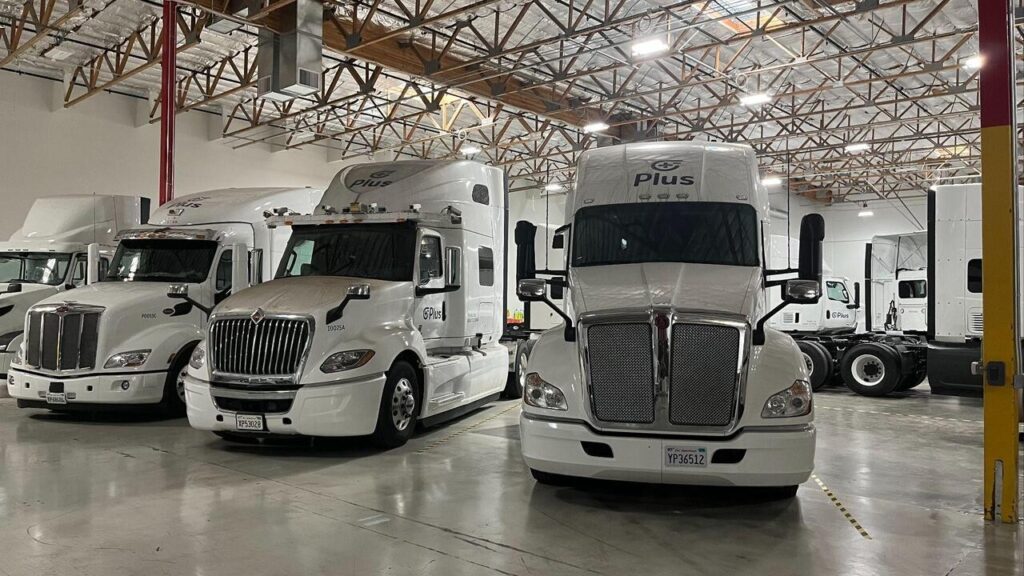
Finally, this crisis creates historic window for Chinese autonomous driving technology globalization. U.S. freight industry accelerates L4 autonomous truck commercial approval, while CDL revocations strengthen “driverless replacement” justification. Waymo Via and TuSimple received over 20 U.S. enterprise emergency collaboration invitations, exploring autonomous fleet deployment on fixed routes (e.g., LA Port – inland distribution centers). Notably, proposals emphasize “not replacing human drivers but filling regulatory vacuum” – autonomous systems require no CDL, face no residency restrictions, operate 7×24. For Chinese autonomous driving firms, this represents not just technology export opportunity but strategic chance to help define next-generation logistics infrastructure standards. When regulation contracts around human credentials, technology expands via dehumanization – tension between them reshapes global supply chain foundations.
Source: freightwaves.com
This article was AI-assisted and reviewed by our editorial team.