The Cascading Effect of Global Shipping Disruptions: From the Strait of Hormuz to Worldwide Supply Chains
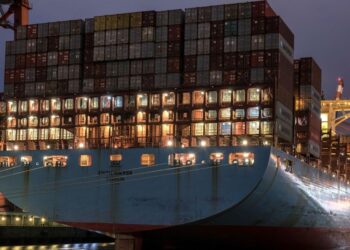
In early 2026, escalating geopolitical tensions in the Middle East led to a dramatic 70% reduction in vessel traffic through the Strait of Hormuz within hours. This critical global shipping chokepoint handles 11% of all maritime trade volume and processes over 30 million TEUs of containerized cargo annually. The sudden disruption triggered immediate responses from shipping companies, including service suspensions, route diversions, and emergency surcharge implementations.
However, the impact extends far beyond a single shipping lane. When primary corridors become unreliable, supply chains don’t simply pause—they undergo spontaneous optimization under pressure, often with inadequate visibility, limited data, and decision-making structures ill-equipped for hour-to-hour operational volatility. This self-optimization can lead to suboptimal decisions that further exacerbate supply chain fragility.
For Chinese enterprises engaged in global trade, this disruption carries particular significance. As the world’s manufacturing hub, China’s export economy depends heavily on maritime corridors. The Strait of Hormuz serves as a crucial nexus for China-Europe, China-Middle East, and China-Africa trade routes, making any interruption a direct threat to Chinese companies’ international supply chain stability. In the context of ongoing global supply chain restructuring, such disruptions may accelerate trends toward diversification and regionalization.
How Disruption Evolves into Operational Crisis: Four Critical Stages
Supply chain disruptions rarely cause immediate collapse but progress through four distinct stages: transit time inflation, reliability degradation, capacity and equipment dislocation, and port and air spillover effects. Understanding this progression is essential for developing effective response strategies.
Transit time inflation represents the first visible symptom. When vessels must divert around constrained corridors, major east-west trade routes can experience 10 to 14 additional days in transit. This isn’t merely a scheduling detail—it can mean missed promotional windows, production line shutdown risks, or cash conversion cycle problems. For time-sensitive products like electronics or fashion goods, such delays may result in complete market opportunity loss.
Reliability degradation follows closely. Even when alternative routes are technically available, revised schedules, blank sailings, and rolling port omissions increase arrival time variability. Planning teams must manage not just “longer lead times” but wider error bars on delivery dates. This uncertainty complicates inventory management and production planning, increasing operational costs and risks.
Capacity and Equipment Dislocation: Systemic Pressure on Supply Networks
When vessels, containers, and chassis are repositioned away from planned rotations, networks lose their slack capacity. This manifests as tighter space availability, poorer equipment accessibility, increased cargo rollovers, and congestion appearing far from the original disruption point. Such systemic pressures often exceed individual companies’ control, requiring industry-level coordination.
Port and air spillover effects further amplify the impact. With extended ocean transit times and delayed schedules, some shippers shift urgent cargo to air freight at significantly higher costs. Simultaneously, ports and inland terminals face irregular vessel bunching (too many arrivals followed by too few), leading to extended dwell times and secondary inventory backlogs. These spillover effects can propagate throughout logistics networks, affecting seemingly unrelated supply chain segments.
For Chinese logistics providers, this systemic pressure is particularly acute. As critical nodes in global trade, Chinese ports experience cascading effects from international shipping disruptions. Port congestion can trigger inland transportation delays, subsequently impacting factory production and export schedules. This domino effect underscores the interconnected nature of global supply chains.
The Golden 72 Hours: Five Critical Questions Supply Chain Leaders Must Answer
When disruption strikes, leadership teams must define required decisions, assign ownership, and identify data sources within 24-72 hours. The most effective operational teams rapidly address five fundamental questions that form the foundation of disruption response.
Which shipments are exposed to disruption risk? Exposure mapping should begin with current in-transit containers and open bookings, then expand to include feeder and transshipment legs through affected hubs, plus any origin cargo not yet gated in. This comprehensive assessment requires real-time data support that traditional manual methods often cannot provide.
Which suppliers and lanes indirectly depend on disrupted corridors? Many organizations track supplier countries and incoterms but overlook route realities. A supplier may operate from a “safe” geographic location while its preferred carrier routing relies on vulnerable transshipment hubs or chokepoints. These indirect dependencies frequently remain unnoticed until disruption occurs.
Inventory Risk Assessment and Customer Order Prioritization
How much inventory is at risk, by SKU and location? Inventory exposure isn’t measured by total weeks of supply but by the gap between planned arrival times and realistic arrival times under new routing and handling conditions. This gap analysis demands granular inventory visibility and predictive capabilities that traditional ERP systems often lack.
Which customer orders become at-risk first? Order risk should be triaged based on service level commitments, margin contributions, contractual penalties, and substitution options. Blanket “expedite everything” decisions typically create cost disasters. A more strategic approach prioritizes high-value, high-margin, or strategically important customer orders while maintaining transparent communication with affected clients.
Are alternatives viable, and what are their operational costs? Viability extends beyond freight rates to include equipment access, terminal capacity to handle products, customs/documentation constraints for movements, and planning teams’ ability to implement switches without jeopardizing downstream delivery schedules. Additionally, multiple compliance and insurance considerations impact route feasibility, including restricted port calls, evolving denied-party screening lists, coverage limits for transit losses or damages, and changing documentation requirements.
The Fragility of Lean Supply Chains: Balancing Efficiency and Resilience
Lean supply chains aren’t inherently “bad”—they represent a design choice optimized for efficiency, predictable lead times, and stable variability. Fragility emerges when variability spikes and organizations lack time to replan. Lean networks typically exhibit three characteristics that amplify disruption pain.
Tight buffers. Low inventory levels and minimal safety stock assumptions function effectively until lead times expand materially (for instance, by 10-14 days on core lanes). These tight buffers reduce costs during normal operations but can become critical vulnerabilities during disruptions.
Planning cycles too slow for shocks. Weekly planning cadences cannot absorb hour-by-hour service suspensions and rolling ETA changes. Traditional supply chain planning tools often rely on periodic batch processing, lacking real-time responsiveness.
Limited end-to-end visibility. Many teams can view purchase orders or carrier milestones but cannot connect both to production schedules and customer commitments within a single view. This information siloing proves particularly dangerous during disruptions, leading to decisions based on incomplete or outdated information.
“The greatest risk of lean supply chains lies in their stability assumptions. When global shipping networks experience hour-by-hour volatility, supply chain systems designed for weekly planning cycles are like using an abacus for high-frequency trading.” — International logistics expert analysis
When these three characteristics converge, teams revert to manual triage, inbox-based escalation, and expensive expediting decisions disconnected from clear service strategies. For Chinese manufacturing enterprises, this vulnerability is particularly pronounced, as many have adopted highly lean global supply chain models to maximize efficiency and cost advantages.
Analytics and Visibility: Shortening the Time from “Something Changed” to “We Decided What to Do”
Supply chain analytics doesn’t eliminate disruptions but reduces the time between “something changed” and “we decided what to do.” The practical capability stack includes connected data across orders, shipments, and inventory, plus decision-ready alerts rather than dashboard monitoring.
Connected data means a reconciled view linking purchase order lines to bookings, milestones, and the inventory positions those shipments supply. This end-to-end visibility requires data integration and technological investment but delivers immeasurable value during disruptions.
Decision-ready alerts should trigger workflows, not merely generate notifications. When systems detect abnormal patterns or risk signals, they should automatically initiate predefined response processes, reducing manual intervention and decision latency. This automated response capability proves especially valuable during the critical 72-hour window.
For Chinese supply chain managers, investing in digital technologies and analytical capabilities represents not just efficiency enhancement but risk management. In an era of increasing global supply chain uncertainty, such investments provide crucial competitive advantages and resilience safeguards.
Source: globaltrademag.com
This article was AI-assisted and reviewed by our editorial team.