Breaking Point: Trump Signals 25% Tariff on South Korean Imports
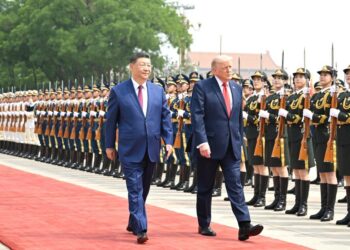
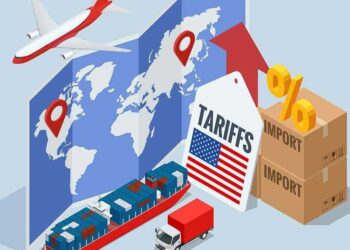
On January 27, 2026, U.S. President Donald Trump posted on Truth Social that he intends to raise tariffs on South Korean imports — including automobiles, lumber, and pharmaceuticals — from 15% to 25%, citing South Korea’s failure to fulfill a bilateral framework trade agreement. The announcement sent immediate shockwaves through Seoul’s export-reliant industries, particularly automotive and semiconductor sectors.
Critically, Trump did not specify a start date for the hike, and no formal White House documentation had been published as of February 24, 2026. Nevertheless, the statement alone was sufficient to destabilize a trade environment that had taken months of diplomacy to construct. The root cause lies with South Korea’s National Assembly, which holds a Democratic Party majority and has yet to pass the special legislation required to enact the framework agreement’s terms.
According to a Democratic Party of Korea statement, the Assembly has reflected certain investment provisions in South Korea’s 2026 national budget, but the broader legislative package remains stuck. This delay handed the Trump administration a pretext to revisit the tariff structure, pushing supply chain planners at Hyundai, Kia, Samsung, and SK Hynix into urgent contingency mode.
The Anatomy of the US-Korea Deal: How 25% Became 15%
In July 2025, the Trump administration announced a 25% tariff on South Korean goods, effective August 1, 2025 — a shock that pushed Seoul into accelerated negotiations. The parties reached a framework agreement later that month reducing the rate to 15%. By November 2025, both sides had formalized the terms, including protections under Section 232 covering automobiles, automobile parts, timber, and lumber derivatives at the unified 15% rate.
The deal also included semiconductor safeguards: the U.S. committed to align future semiconductor tariff treatment with countries whose trade volumes are comparable to South Korea — directly relevant to Samsung Electronics and SK Hynix. On market access, the agreement required South Korea to allow U.S.-manufactured vehicles to enter without additional local safety testing, dismantling a longstanding non-tariff barrier.
“The spread between 15% and 25% translates to thousands of dollars per vehicle in additional export costs. For Hyundai and Kia, whose pricing competitiveness in the U.S. market is already tight, this gap can determine market share outcomes across one of the world’s most contested automotive arenas.” — Supply Chain Dive analysis
The $350 Billion Commitment: What South Korea Promised
In exchange for the 15% tariff umbrella, South Korea agreed to commit $350 billion in U.S. investments, including $150 billion designated for American shipbuilding — a strategic priority under the Trump administration’s industrial revival agenda. The scale of this pledge approaches roughly one-third of South Korea’s annual GDP, underscoring the extreme leverage the U.S. has exercised in these negotiations.
Beyond shipbuilding, the deal required South Korea to expand purchases of U.S. agricultural products including soybeans and fertilizers, working to reduce the bilateral trade deficit, which stood at approximately $68 billion in 2024. Taken together, the agreement’s architecture reflects consistent Trump priorities: manufacturing job creation, agricultural market access, and capital investment pledges — all extracted through tariff pressure.
Hyundai Motor’s Dual-Track Strategy: Hedging Against Tariff Volatility

Hyundai Motor Group has responded to this uncertainty with a deliberate dual-track investment posture. In November 2025, following the framework deal’s formalization, the group announced 125.2 trillion won (approximately $86 billion) in South Korean domestic investment from 2026 to 2030. Simultaneously, the group is advancing a $21 billion U.S. localization plan, including a $5.8 billion steel plant in Louisiana slated to begin construction in Q3 2026.
The Louisiana facility will supply Hyundai’s EV plants in Georgia and Alabama and is projected to produce more than one million vehicles annually on American soil, creating approximately 14,000 direct jobs by 2028. This parallel investment in both home-country and U.S. production reflects a hedge: if tariffs rise to 25%, the accelerated U.S. localization provides insulation; if 15% holds, Korean export capacity remains economically viable.
The difficulty is that the capital allocation logic underpinning each scenario differs fundamentally. Simultaneous planning for both outcomes is inherently inefficient and costly. Supply chain managers across Korea’s auto parts ecosystem face the same dilemma at smaller scale, without Hyundai’s financial resources to sustain parallel contingency plans.
Regional Benchmarks: Japan and the EU as Comparative Reference Points
South Korea’s standoff is part of a broader multilateral tariff framework the Trump administration has constructed across key trading partners. The U.S. has struck similar 15% framework deals with Japan, the European Union, and Thailand. Japan’s deal, formalized in September 2025, is particularly instructive. Under its terms, Japan agreed to buy 100 Boeing commercial aircraft, commit $550 billion in U.S. investments, and expand agricultural imports — in exchange for a 15% tariff covering automobiles and auto parts under Section 232.
Crucially, Japan’s legislative process moved more swiftly. Japanese exporters now enjoy a degree of policy clarity that their Korean counterparts lack — a relative competitive advantage in the U.S. market that may persist until Seoul resolves its legislative impasse. For Korean auto parts suppliers competing against Japanese peers for U.S. OEM procurement contracts, this uncertainty premium is a real and immediate cost of doing business.
Three Scenarios for Supply Chain Planning in 2026
Supply chain practitioners with Korean supplier or customer exposure should stress-test operations against three distinct scenarios:
- Scenario 1 — Legislative Resolution (Optimistic): South Korea’s National Assembly passes implementing legislation in the near term. The 15% tariff rate is confirmed as stable. Korean auto and semiconductor exporters retain pricing competitiveness, and Hyundai’s dual-track strategy proceeds on schedule. Companies should continue monitoring but avoid premature restructuring. Disruption risk: Low.
- Scenario 2 — Prolonged Impasse (Base Case): Negotiations stall without resolution for several months. Policy uncertainty itself becomes a cost — procurement teams delay long-term commitments, global buyers accelerate supplier diversification away from Korea, and Korean suppliers face margin pressure even without an actual tariff increase. Companies should maintain dual-source redundancy and prepare contingency routing through Southeast Asian alternatives. Disruption risk: Medium.
- Scenario 3 — 25% Tariff Implementation (Adverse): Tariffs escalate to 25%, triggering structural shifts in Korean auto and electronics exports to the U.S. Supply chain restructuring costs historically run two to five times the value of tariff savings. Full reconfiguration typically requires three to five years. Korean manufacturers accelerate U.S. localization timelines, potentially hollowing out Korea’s export supply chain base over the medium term. Companies should activate alternative sourcing plans and model landed-cost scenarios under the new tariff regime. Disruption risk: High.
The primary leading indicator to monitor is whether South Korea’s National Assembly schedules and passes the special implementing law in coming weeks. A clear legislative vote — in either direction — will materially reduce the strategic ambiguity that is currently the most disruptive element of this standoff. Until resolution arrives, resilience planning must explicitly account for all three scenarios rather than anchoring on a single expected outcome.
Source: supplychaindive.com
This article was AI-assisted and reviewed by our editorial team.