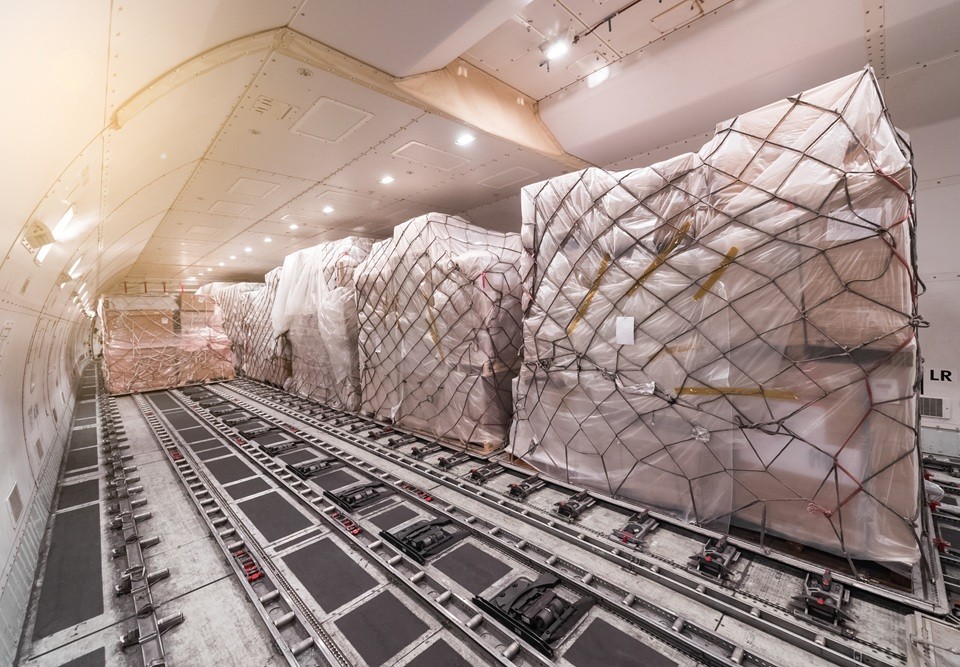
According to www.aircargonews.net, Turkish Cargo and Air China Cargo have launched a new scheduled air cargo partnership on the Chengdu–Istanbul corridor, with three weekly flights now operational between Chengdu Shuangliu International Airport (CTU) and Istanbul Airport (IST).
New Route Strengthens Eurasian Air Cargo Connectivity
The route marks a strategic expansion of bilateral air freight capacity between China and Turkey. As stated in Turkish Cargo’s official LinkedIn announcement, “We have started scheduled cargo flights between Chengdu and Istanbul, operated by Air China Cargo.” The carrier emphasized that the service supports “efficient connections from Chengdu to a wide geography through our global network, while reinforcing İstanbul’s role as a key transfer hub.”
Fleet Context for Operational Execution
While Turkish Cargo did not specify the aircraft type deployed on the new route, fleet data from Planespotters cited in the source indicates Air China Cargo’s current freighter inventory includes 13 Boeing 777 freighters, two Boeing 747-400Fs, and eight Airbus A330-200 passenger-to-freighter (P2F) conversions. Turkish Cargo’s own fleet comprises nine 777Fs and 10 Airbus A330-200Fs, with three additional 777Fs on order and five Airbus A350Fs pending delivery. Under Turkish Airlines’ 2033 Vision, its total freighter fleet is projected to reach 44 units.
Broader Infrastructure and Strategic Momentum
This partnership follows recent infrastructure investments by Turkish Airlines: in January 2026, the airline announced the second phase of its SmartIST air cargo terminal and a dedicated e-commerce facility — both designed to scale Turkish Cargo’s handling capacity and digital integration capabilities. These developments align with growing demand for time-sensitive, cross-border e-commerce logistics across Eurasia.
Industry Context for Supply Chain Professionals
For global supply chain professionals, this route adds a new direct link in a high-demand manufacturing and electronics corridor — Chengdu is a major hub for semiconductor assembly, consumer electronics, and automotive components, while Istanbul serves as a critical multimodal node connecting Europe, the Middle East, and Central Asia. The launch coincides with broader industry trends: SF Express selected Singapore’s Changi Airport as its first overseas hub on 30 April 2026, and DHL reported ongoing jet fuel supply challenges at non-dedicated airports — underscoring the value of established, resilient hub-and-spoke networks like IST. With no aircraft type specified and no mention of interline agreements or IT system integration in the source, practitioners should verify operational compatibility — including ULD compatibility, customs pre-clearance protocols, and real-time tracking interoperability — before routing time-sensitive shipments.
Source: Air Cargo News
Compiled from international media by the SCI.AI editorial team.