China’s Zero-Tariff Bombshell: 53 African Nations Get Full Market Access from May 2026
In a move that reshapes the competitive landscape for global supply chains across Africa, Chinese President Xi Jinping announced at the African Union Summit that China will eliminate import tariffs on goods from 53 African countries starting May 1, 2026, covering 100% of tariff lines. This represents the most sweeping trade liberalization measure in the history of China-Africa economic relations, extending far beyond the partial zero-tariff arrangements previously granted to 33 nations. The only exception is Eswatini, excluded due to its diplomatic recognition of Taiwan, underscoring the geopolitical dimensions that inevitably accompany such landmark trade decisions.
The scale of the bilateral relationship provides essential context. China-Africa trade reached $348 billion in 2025, growing 17.7% year-over-year, but the structural imbalance remains stark: Chinese exports to Africa totaled $225 billion while African exports to China stood at just $123 billion, producing a $102 billion trade deficit. Beijing estimates the zero-tariff policy will cost approximately $1.4 billion in foregone customs revenue — a modest price for the strategic advantages it is designed to secure. A complementary “green lane” initiative will fast-track customs and quarantine procedures, systematically reducing the institutional barriers that African exporters face when accessing the Chinese market.
The timing is anything but coincidental. The United States recently imposed 30% tariffs on South African imports, and the African Growth and Opportunity Act (AGOA) has been steadily losing its practical relevance. China’s zero-tariff announcement creates a stark contrast with Washington’s protectionist trajectory, offering African exporters a more predictable and welcoming alternative market. This is not merely an economic calculation — it is a precisely calibrated move in the broader geopolitical competition for influence across the world’s fastest-growing continent.
The CAEPA Framework: South Africa as the Supply Chain Partnership Blueprint
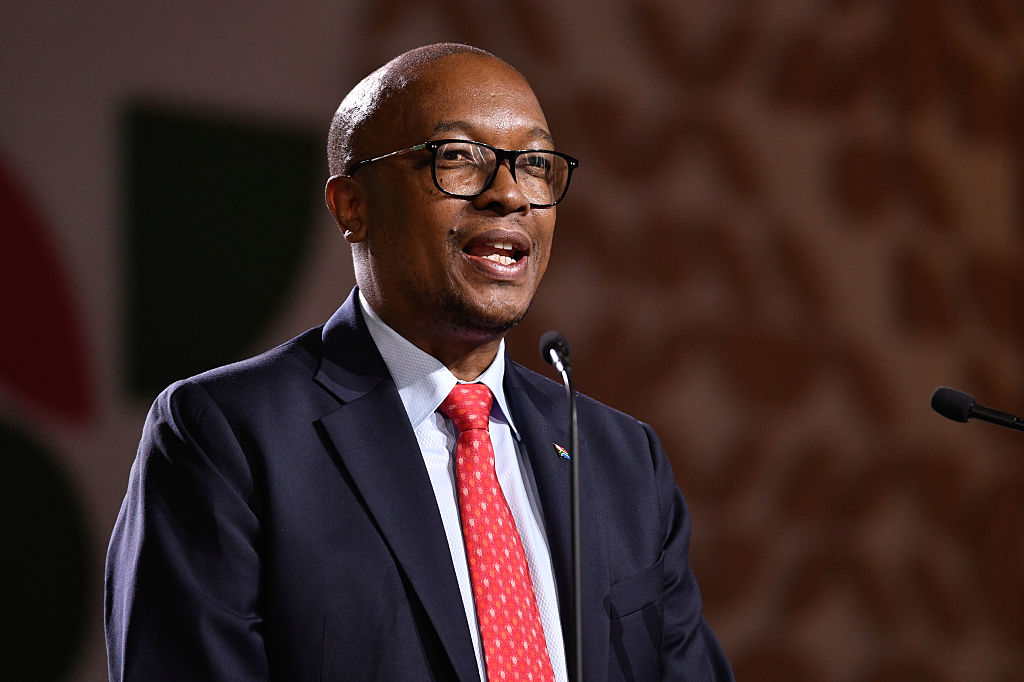
Within the broader zero-tariff architecture, the China-Africa Economic Partnership Agreement (CAEPA) signed between South Africa and China deserves particular attention. South Africa’s Minister of Trade, Industry and Competition, Parks Tau, highlighted the “significant and steady increase in Chinese investments in South Africa,” noting that the Early Harvest Agreement — expected by the end of March 2026 — will grant South African exports priority duty-free access to the Chinese market. International relations expert Dr. Oscar van Heerden characterized the deal as “extremely significant,” emphasizing that “all goods exported to China will be tariff-free, offering a huge boost for agriculture and manufacturing.”
The CAEPA’s scope spans mining, agriculture, renewable energy, and technology — essentially every pillar of South Africa’s economy. Chinese automotive companies have already established manufacturing operations in the country, and the Motor Industry Staff Association (MISA), representing 75,000 workers, publicly endorsed the agreement as a catalyst for “accelerating Chinese investment and creating more employment.” From a supply chain perspective, South Africa’s reserves of platinum, manganese, chromium, and vanadium position it as a critical node in battery and clean energy value chains. Chinese firms can establish processing facilities there and leverage AfCFTA to serve the entire African continental market — a classic hub-and-spoke supply chain strategy.
However, President Cyril Ramaphosa expressed measured reservations about the persistent trade imbalance, a concern that supply chain professionals should take seriously. If South Africa fails to develop local processing capabilities, zero tariffs may simply redirect raw material flows to a different destination without driving genuine industrial upgrading. The challenge for policymakers is clear: how to convert market access into domestic value creation rather than deeper resource dependency. This tension between access and agency will define the success or failure of CAEPA as a supply chain partnership model.
Beijing’s Defensive Economics: Resource Security in a Fragmenting World
Viewed from Beijing’s strategic planning offices, this zero-tariff policy is textbook defensive economics rather than diplomatic generosity. As global supply chains fragment under sustained geopolitical pressure, securing reliable access to raw and semi-processed inputs — earlier in the value chain, at lower cost, and with reduced political friction — has become a strategic imperative for China’s industrial economy. Africa holds a disproportionate share of the minerals, agricultural commodities, and intermediate materials that China’s manufacturing base will require over the next two decades, and zero-tariff access is the lever that accelerates these procurement relationships into long-term structural dependencies.
The defensive nature of this strategy is especially visible when set against the backdrop of Western counter-moves. The US-led FORGE alliance — comprising 55 nations and backed by $10 billion in financing through Project Vault — explicitly aims to break China’s dominance in critical minerals supply chains. While Western governments are still debating de-risking frameworks and publishing position papers, Beijing has moved directly to trade facilitation measures that lock in African supply corridors. This “market access for resource security” approach is arguably more sustainable than traditional aid-and-loan diplomacy, as it creates genuine commercial incentives for African governments to maintain and deepen these relationships.
The industrial footprint already in place amplifies this advantage. According to UNCTAD and African Union data, Chinese manufacturing investment across Africa has grown into multi-billion-dollar industrial clusters providing tens of thousands of direct and indirect jobs. Zero tariffs will further reduce input costs for these operations, strengthening their competitiveness in both domestic African and global export markets. For companies like BYD, Huawei, and Haier — all accelerating their overseas expansion — Africa represents not merely a consumer market but an indispensable resource and production node within increasingly complex global supply chain networks.
The Real Barriers: Why Tariffs Were Never Africa’s Binding Constraint
Multiple analysts have emphasized a point that much of the coverage will miss: tariffs were never Africa’s binding export constraint. The structural obstacles that have historically limited African exporters’ ability to capture value — rather than merely supply volume — are logistics reliability, quality consistency, scale aggregation, and payment certainty. These frictions determine whether a producer graduates from raw commodity exporter to processed-goods supplier. Removing tariffs without addressing them changes the destination of shipments but does not unlock Africa’s value chain potential in any meaningful sense.
South African port data illustrates this vividly. Recent statistics show an average of 79 vessels queuing at major South African ports, with monthly throughput of approximately 305,000 TEU — performance levels that severely undermine export competitiveness regardless of tariff rates. In East Africa, while the LAPSSET corridor development is progressing, transport costs from Kenya’s Mombasa to landlocked nations remain prohibitively high. For Chinese procurement teams, zero tariffs become irrelevant if goods cannot arrive on time and to specification — logistics costs simply absorb whatever tariff savings might have been gained.
Realizing the policy’s intended impact will require African nations to invest heavily in several critical areas: cold chain logistics infrastructure (especially for agricultural exports), testing and certification capacity to meet Chinese market standards, aggregation platforms that enable smallholder and mid-scale producers to meet minimum order requirements, and innovative trade financing instruments that reduce the cash-flow risk inherent in long-haul commerce. These unglamorous investments are precisely what separates market access from genuine bargaining power — and they will determine whether zero tariffs translate into structural economic transformation or merely redirect commodity flows.
The Competitive Ripple Effect: Signals for India, the Gulf, and Europe
China’s zero-tariff move sends unmistakable competitive signals to every operator with Africa-facing supply chain exposure. For Indian, Gulf, and European companies and investors, this should register as a strategic inflection point rather than background noise. Africa’s long-term trade orientation is being set right now — not in ministerial communiqués, but in the quiet accumulation of offtake agreements, logistics investments, and supplier relationships that create structural advantages difficult to displace later.
African leaders’ responses reveal the policy’s gravitational pull. Rwanda’s President Kagame pledged customs reforms to “accelerate AfCFTA and export diversification.” Kenya’s President Ruto declared that “this is the time for Africa to transform its raw materials,” referencing Chinese special economic zones in Mombasa. Tunisia announced a dedicated task force targeting textiles and agricultural products as “a new impetus for youth employment.” These are not diplomatic pleasantries — they represent concrete policy commitments that will shape procurement patterns and supply chain configurations for years to come.
Yet the competitive landscape is far more complex than a simple China-versus-the-rest narrative. India recently launched a ₹25 billion export factoring subsidy program targeting MSME trade finance. Gulf states continue deepening African logistics investments through Vision 2030 and related frameworks. The European Union is attempting to reshape trade rules through carbon border mechanisms like CBAM. In this multi-polar competition for African markets, China’s zero-tariff policy is a powerful opening move, but the game is far from decided. For Chinese companies going overseas, market access is merely the starting line — sustainable competitive advantage requires building localized supply chain networks, developing local talent, and establishing genuinely reciprocal partnerships with African enterprises.
Looking Ahead: From Access to Value Creation
China’s zero-tariff policy for 53 African nations stands as one of the most consequential single trade measures of 2026. It redefines the foundational architecture of China-Africa economic relations and introduces a powerful new variable into the ongoing regional reconfiguration of global supply chains. However, as analysts have emphasized, the question that will ultimately determine African economic outcomes is not whether tariff-free access helps the continent — incrementally, it does — but whether African producers can convert that access into genuine bargaining power, or whether they become price-takers in an even larger system than the one they are trying to exit.
For supply chain professionals and Chinese companies with global ambitions, the policy delivers clear action signals. First, accelerate raw material sourcing relationships across Africa, leveraging the zero-tariff window to establish long-term supply agreements. Second, invest in local processing capacity rather than pure resource extraction — this is both strategically sound and increasingly expected by African host governments. Third, integrate deeply with the AfCFTA framework, using Africa’s internal free trade network to access broader continental markets from strategically positioned hubs.
As the May 1 implementation date approaches, the intensity of China-Africa trade dialogue will only increase. The South Africa CAEPA Early Harvest Agreement, individual nations’ customs reform timelines, and the pace of supporting logistics infrastructure development will all serve as critical indicators of whether this historic policy can translate from announcement to operational reality. What seems certain is that 2026 will mark the year when China-Africa supply chain cooperation shifts decisively from promises to execution — with implications that extend far beyond the bilateral relationship to reshape competitive dynamics across the entire global trade system.
Source: Forbes Africa