Modi Lays Foundation Stone for India’s Largest Semiconductor JV
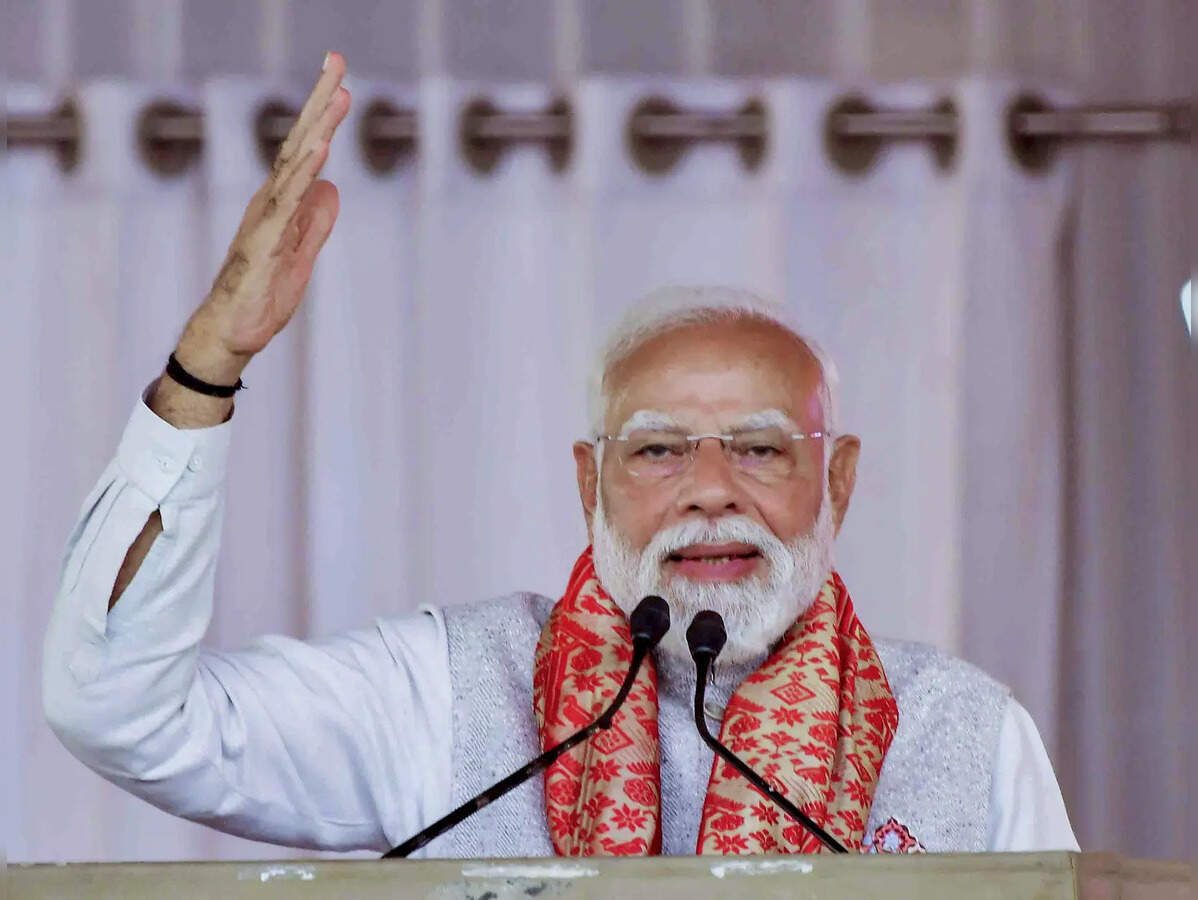
On February 21, 2026, Indian Prime Minister Narendra Modi personally laid the foundation stone for a semiconductor chip manufacturing plant in Jewar, Uttar Pradesh — a landmark moment in India’s quest to establish itself as a credible player in the global semiconductor supply chain. The facility, operated by India Chip Private Limited, is a joint venture between India’s HCL Group (60% stake) and Taiwan’s Foxconn, formally known as Hon Hai Technology Group (40% stake). With a total investment of ₹3,700 crore (approximately $4.4 billion), the plant will function as an Outsourced Semiconductor Assembly and Test (OSAT) facility specializing in display driver integrated circuits (DDICs). Production is slated to begin in 2028, with full capacity reaching 36 million chips per month.
The ceremony was attended by HCL Group Chairperson Roshni Nadar Malhotra, Foxconn’s Semiconductor Business Group President Bob Chen, Uttar Pradesh Chief Minister Yogi Adityanath, and Union Minister of State for Electronics & IT Jitin Prasada. Modi used the occasion to articulate a broader vision, declaring that “Made in India chips are vital for a developed India” and that the country must achieve self-reliance in semiconductor manufacturing to fulfill its development ambitions. The choice of Jewar — adjacent to the under-construction Noida International Airport and within the YEIDA industrial corridor — reflects careful logistics planning, positioning the facility at the intersection of air cargo connectivity and the Delhi-NCR manufacturing ecosystem.
India Semiconductor Mission: 10 Plants, $18.3 Billion in Cumulative Investment
The HCL-Foxconn plant is the latest addition to India’s rapidly expanding semiconductor manufacturing portfolio under the India Semiconductor Mission (ISM), launched in 2021. The government has now approved 10 semiconductor manufacturing projects with cumulative investment commitments of ₹1.6 lakh crore ($18.3 billion). These span the semiconductor value chain from wafer fabrication to packaging and testing. Notable projects include Micron Technology’s OSAT facility in Gujarat, Tata Group’s semiconductor fab in Assam and packaging plant in Gujarat, and Kaynes Technology’s OSAT unit. According to Modi, four of the ten approved plants are nearing production readiness, signaling that India’s semiconductor ambitions are transitioning from policy announcements to physical output.
Union IT Minister Ashwini Vaishnaw provided additional context on India’s electronics manufacturing trajectory. He noted that India’s electronics production has reached ₹12 lakh crore ($138 billion), a dramatic increase from negligible levels just a decade ago. Electronics has risen to become India’s third-largest export category. Uttar Pradesh alone accounts for approximately 50% of India’s mobile phone production and 25% of its electronics output. The addition of semiconductor manufacturing capabilities in the state represents a strategic upgrade from assembly-focused electronics production to higher-value-added chip fabrication and testing — a move that could fundamentally reshape India’s position in the global technology supply chain.
Why Display Driver ICs? The Strategic Logic Behind OSAT Entry
The decision to focus on display driver ICs rather than logic chips or memory is strategically calculated. The global DDIC market is projected to reach approximately $9 billion in 2026, with applications spanning smartphones, tablets, laptops, automotive displays, and industrial control panels. The market is currently dominated by a handful of Taiwanese and Korean firms including Novatek Microelectronics, Raydium Semiconductor, and Samsung LSI. By entering this segment, India is targeting a product category where packaging and testing technology is relatively mature, making it suitable as a starting point for a country building semiconductor manufacturing capabilities from scratch.
From a supply chain perspective, the OSAT segment represents the most accessible entry point in the semiconductor value chain. Unlike wafer fabrication, which requires capital expenditures in the tens of billions and decades of process know-how, OSAT operations can be ramped up more quickly and at lower cost. The global OSAT market has long been dominated by ASE Technology, Amkor Technology, and JCET Group, with significant concentration in China, Taiwan, and Malaysia. However, geopolitical tensions — particularly US-China technology restrictions — have created strong demand for alternative OSAT capacity in geopolitically aligned nations. India’s combination of engineering talent, competitive labor costs, and generous government incentives (including up to 50% capital subsidy under ISM) positions it as a compelling destination for this capacity diversification. The HCL-Foxconn facility is designed to capitalize on exactly this global supply chain restructuring trend.
Foxconn’s Expanding India Footprint: From iPhone Assembly to Chip Manufacturing
For Foxconn, the Jewar chip plant represents a significant deepening of its India commitment. The world’s largest electronics contract manufacturer has been steadily expanding its Indian operations over the past several years. At its Sriperumbudur facility in Tamil Nadu, Foxconn has built a massive iPhone assembly operation and constructed a “mini-township” housing 30,000 workers, 80% of whom are women. This facility has been central to Apple’s strategy of diversifying iPhone production away from China — Indian-assembled iPhones now account for an estimated 18% of global production, up from less than 5% in 2022, with projections to exceed 25% by the end of 2026.
Foxconn’s parent company, Hon Hai Technology Group, has been pursuing a broader pivot into semiconductor manufacturing as part of its corporate transformation strategy. The group established a dedicated semiconductor division in 2020 and has since executed multiple strategic moves: a joint venture with STMicroelectronics for silicon carbide (SiC) chip production in Malaysia, the acquisition and planned conversion of Sharp’s Sakai factory in Japan into an AI data center wafer foundry, and investments in EV-related semiconductor capabilities. The Jewar project adds another critical node to Hon Hai’s global semiconductor footprint. For India, this means access not just to Foxconn’s capital, but more importantly to its decades of manufacturing management expertise and global supply chain network — invaluable assets for a semiconductor manufacturing newcomer.
Rare Earth Corridors and Pax Silica: Building the Upstream Security Net
Modi’s announcement at the ceremony included a significant upstream signal: India is planning to develop “rare earth corridors” to secure the critical mineral inputs essential for semiconductor manufacturing. Rare earth elements and critical minerals are indispensable in chip production processes, and global supply is heavily concentrated in China, which controls over 60% of global rare earth processing capacity. India possesses the world’s fifth-largest rare earth reserves but has historically underinvested in extraction and refining capabilities. The rare earth corridor initiative aims to systematically develop India’s mining, refining, and processing infrastructure to ensure raw material security for its growing semiconductor industry.
This upstream strategy dovetails with India’s decision, announced earlier the same week, to join Pax Silica — a US-led semiconductor supply chain security alliance aimed at building a resilient global chip supply network among democratic nations. India’s membership adds a critical minerals dimension to the coalition, complementing the manufacturing capabilities of existing members such as Japan, South Korea, and the Netherlands. Together, the rare earth corridors and Pax Silica membership represent a coordinated two-pronged approach: securing upstream raw materials while simultaneously integrating into the Western-aligned semiconductor supply chain architecture. For global chip buyers and OEMs evaluating “China+1” strategies, India’s simultaneous moves on both fronts make it an increasingly serious contender for supply chain diversification.
Challenges Ahead: Infrastructure, Talent, and Execution Risk
Despite the momentum generated by the HCL-Foxconn groundbreaking, India’s path to semiconductor supply chain relevance is fraught with challenges. Infrastructure gaps remain significant — semiconductor manufacturing demands ultra-reliable power supply, ultra-pure water systems, and world-class logistics connectivity, all areas where India still lags behind established semiconductor hubs in East Asia. Talent shortages present another critical bottleneck: while India produces large numbers of engineering graduates annually, professionals with hands-on semiconductor fabrication and testing experience are scarce. Industry estimates suggest India will need an additional 85,000 semiconductor-specific professionals by 2027 to staff its approved projects.
Yet the structural tailwinds are powerful. The global semiconductor supply chain is undergoing its most profound geopolitically-driven restructuring since the end of the Cold War. The US CHIPS Act, the EU Chips Act, Japan’s semiconductor revival plan, and now India’s Semiconductor Mission all point in the same direction: reducing dependence on any single geography and building more resilient, diversified supply networks. India brings unique advantages to this reconfiguration — a massive demographic dividend with a median age of 28, geopolitical alignment with Western democracies providing “trusted partner” status, and unprecedented government policy commitment including capital subsidies, tax incentives, and infrastructure development. If India can execute on even a fraction of its semiconductor ambitions, the global chip supply chain landscape in 2030 could look dramatically different from today. The foundation stone laid in Jewar is more than symbolic — it represents the physical beginning of India’s bid to claim a permanent seat at the global semiconductor table.
Source: economictimes.indiatimes.com