Ocean Alliance’s Day 10 Network Update: Upgrading Southeast Asia to Core Deep-Sea Origins
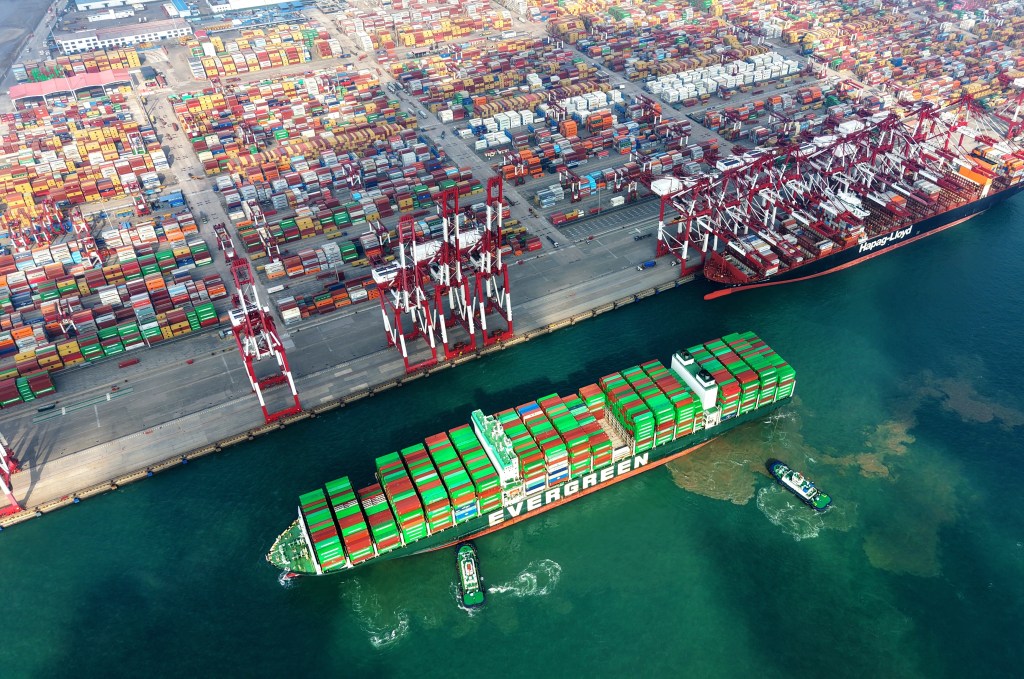
In April 2026, the Ocean Alliance — comprising CMA CGM, Evergreen, Cosco Shipping, and its subsidiary OOCL — will implement its “Day 10” network update, a move that maritime consultancy Sea-Intelligence has characterized as a “strategic pivot” toward Southeast Asian markets. Sea-Intelligence CEO Alan Murphy delivered an unambiguous verdict in his weekly update: “This is not a general expansion, but a targeted injection of capacity into Vietnam and Thailand. Ocean Alliance has effectively upgraded these markets into core deep-sea origins.” The implications are profound — Southeast Asia is no longer merely a waypoint in global shipping networks but has earned status as a primary cargo origin alongside China’s coastal ports.
The restructuring reflects the irreversible momentum of the “China plus one” manufacturing migration. As U.S. tariffs on Chinese goods continue to escalate, brands and manufacturers have systematically shifted production capacity to Vietnam, Thailand, and other ASEAN nations. Shipping alliances, which function as the circulatory system of global trade, typically lag behind shifts in trade flows. When they do adjust, however, it signals that the underlying migration has reached a critical mass. Ocean Alliance’s Day 10 update introduces 21 new port-to-port connections while discontinuing 26 direct links, with 318 connections remaining unchanged — evidence of a carefully calculated reallocation of resources rather than a blanket expansion.
Haiphong Port: A New Corridor for High-Value Cargo Bypassing South China
The most dramatic change in the Day 10 update centers on Vietnam’s Haiphong Port, which will see its direct market reach expand by 33%. Four new transpacific services will connect Haiphong directly to North America — two to the East Coast and two to the West Coast. The strategic significance is clear: high-value goods manufactured in northern Vietnam will no longer need to transit through traditional South China transshipment hubs such as Hong Kong or Shenzhen’s Yantian port. Instead, they can ship directly to North American destinations, cutting transit times and reducing logistics costs substantially.
CMA CGM’s confidence in Haiphong is further underscored by its $600 million terminal construction investment at the port — a massive infrastructure bet signaling that the French shipping giant views Vietnam’s export growth as a long-term structural trend rather than a cyclical blip. Vietnam’s foreign direct investment performance supports this thesis: FDI reached a record $22.1 billion in 2025 and is projected to hit $25 billion in 2026. Samsung, Apple supply chain partners Foxconn and Luxshare, and numerous other multinational manufacturers continue expanding their Vietnamese production footprint. Electronics, textiles, and furniture have emerged as Haiphong’s dominant export categories, and the addition of direct transpacific services will further reduce the logistics cost disadvantage that once made Vietnam less competitive than China’s coastal manufacturing clusters.
Laem Chabang: Doubled Frequency and the Zero-Sum Game with Malaysia
Thailand’s premier container port, Laem Chabang, receives an equally significant boost in the Day 10 update — weekly service frequency to the U.S. West Coast doubles from one to two sailings. For Thai exporters, this means more flexible shipping windows and reduced waiting times. Thailand is in the midst of a strategic pivot from traditional automotive manufacturing toward electric vehicles and advanced electronics, with the Thai Board of Investment (BOI) offering generous tax incentives for smart electronics and EV battery production. Chinese automakers including Great Wall Motors and BYD have already established significant production bases in Thailand.
However, Murphy’s analysis reveals a more consequential competitive dynamic beneath the surface: “The data shows a direct operational swap, where resources were stripped from a transshipment hub like Port Klang to fuel the direct call frequency in Laem Chabang.” This zero-sum reallocation means that Ocean Alliance has consciously sacrificed Malaysia’s traditional transshipment advantages to support direct services from Thailand. For Malaysia, this is an alarming signal — if shipping alliances continue redirecting capacity from Port Klang to Vietnamese and Thai ports, Malaysia’s role as a regional shipping hub could face gradual erosion. The competitive implications extend beyond port economics to national industrial strategy, as port connectivity directly influences manufacturing investment decisions.
Premier Alliance and Gemini Cooperation: A Synchronized Industry-Wide Pivot
What makes this shift particularly significant is that it extends far beyond a single alliance. The Premier Alliance — consisting of Ocean Network Express (ONE), Hyundai Merchant Marine (HMM), and Yang Ming — announced in late January that it would add Haiphong Port to its FP2 service connecting Asia-Pacific with the ports of Tacoma and Vancouver. Just one month earlier, ONE revealed that its EC2 China-to-U.S. East Coast service would replace China’s Xiamen Port with Vietnam’s Cai Mep Port on eastbound rotations — a symbolically powerful substitution that directly embodies the “Vietnam replacing China” trend in ocean routing.
The Gemini Cooperation of Hapag-Lloyd and Maersk similarly disclosed in January that its WC1 Asia-to-Los Angeles service would add Thailand’s Laem Chabang while dropping China’s Nansha Port. Three major shipping alliances making parallel adjustments within weeks of each other points to overwhelming market demand as the driving force. When shipping companies are willing to sacrifice Chinese port calls to create capacity for Southeast Asian ports, this “voting with their vessels” carries more conviction than any market forecast. For exporters still concentrating production in China, this is a warning signal that demands serious attention — the global logistics network is being actively reconfigured, and companies that delay supply chain diversification risk finding themselves marginalized in terms of shipping capacity and service frequency.
The Demand Side: Savannah Port’s 38% Growth Validates Southeast Asia’s Rise
Demand-side data from major U.S. ports corroborates the supply-side network shifts. Georgia’s Port of Savannah designated Vietnam as its “fastest-growing trade partner” in December 2025, currently offering nine direct ocean carrier services between Savannah and Vietnam with an average transit time of 33 days. Over the past five years, container trade between Savannah and Vietnam has climbed 38%, adding 104,000 twenty-foot equivalent units (TEU). This growth rate far exceeds that of other trade partners during the same period, reflecting the systematic shift by American retailers and brand owners in sourcing from China to Vietnam.
Savannah’s experience illustrates a broader macro trend: as Southeast Asian export volumes continue to surge, U.S. ports are proactively adjusting their trade lane configurations and infrastructure investments to accommodate the new cargo origin structure. This bidirectional network reconfiguration — with both origin and destination ports simultaneously adjusting — further reinforces the irreversibility of the China+1 supply chain migration. For companies that have already established production facilities in Vietnam and Thailand, the improving logistics efficiency will constitute an additional competitive advantage over pure China-based supply chains in terms of total landed cost and delivery reliability.
Strategic Implications: The Emergence of a Dual-Core Global Shipping Architecture
The synchronized pivot by all three major shipping alliances sends an unmistakable signal: the “decentralization” of global supply chains is now propagating from the manufacturing layer to the logistics layer. For the past decade, China’s coastal ports — Shanghai, Shenzhen, Ningbo — maintained their position as the undisputed core of global shipping networks, anchored by unmatched cargo volumes. But as alliances systematically redirect capacity from Chinese ports to Vietnamese and Thai alternatives, this dominance is experiencing structural loosening. Sea-Intelligence data shows that Ocean Alliance’s update involves discontinuing 26 direct links while adding 21 new connections, a deliberate pattern of rebalancing that reflects confidence in the long-term sustainability of Southeast Asian manufacturing growth.
This does not mean China’s position in global supply chains will be supplanted — China still possesses the world’s most complete industrial ecosystem and most mature logistics infrastructure. But it does signal that global shipping networks are evolving from a “China-centric single core” toward a “China plus Southeast Asia dual-core” architecture. For supply chain professionals, this transformation demands a reassessment of routing strategies, transit time calculations, and cost structures. For investors, Vietnam and Thailand’s port infrastructure, industrial real estate, and logistics services sectors may present compelling growth opportunities. And for policymakers across the region, maintaining national port competitiveness and manufacturing attractiveness amid this global supply chain reconfiguration will rank among the most pressing economic challenges of 2026.
Source: Sourcing Journal