The Unraveling of a Billion-Dollar Partnership: From 20 Planned Sites to Three Shuttered Warehouses
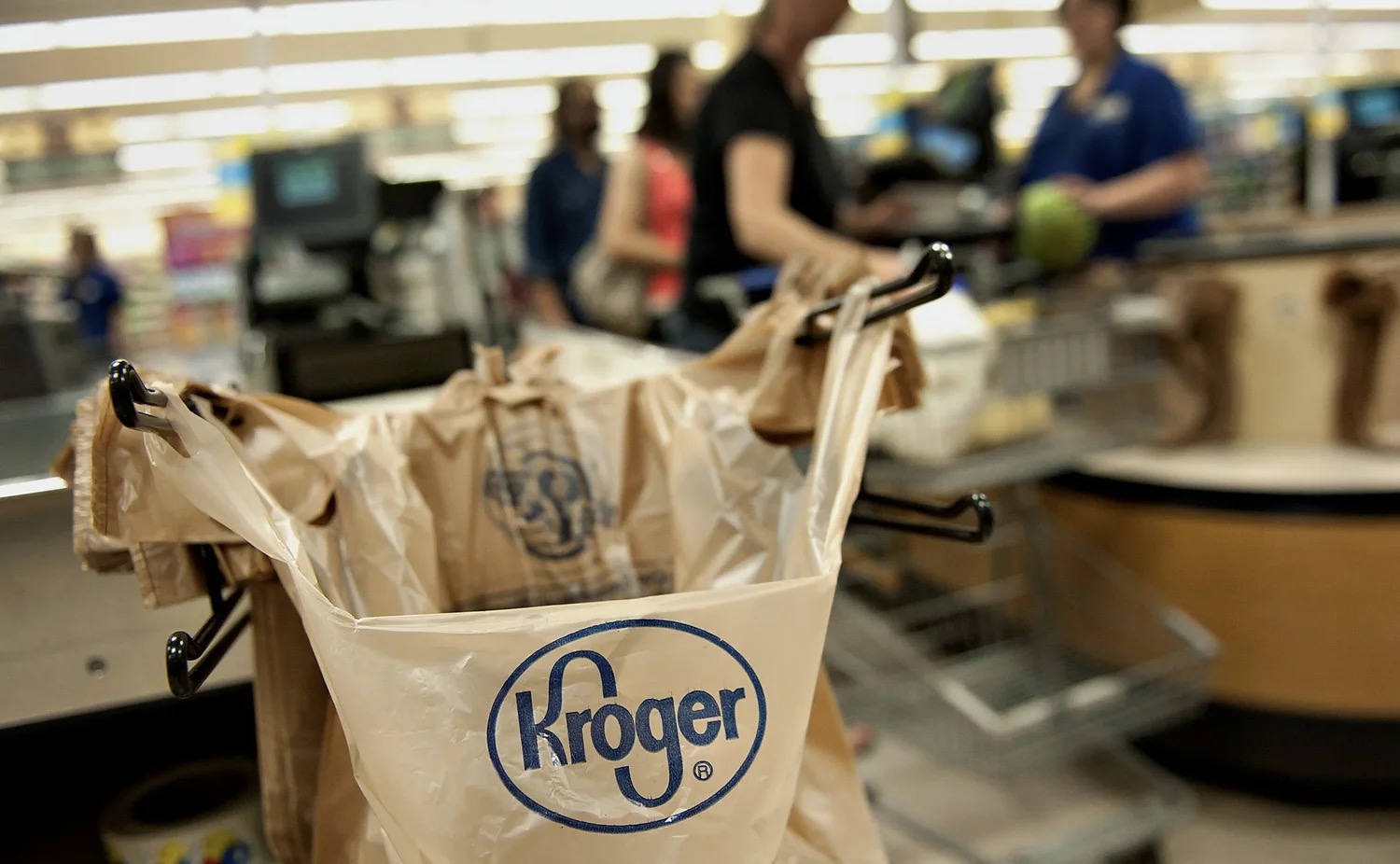
When Kroger, America’s second-largest supermarket chain, announced its partnership with British warehouse robotics firm Ocado Group in 2018, the deal was heralded as a watershed moment for grocery retail. The ambitious plan called for 20 massive Customer Fulfillment Centers (CFCs) across the United States, each powered by Ocado’s proprietary Cube automated storage and retrieval system — a three-dimensional grid of bins serviced by hundreds of robots racing across overhead tracks. The vision was nothing short of revolutionary: fully automated grocery fulfillment that could process thousands of orders per day with minimal human intervention. Ocado’s stock soared, earning the company the moniker “the Tesla of grocery” from Wall Street analysts eager to back the next big disruption in retail.
The reality proved far more sobering. By early 2026, only eight of the planned 20 sites had gone live, and three of those — located in Pleasant Prairie, Wisconsin; Frederick, Maryland; and Groveland, Florida — were permanently shuttered in January 2026. A planned CFC in Charlotte, North Carolina was cancelled entirely, while only the Phoenix, Arizona site continues, set to feature Ocado’s new AutoFreezer technology. Kroger paid a staggering $350 million one-time breakup fee to Ocado, disbursed in January 2026, reflecting lost future capacity fees. The fallout on Ocado’s side has been devastating: the company’s share price has plummeted 91% over the past year, and in February 2026, Ocado announced plans to cut up to 1,000 jobs — roughly 5% of its 20,000-strong workforce — with head office roles bearing the brunt of the reductions. In Canada, Ocado partner Sobeys also closed its Calgary automated warehouse, while the partnership with Australian grocer Coles shows signs of strain.
The Cube’s Achilles Heel: A System Designed for Density, Not Speed
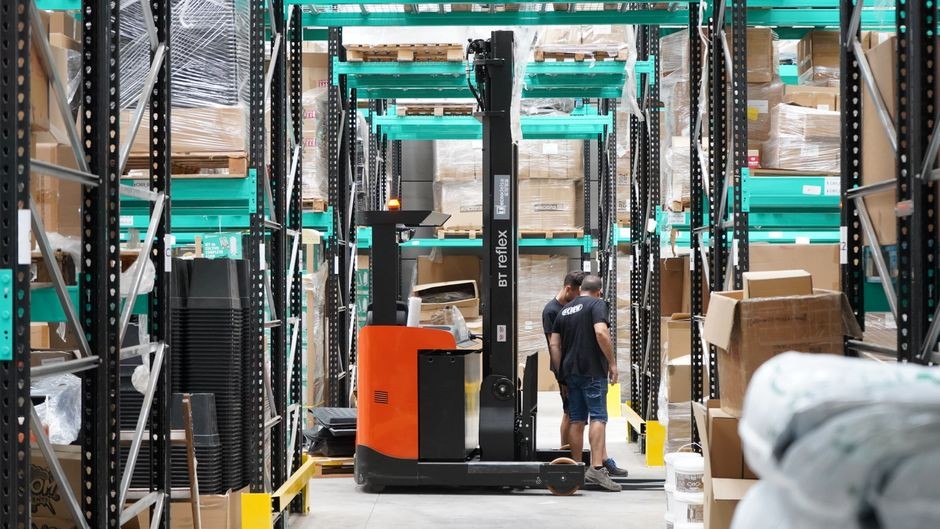
Understanding why this partnership collapsed requires examining the fundamental architecture of Ocado’s robotic system. The Cube automated storage and retrieval concept traces its origins to the late 1990s, when Ocado’s founders designed a system optimized for one thing above all else: storage density. The first commercial deployment in 2005 operated with just five robots and approximately 6,000 bins, built on the philosophy of fitting maximum inventory into minimum floor space. In traditional warehousing contexts, this approach delivered impressive results — the Cube system can achieve three to five times the storage capacity of conventional racking in the same footprint.
However, when applied to the high-velocity demands of modern online grocery fulfillment, the system’s structural limitations became apparent. Online grocery orders are characterized by high SKU diversity (fresh, chilled, and ambient products mixed in single orders), tight delivery windows (same-day or even same-hour), and dramatic intraday demand fluctuations. Ocado’s Cube system suffered from what industry insiders term a “natural slotting bottleneck” — when robots need to retrieve bins stored deep within the grid, they must repeatedly shuffle upper-layer bins out of the way, significantly reducing pick rates below target throughput. Sources familiar with the partnership revealed that Kroger flagged these performance issues shortly after the first CFCs went live. Ocado’s engineering teams invested heavily in software optimization but were ultimately unable to overcome the inherent constraints of the cube storage architecture.
The contrast with Amazon’s approach is instructive. After acquiring Kiva Systems for $775 million in 2012, Amazon adopted a fundamentally different “goods-to-person” flat-floor mobile robot architecture, now evolved into the Hercules system. Over more than a decade of continuous hardware and software iteration, this system has successfully supported Amazon’s progression from two-day to same-day to ultra-fast delivery. The trade-off between storage density and retrieval speed proved to be the decisive factor separating the two technological trajectories, with speed winning decisively in the e-commerce era.
The Economic Logic Behind Kroger’s $350 Million Exit
Kroger’s willingness to pay such a substantial penalty to exit the partnership reveals a clear-eyed economic calculation. Each Ocado CFC carried an estimated construction cost of $50 million to $100 million, with ongoing operational expenses for staff, electricity, maintenance, and technology fees adding significantly to the total cost of ownership. Critically, the CFC model required extremely high order density within each facility’s service radius to reach breakeven — a threshold that most U.S. markets simply could not sustain. By contrast, Kroger operates more than 2,700 stores nationwide, each representing a ready-made distributed fulfillment node. Through partnerships with Instacart, DoorDash, and Uber Eats, Kroger can leverage existing store inventory and labor to fulfill online orders with minimal incremental capital investment.
From a financial perspective, the closure of three CFCs will reduce Ocado’s annual fee revenue by approximately $50 million in fiscal 2026. But for Kroger, shedding these high-fixed-cost assets delivers strategic value far exceeding the breakup payment. The company’s financial reporting indicates meaningful margin improvement in its e-commerce operations since shifting to store-based fulfillment, where the marginal cost of picking an online order is substantially lower than the fully loaded cost of CFC operations. As Peel Hunt analysts noted, the $350 million compensation actually demonstrates that “Ocado’s technology remains important if deployed in the right way” — the implication being that large centralized CFCs may not be the right deployment model for most grocery markets.
Global Ripple Effects: Partners from Canada to Australia Pull Back
The shockwaves from Kroger’s exit have reverberated well beyond North America. In January 2026, Canadian grocer Sobeys announced the closure of its Ocado-powered automated warehouse in Calgary, Alberta, marking another high-profile defection from the platform. In Australia, Ocado’s partnership with supermarket giant Coles has shown visible cracks — while Coles has not formally announced a withdrawal, market expectations point to a significant scaling back of their collaboration. The cumulative effect of these departures has placed enormous pressure on Ocado’s international licensing business, which was supposed to be the growth engine that would eventually justify the company’s once-lofty valuation.
Ocado CEO Tim Steiner has publicly maintained confidence in the U.S. market opportunity, revealing that the company is developing store-based automation solutions to support click-and-collect and rapid fulfillment use cases. This strategic pivot is significant — it represents a fundamental shift from Ocado’s identity as a provider of large-scale centralized fulfillment technology to a more diversified platform offering multiple fulfillment solutions. However, this transformation requires substantial R&D investment and time, and with the company having posted a loss of £375 million in 2024 while simultaneously executing major workforce reductions, the question of whether Ocado can complete its pivot before running out of financial runway remains very much open. For Ocado, 2026 is not merely a year of strategic transition — it is an existential test of whether the company can achieve positive cash flow and avoid a deeper crisis.
The Paradigm Shift: From Centralized Robot Warehouses to Distributed Store Fulfillment
The Kroger-Ocado divorce is not an isolated incident but rather the most dramatic manifestation of a profound paradigm shift sweeping through retail fulfillment. Over the past five years, the industry has coalesced around a fundamental insight: no automation system can overcome the physics of distance. As consumer delivery expectations have compressed from three-day to same-day to same-hour, fulfillment nodes must be positioned as close to the end consumer as possible. Large centralized CFCs, typically located in industrial zones on urban peripheries with service radii of 50-100 kilometers, are inherently disadvantaged in this speed competition. Walmart, leveraging its network of over 4,700 U.S. stores, now offers same-day delivery to 95% of American households. Amazon continues to shrink last-mile distances through its Whole Foods store network and proliferating urban micro-fulfillment centers.
The core logic of this paradigm shift can be stated simply: automation technology should serve network design, not substitute for it. The most successful retailers are not those deploying the most advanced robots, but those deploying the right level of automation at the right locations and the right scale. Target’s Ship-from-Store model and Walmart’s store-pick-and-deliver approach both demonstrate that moderate automation retrofits to existing retail infrastructure deliver superior economic returns and market adaptability compared to greenfield robotic mega-warehouses. For retailers and logistics providers worldwide evaluating warehouse automation investments, the Kroger-Ocado case delivers an unmistakable message: before selecting an automation system, ensure your network design is sound, because no technology — however sophisticated — can compensate for poor site selection and over-centralized architecture.
The Road Ahead: Where Warehouse Automation Goes in the Next Decade
Despite the setback for centralized CFC models, the broader warehouse automation market remains on a strong growth trajectory. The global market is projected to expand from approximately $23 billion in 2023 to over $40 billion by 2028, driven by persistent labor shortages, rising wage costs, and escalating fulfillment complexity. What is changing fundamentally is how automation is deployed and commercialized. The rise of Robotics-as-a-Service (RaaS) has dramatically lowered adoption barriers for small and mid-sized operators — companies like Locus Robotics and 6 River Systems (owned by Shopify) offer subscription-based models charging per pick or per unit moved, allowing operators to elastically scale robot fleets with seasonal demand without heavy upfront capital commitments. Simultaneously, the micro-fulfillment center (MFC) concept is gaining rapid traction, with the market projected to reach $9.39 billion in 2026 at a compound annual growth rate of 44.5%. These compact automated facilities, typically embedded within existing stores or positioned in urban cores, combine automation efficiency with locational advantage.
Looking further ahead, three macro trends will define the next decade of warehouse automation. First, modular and composable architectures will replace monolithic end-to-end solutions, allowing operators to mix and match functional modules based on specific operational requirements. Second, AI-driven dynamic optimization — encompassing real-time demand forecasting, intelligent inventory positioning, and adaptive pick-path planning — will become the primary source of competitive differentiation. Third, human-robot collaboration rather than full lights-out automation will emerge as the dominant operating model, preserving human judgment at critical decision points while delegating repetitive physical tasks to machines. Amazon’s recent decision to abandon its ceiling-mounted Blue Jay robot project in favor of the modular Orbital warehouse system exemplifies this trajectory perfectly. For Chinese companies building overseas fulfillment networks, the Kroger-Ocado lesson is directly applicable: automation technology selection must be deeply aligned with target market characteristics and network architecture, and the pursuit of technological sophistication must never override practical operational requirements.
Source: warehouseautomation.ca | Reuters