According to www.globaltrademag.com, warehouse owners and logistics managers are turning to intelligent automation to accelerate fulfillment, increase operational transparency, and gain competitive advantage — fueling a warehouse automation market valued at nearly $30 billion in 2026 and projected to nearly double by 2030.
1. Automated Pallet Movement
Systems such as high-speed conveyors, pallet shuttles, and integrated automated storage and retrieval systems accelerate receiving, put-away, and replenishment of pallet-level goods. A pallet shuttle system uses self-powered robotic carriers to execute as many as 11,000 pallet movements per week within racking structures — eliminating wide forklift aisles and increasing vertical storage density.
2. Forklift-Free Warehouse Design
This lean strategy re-engineers facility layout and workflows to reduce or eliminate dependence on human-operated forklifts. It replaces unpredictable forklift movements with continuous, controlled flow using autonomous mobile robots (AMRs), automated guided vehicles (AGVs), conveyors, and automated cranes. Benefits include improved worker safety, narrower aisles, higher storage density, and more predictable operations from receiving to shipping.
3. Autonomous Material Transport
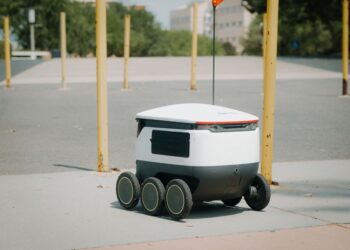
AGVs and AMRs both automate manual material movement but differ operationally. AGVs follow fixed paths — via magnetic tape or lasers — and suit repetitive, static-point transfers. AMRs use advanced sensors and internal facility maps to navigate dynamically, maneuver around obstacles, and adapt routes in real time. Selecting between them depends on workflow predictability versus flexibility needs.
4. Goods-to-Person (G2P) Automation
G2P systems — including vertical lift modules and robotic shuttle systems — retrieve totes or bins and deliver inventory directly to stationary operators. This reverses traditional person-to-goods workflows, minimizing human walking and boosting productivity and order accuracy. It is especially critical for high-velocity e-commerce operations demanding speed and precision.
5. Robotic Piece-Picking and Manipulation
Building on G2P, robotic piece-picking uses machine vision, AI, and advanced grippers to select individual items from bins and sort them into order containers. It handles diverse stock-keeping units without human intervention, operating with extreme accuracy 24/7 and freeing workers for problem-solving and quality control — addressing the most labor-intensive segment of e-commerce fulfillment.
6. High-Speed Automated Sorting
Once items are selected, automated sorters consolidate orders and route them to correct packing stations or shipping lanes. Tilt-tray and cross-belt sorters deposit items down chutes upon reaching preset destinations. Pouch sorters serve dual roles: sorting and temporary order buffering — reducing chaos in busy packing areas.
7. Warehouse Execution Systems (WES)
The WES acts as the warehouse’s central nervous system — orchestrating all automated hardware in real time. Unlike warehouse management systems (WMS), it operates on a second-by-second basis, dynamically assigning tasks to AMRs, G2P systems, or human workers. Its function is to ensure harmonious system integration, prevent bottlenecks, and maximize throughput.
Source: www.globaltrademag.com
Compiled from international media by the SCI.AI editorial team.