# Key Takeaways from the Maersk Supply Chain Management Forum 2024: Building Resilient Global Supply Chains in a Rapidly Changing World
September 17, 2024
Stuart Newman
European Customer Communications Manager
## Disruption Has Become the Norm
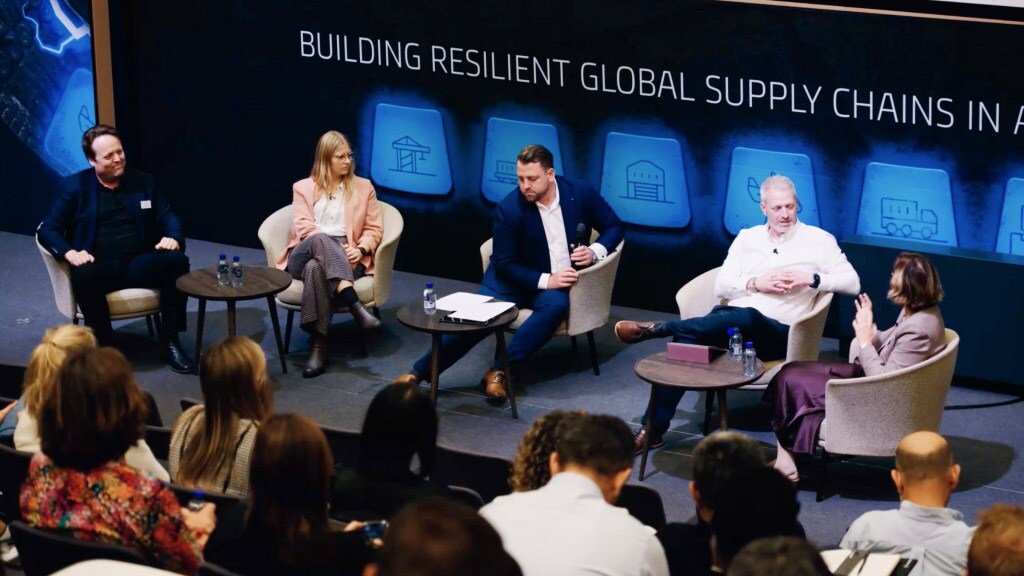
The theme of this year’s supply chain management forum is “Building Resilient Global Supply Chains in a Rapidly Changing World,” with high volatility being one of the core topics of the day.
During the opening session, Aymeric Chandavoine, President of Maersk Europe, and Vincent Clerc, CEO of Maersk, highlighted the significant role that disruption plays in global supply chains. According to a survey by Maersk involving over 2000 European customers, 75% of businesses experienced operational delays due to supply chain disruptions in the past year.
Carina Demant, Global Director of Operations Excellence at Pandora, provided a typical example of how a resilient supply chain can bring business advantages. In her insightful session, she described the company’s rapid recovery process from potential disasters.
## Sustainability and Resilience Can Go Hand-in-Hand
In an unpredictable world with increasing challenges, you might think that other areas of logistics, such as sustainability, would be put on hold for now.
However, with contemporary consumers becoming more environmentally conscious and stricter regulations in place, sustainability remains a cornerstone of many companies’ strategies, like the footwear company Vivobarefoot.
Vivobarefoot aims to reconnect people’s feet with nature, fostering deep environmental empathy. CFO John Collins and Logistics Manager Nick Weekes from Vivobarefoot explained that embedding sustainability and regeneration at the core of the company must be reflected in all its operations, including logistics.
## An Optimistic Outlook for Supply Chains
There is no doubt that we are currently navigating a challenging environment, but there can still be an optimistic outlook as we move into 2025.
Economic factors have dominated some of the most prominent supply chain issues over the past few years, such as record-high inflation levels affecting consumers and causing imbalances in supply and demand.
Professor Jesper Rangvid from Copenhagen Business School’s Finance Department suggests that conditions may ease at the start of the new year, positively impacting supply chains. Based on current economic data, his four predictions for 2025 are: central banks will lower interest rates, inflation will fall back to a target of 2%, the US will not enter a recession, and with lowered interest rates, the Eurozone may recover.
Scott Horn, Global Head of Technology Platforms at Maersk, and Rico van Leuken, Global Leader for Solutions & Services at Maersk, outlined some technologies currently available and in development that can make supply chains more resilient.
There is no one-size-fits-all solution when building resilience, but they identified four key areas businesses need to consider from end-to-end:
– Reducing supply chain risks to enable swift responses during crises
– Adopting a multichannel approach to integrate and make your supply chain flexible
– Developing scalable supply chain solutions that allow easy entry into new markets
– Continuously improving and investing in technology
Building true supply chain resilience is a long-term, multifaceted process. However, by sharing insights at events like the SCM forum, the industry can develop in sync, and businesses can learn from each other along the way.
If this journey can maintain sustainability as much as possible, it’s good news for all of us.
For more information on Maersk’s supply chain resilience model, contact your local Maersk representative to help you make your supply chain more resilient.
—
Source website: