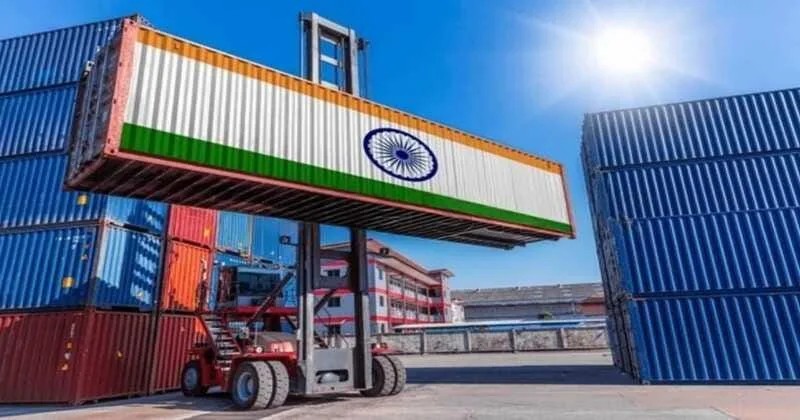
According to organiser.org, India’s Logistics Data Bank (LDB) has tracked its ten-crore export-import container since its launch in 2016, marking a milestone in the nation’s digital logistics infrastructure.
From Ancient Ports to Digital Visibility
Union Minister of Commerce and Industry Piyush Goyal called the achievement “
an important milestone in Indian logistics journey
,” emphasizing that technology is making logistics simpler, faster, and more efficient while strengthening India’s manufacturing base and global market presence in line with the Prime Minister’s vision of a Viksit Bharat. The LDB now provides visibility across 19 ports and 32 container terminals, extending deep into inland networks with 103 Inland Container Depots, 439 Container Freight Stations, and 89 manufacturing Special Economic Zones.
Technology Backbone and Institutional Foundation
NICDC Logistics Data Services Limited — a joint venture established on 30 December 2015 between the Government of India’s National Industrial Corridor Development and Implementation Trust and Japan’s NEC Corporation — built and operates the LDB. Its founding objective was narrow but ambitious: to lift logistics efficiency in a sector long seen as opaque and fragmented. The platform uses Radio Frequency Identification tags, IoT, big data, and cloud computing to deliver near real-time location tracking for every EXIM container moving across 5,569 railway stations, 269 toll plazas, and three Integrated Check Posts along India’s land borders.
Expansion, Analytics, and Real-World Impact
LDB 2.0, launched by Piyush Goyal in September 2025, extended tracking beyond Indian shores for the first time — enabling high-seas monitoring of export containers and multimodal shipment visibility across ship, rail, and road. NICDC Managing Director and NLDSL Chairman Rajat Kumar Saini, IAS, described reaching ten crore containers as “
a proud moment in the journey of LDB
.” The system now handles over 1.5 crore container searches monthly, supporting exporters, importers, logistics firms, and government agencies. Dwell time and transit time analytics help identify bottlenecks — such as terminals with unusually long idle periods or rail corridors with erratic schedules — turning anecdote into evidence-based intervention.
Global Benchmarking and Market Trajectory
The World Bank’s Logistics Performance Index (LPI), which recognized LDB’s contribution, ranked India 38th among 139 countries in its 2023 edition — up from 44th in 2018 and 54th in 2014. India’s freight and logistics market is projected to grow from $317 billion in 2024 to nearly $485 billion by 2029, at an annual rate of roughly 8.8 per cent. Tracking and tracing is one of the six core LPI parameters, and India’s improvement aligns closely with LDB’s expansion — underscoring its role as foundational digital public infrastructure rather than a commercial add-on.
Source: organiser.org
Compiled from international media by the SCI.AI editorial team.