According to mediaindonesia.com, Indonesia officially launched its B50 biofuel program — a 50% biodiesel blend with Biosolar — on 1 July 2026, though downstream infrastructure for storage and handling remains insufficient to fully support long-term stability and quality assurance.
Technical Demands of FAME Drive Infrastructure Upgrades
The downstream rollout of B50 has been relatively stable since its launch date, but technical constraints tied to Fatty Acid Methyl Ester (FAME), the core biodiesel component, require targeted infrastructure adaptation. Fathul Nugroho, Member of the Downstream Oil and Gas Regulatory Agency (BPH Migas) Committee, emphasized that FAME’s hygroscopic nature — its tendency to absorb moisture — necessitates strict control over long-term storage conditions. He stated:
“FAME has hygroscopic properties — it readily absorbs water. Its management requires special attention, especially for long-term storage. Tank readiness is critical to ensuring fuel quality remains intact before distribution to the public.” — Fathul Nugroho, Member of the BPH Migas Committee
According to the report, incremental upgrades to storage infrastructure are required to accommodate increasing volumes of FAME, particularly in regional terminals and distribution depots. Without such upgrades, water contamination risks could compromise engine performance across vehicle and heavy machinery fleets.
The Badan Riset dan Inovasi Nasional (BRIN) is intensifying research to mitigate fuel degradation both in storage tanks and combustion chambers. Arif Satria, Head of BRIN, confirmed that technical trials are underway focusing on filtration system efficiency and water reduction in FAME blends. He added:
“Dewatering technology and engine reliability testing are continuously refined. B50’s characteristics demand rigorous handling procedures to ensure consistent quality across diverse vehicle types and heavy equipment.” — Arif Satria, Head of BRIN
Integrated Upstream-to-Downstream Coordination Urged
Anggawira, Chairman of the Central Board of the Indonesian Association of Energy, Mineral, and Coal Suppliers (ASPEBINDO), stressed that policy success hinges on more than blending ratios alone. He called for tight integration between palm oil feedstock supply, processing capacity, and regional logistics efficiency. According to him, without synchronized readiness in storage facilities and transparent logistics cost structures, the national bioenergy initiative cannot deliver maximum value to domestic enterprises or local economies.
The source states that ASPEBINDO advocates for holistic development spanning upstream raw material sourcing to downstream distribution — highlighting storage facility preparedness and logistics cost transparency as two decisive enablers. The association also flagged uncertainty around feedstock availability, financing access, and environmental governance as key project viability factors.
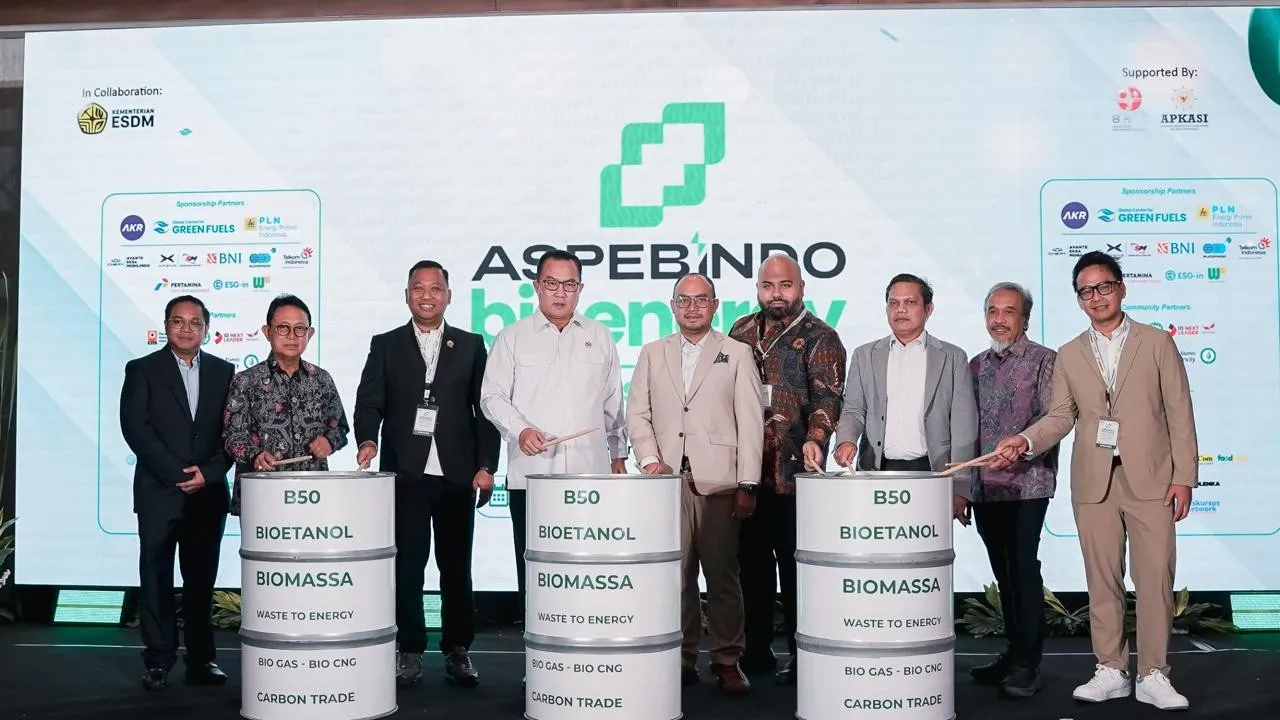
ASPEBINDO’s M. Hadi Nainggolan, Chair of the ASPEBINDO Bioenergy Business Summit 2026, described the event — held under the theme “Accelerating Indonesia’s Bioenergy Ecosystem Towards Energy Security and Green Economic Growth” — as the first in a sustained series of activities. These include policy forums, business matching, member capacity building, project scouting, and talent development. He affirmed:
“ASPEBINDO is ready to play a more active role in supporting Indonesia’s bioenergy business development. This summit is not a standalone activity. We are preparing a continuous series of activations — from policy dialogue and business matching to talent development — with a clear direction: helping bioenergy become a viable, measurable, and impactful contributor to national energy security and regional economic growth.” — M. Hadi Nainggolan, Chair of the ASPEBINDO Bioenergy Business Summit 2026
Source: mediaindonesia.com
Compiled from international media by the SCI.AI editorial team.