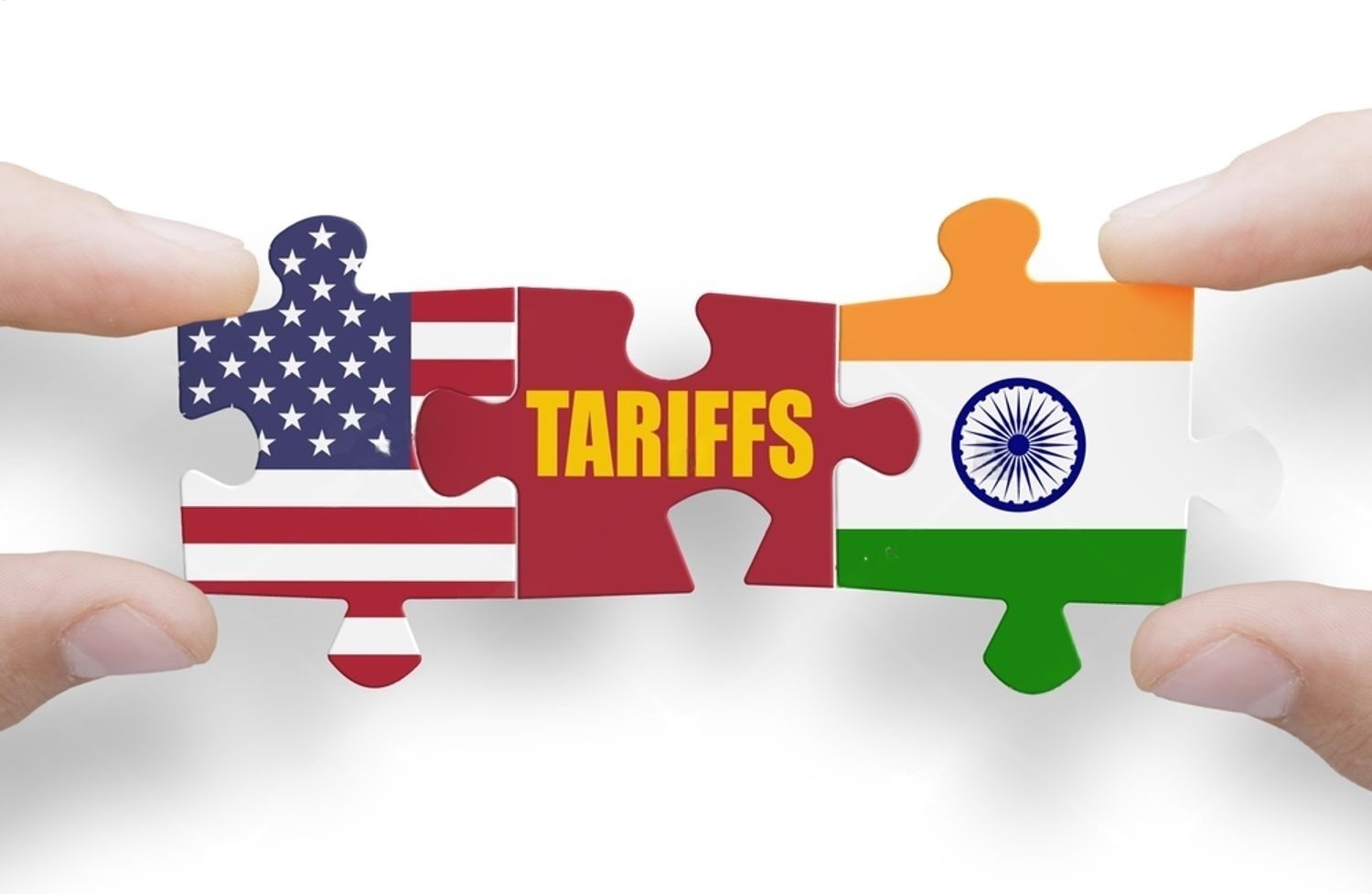
According to indiashippingnews.com, the United States has imposed permanent 10% tariffs on approximately 70% of India’s exports — including engineering goods, textiles and garments, chemicals, machinery, plastics, leather products, gems and jewellery, and furniture — under Section 301 of the Trade Act of 1974.
Permanent Tariffs Replace Temporary Measure
The new duties follow the expiration of a temporary 150-day 10% tariff that the U.S. had imposed on all trading partners in February 2026 and which lapsed on July 24, 2026. While that broad measure ended, the Office of the U.S. Trade Representative (USTR) advanced two parallel investigations launched in March 2026. The first focused on forced labour in global supply chains; the second examines whether excess manufacturing capacity in partner economies is distorting U.S. markets.
India’s Policy Response Lowers Tariff Rate
A draft USTR report released in June 2026 had proposed a 12.5% tariff on 54 countries, including India, citing their failure “to impose and effectively enforce” prohibitions on imports made with forced labour. However, India issued a formal notification banning such imports earlier in July 2026, prompting the USTR to place India in the lower-tier group facing 10% duties instead. This category includes 17 economies — among them Argentina, Bangladesh, Canada, Indonesia, Malaysia, Mexico, Sri Lanka, and the United Kingdom — that either enacted full import bans, committed to enforceable bans via U.S. trade agreements, or implemented partial regimes targeting specific forced-labour-linked goods.
Scope and Exemptions
The 10% tariffs apply over and above standard most-favoured-nation (MFN) duties and cover nearly all Indian manufactured exports — except those exempted for national security or economic stability reasons. Excluded items include raw materials whose unavailability would cause economy-wide disruptions, as well as products the U.S. cannot produce domestically in sufficient quantity or at reasonable cost. Additionally, certain goods from 13 jurisdictions — including Argentina, the European Union, Indonesia, Jordan, Malaysia, Switzerland, Taiwan, and the United Kingdom — were granted exemptions “to encourage these economies to fulfill commitments regarding forced labor import prohibitions.”
Compounding Tariff Layers
Beyond the new 10% forced labour duties, about 8% of India’s exports — notably steel, aluminium, copper, auto components, and derivative products — remain subject to higher Section 232 tariffs of 25% or 50%. These are applied in addition to normal MFN rates. The USTR cautioned that the Section 301 tariff level could increase further depending on the outcome of the ongoing excess-capacity investigation, which remains pending.
Industry Reactions
S.C. Ralhan, president of the Federation of Indian Export Organisations, welcomed the 10% rate as a strategic advantage:
“The fact that India has been placed in the lower 10% tariff category, while several competing exporting nations including China, Vietnam, Thailand, Türkiye, UAE, Brazil, South Africa and others face a higher tariff of 12.5%, reflects the recognition by the U.S. of the policy measures taken by the Government of India to strengthen its framework relating to forced labour.” — S.C. Ralhan, president of the Federation of Indian Export Organisations
He noted that India’s key competitors in labour-intensive sectors — Bangladesh, Cambodia, Pakistan, Sri Lanka, Indonesia, and Malaysia — also face the same 10% rate, preserving relative competitiveness. In contrast, Rajesh Rokde, chairman of the All India Gem and Jewellery Domestic Council, warned of margin pressure:
“The U.S. government’s decision… will undoubtedly create challenges for our gem and jewellery exporters, making Indian products less price-competitive in one of our largest markets.” — Rajesh Rokde, chairman of the All India Gem and Jewellery Domestic Council
U.S. Trade Representative Jamieson Greer underscored the human rights rationale behind the move:
“President Trump recognises that decades of moral suasion have not eradicated forced labour from global supply chains. The United States has had a forced labour import ban for nearly a century, and rigorously enforces it; it’s well past time for our trading partners to do the same.” — Jamieson Greer, U.S. Trade Representative
Source: indiashippingnews.com
Compiled from international media by the SCI.AI editorial team.